search

Mount Kailash Travel Guide

The towering Mount Kailash lies 100 km northwards of the common border of China, Nepal, and Tibet. The mountain is considered sacred in four eastern religions; Hinduism, Buddhism, Jainism, and Bon. In Sanskrit, the meaning of the word Kailash is crystal. Several religious pilgrims believe circumambulation (Parikrama) of mount Kailash brings spiritual blessings like forgiveness of sins, merits, and good fortune. If exploring remote places and conquering challenging terrains is what you love, Mount Kailash travel will not disappoint you.

The Parikrama of mount Kailash is done clockwise by Hindu, Buddhist, and Jain pilgrims, whereas Bonpos pilgrims do it in the opposite direction. The interesting fact about mount Kailash is that no one is allowed to climb it. The Hindu religion forbids anyone to climb the mountain. Mount Kailash is also the Source of some of the largest rivers in Asia: Brahmaputra, Sutlej, Indus, and the Karnali.

Access Routes:

Most of the pilgrim’s access Mt. Kailash through Nepal. Many factors, such as Geopolitics, high expenses, remoteness of the place, and high altitude, may discourage people from traveling to Mt. Kailash. However, you can access this remote Mountain through India, Nepal, or Tibet.

From India:

The Government of India organizes annual pilgrimages to Kailash, but only Indian Citizens with a valid passport are eligible to take part in the tour. The Indian Government guides the pilgrims through either the Lipu Lekh pass or the Nathu La pass in Sikkim, and no private travel companies are permitted to bring tourists through these routes.

From Nepal:

The general route via Nepal has been through the Humla district in northwestern Nepal. If you are in Kathmandu, you must take three flights: Kathmandu to Nepalgunj, Nepalgunj to Simikot, and Simikot to Hilsa.

The Tatopani-Zangmu route was the most popular route until the 2015 Earthquake. The route was closed for four years due to the damage caused by the Earthquake.

From Tibet:

Another popular route to Kailash is via Lhasa. Most travelers arrive at Lhasa by road or flight and then take a journey to Lake Manasarovar, which requires four days.

The Major Attractions Of Mount Kailash:

Mount Kailash with small monuments

1. Kora Around Mt. Kailash:

Parikrama also called Kora in the local language, is the act of circling by walking around something. As no one is allowed to climb Mount Kailash, this is the best way to experience the sacred mountain. The Hindu, Buddhist, and Jain Pilgrims circle the mountain in a clockwise direction, whereas Bon pilgrims do it in an anti-clockwise way.

These religions believe that the Parikrama bestows many spiritual blessings like forgiveness of sins, earning of merits, and good fortune. One complete Parikrama is about 56 km in the distance.

2. Lake Mansarovar:

Lake Mansarovar sits at the lap of the Kailash mountains. It is common among the pilgrims to take a bath on the lake after circling Mount Kailash. Lake Mansarovar is the highest freshwater lake in the world.

3. The Five Monasteries of Mount Kailash:

There are five monasteries with significant religious importance in mount Kailash: Choku Monastery, Gyanghaza Monastery, Selung Monastery, Drirapuk Monastery, and Zutulpuk Monastery. These monasteries are perfect to shelter in for respite after the trek. You will be privileged to observe antique murals, carvings, and statues at the site.

4. Rakshas Taal:

Rakshas taal sits west of Manasarovar Lake and south of Mount Kailash. The lake holds salty water and is devoid of aquatic plant and animal life. The word Rakshas means demon in Sanskrit. As the name suggests, it is believed that the demon Ravana created this lake while meditating on Mount Kailash to please Lord Shiva.

Weather Conditions in Mount Kailash:

Mount Kailash experiences snowfall even in June. The temperature in the region falls below the freezing temperature of -12 degree Celsius. However, the temperature can rise to 14 degrees Celsius during the day.

Prayer flags around Mount Kailash

Best time to visit Mount Kailash:

Mount Kailash is open to tourists in the time window, April to Mid-October. The ideal time to visit would be between May to September, as the period encompasses the start of spring and the end of Autumn. The monsoon takes place from July to August. But because rainfalls are very light, they will not hamper your tour.

Documents Required For Kailash trip:

Whatever route you choose, you will need a Tibet Travel Permit. You must apply for the permit two months before the trip. Your travel agency will handle obtaining the travel permit on your behalf.

With Tibet Travel Permit, you will also need an Alien Travel Permit and a Military Permit. If you intend to cross over to the Chinese side of the border, you will need a Chinese Group Visa. It takes less than four working days and your original passports to get the Chinese Group Visa.

Interesting Legends Related to Mount Kailash:

  1. The mountain is considered to be the home of a Hindu god, Lord Shiva.
  2. Monasteries and caves around Mount Kailash give shelter to many holy sages.
  3. If you climb Mount Kailash, you will disturb the divine energies.
  4. Lake Mansarovar stays placid whether it is windy or not. Whereas the Rakshas Tal always stays more or less turbulent.
  5. Mount Kailash is also called the world axis, world pillar, and cosmic axis.
  6. The aging process speeds up due to the air surrounding the ancient peak.
  7. Tibetan pilgrims at Kailash greet each other with the Buddhist blessing Chin lob chey rather than the more common Tibetan greetings.

Conclusion

The 6638 meters high Mount Kailash has already made it to the bucket list of many adventure lovers. If exploring remote places and conquering challenging terrains is what you love, Kailash will not disappoint. All who have been to Mount Kailash travel will tell you it was a unique experience. You will learn much about Eastern legends and religions along with the mountain. Moreover, once the trip is over, you also will be able to boast that you have been to the common border of Nepal, China, and India. You may even befriend many Tibetan pilgrims on your Mount Kailash travel journey.

Mountain Kailash

In conclusion, Mount Kailash, a sacred peak in Tibet, is regarded as one of the most important locations for pilgrimage worldwide. Many Hindu and Buddhist deities are said to reside on the mountain. It can be difficult to get to Mount Kailash, and you must make a lot of mental and physical preparations in addition to getting the right permissions and permits.

Traveling with a certified guide, being careful of the weather, and taking altitude sickness medication is advised. The summer months between May and September are the best for visiting Mount Kailash because the weather is ideal for hiking. Overall, visiting Mount Kailash is a unique and spiritual experience that offers a glimpse into Tibet’s rich cultural and religious traditions and the Himalayan region.

Also Read : Kailash Mansarovar Tour

FAQ

Q: Why has no one climbed Mount Kailash?
According to cultural and religious beliefs, no one has ever scaled Mount Kailash. It is said that Lord Shiva’s sacred home is Mount Kailash. According to legend, he lives there alongside his wife, Parvati, and his cherished animal Nandi. As a result, Hindus consider climbing Mount Kailash to the top prohibited since doing so would violate the mountain’s holiness and upset the divine spirits that reside there.

Similarly, a long time ago, a monk named Milarepa once traveled far enough to ascend Mount Meru (Mount Kailash). But, when he returned, he cautioned everyone not to try to reach the summit that may trouble God.

Q: Where is Mount Kailash situated?
The towering mount Kailash lies 100 km northwards of the common border of China, Nepal, and Tibet.

Q: What are the major attractions of Mount Kailash travel?
The major attractions of Mount Kailash travel are Kora Around Mt. Kailash, Lake Mansarovar, Choku Monastery, Gyanghaza Monastery, Selung Monastery, Drirapuk Monastery, and Zutulpuk Monastery, and Rakshas Taal.

Q: What is the best time to visit Mount Kailash?
The ideal time to visit would be between May to September, as the period encompasses the start of spring and the end of Autumn.

Q: What does Mount Kailash’s satellite view show?
According to a satellite image of Mount Kailash, its shadow resembles the smiling face of Shiva.

search

How to Prepare for a Nagarkot Changunarayan Day Hike?

Nepal is a landlocked country surrounded by India in the east, west, and south and China in the north. Every place in Nepal is rich in scenic beauty and has peculiar characteristics. Locals and foreigners find a reason to blend in with the natural beauty and feel relaxed wherever they are in Nepal. Among various places in Nepal, Nagarkot and Changunarayan are one. The Nagarkot Changunarayan day hike is the most popular recreational activity for locals and foreigners.

Nagarkot Overview

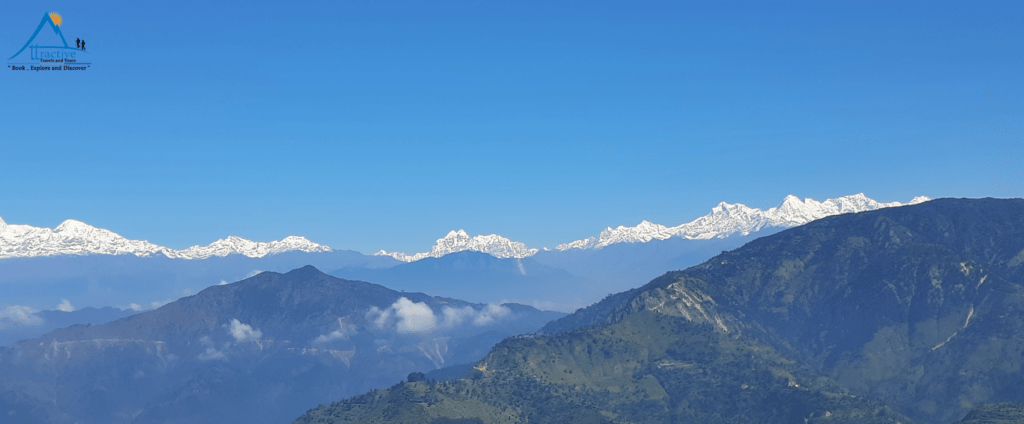
Nagarkot lies in the Bagmati province of the Bhaktapur district of Nepal. It is about 32 km from the Kathmandu valley and is 2195 meters above sea level. Nagarkot is famous for its stunning panoramic views of the Himalayan range, where eight snow-capped Himalayan ranges of Nepal out of 13 can be viewed. The mountain range includes the Ganesh Himal range, Rolwaling range, Annapurna range, Manaslu range, Jugal range, Mahalangur range (Everest range), Langtang range, and Numbur range.

In addition, it is also known for its peaceful and serene atmosphere. Tourists come to Nagarkot to enjoy recreational activities like hiking, seeing scenic views, and viewing sunrise and sunset. Lush forests and high and low hills surround Nagarkot.

Changunarayan Overview

Changunarayan is another district located in the Bhaktapur district. It is mainly known for the mixed culture in one society and rich cultural heritage. There is a calm and relaxed atmosphere, as it is far from the city. Some people also call Changu for Changunarayan in short form.

The one thing that comes to every people’s mind when they hear about Changunarayan is the Changunarayan Temple. Changu Narayan is the oldest Hindu temple dedicated to Lord Vishnu, the god of Preservation. It was built during the Lichchhavi period in the 4th century. Ancient carvings, sculptures, and the unique architectural style of the temple make it among the most popular temples in the world. It is also listed as World Heritage Site.

Nagarkot Changunarayan Hiking Overview

The Nagarkot Changunarayan day hike is the most popular recreational activity for locals and foreigners. Nagarkot Changunarayan hiking is a one-day program that begins in the morning and ends in the evening. One can start this journey either from Kathmandu to Nagarkot or from Kathmandu to Changunarayan. While choosing the journey from Kathmandu to Changunarayan, the journey starts with a drive from Kathmandu to Changu Narayan Temple. The actual hiking journey begins upon reaching the Changu Narayan temple. While choosing this path, people can enjoy sunset views from the top of Nagarkot.

mountain-view-from-nagarkot-changunarayan-hiking

Likewise, in the second option, i.e., from Kathmandu to Nagarkot, the journey starts with a drive from Kathmandu to Nagarkot village. The ending destination in this path is the Changunarayan village. In addition, people can enjoy stunning sunrise views while taking this path. It’s best to start the journey in the early morning to not miss a great ray of sunrise from the top of the hill. It takes around 4 to 5 hours to reach Nagarkot from Changunarayan and vice versa by walking.

What we will see in Nagarkot Changunarayan Hiking

On this journey, we will feel like we are walking on the most beautiful land on the planet Earth with the presence of green terraced fields, dense forests, beautiful floras, and faunas, throughout the journey. We also blend in with the local people’s lifestyle and know about their livelihood. We will see local houses painted with locally found red mud and smoke from chimneys from burning firewood, above all giving the vibe of the countryside feeling. Along the way, we will see lambs and goat kids hopping around. They look so innocent that we can’t help but take pictures of them, carry them near our hearts, and put them on our laps. We, therefore, get an opportunity to learn about native culture & lifestyles in the first part of our hike. And close watch on varied flora and fauna in the second part.

Upon reaching the Nagarkot hilltop, we will see the panoramic view of the mountain range like Annapurna, Manaslu, Ganesh Himal, Langtang, etc., a complete view of beautiful Kathmandu valley, green hills, dense forest, and so on. The journey will be worth it.

However, the hiking routes aren’t that easy. We should walk on steep slopes and dense forests to reach our destination. There is a saying,” a difficult road leads to a beautiful destination.” The route to Nagarkot hill is challenging, but the result is fruitful. We will quickly forget all the suffering we endured during the trek after viewing the mesmerizing mountain ranges and the surreal view of the city from the hill. It’s the view that every people must see in their lifetime.

An Overview of Nagarkot Changunarayan’s Hiking Highlights

Nagarkot Changunarayan hiking is the best way to escape the busy city and get in touch with nature. Some of the highlights of the Nagarkot Changunarayan hiking are as follows:
Surreal panoramic view of the eight mountain peaks, for instance,  the Annapurna range, Manaslu range, Ganesh Himal range, Langtang range, Jugal range, Rolwaling range, Mahalangur range (Everest range), and Numbur range.

  1. An opportunity to meet local people along the way.
  2. An experience to view sunrise and sunset from the Nagarkot hilltop.
  3. View the whole Kathmandu valley from the top of Nagarkot.
  4. An ideal place to escape city chaos.

In conclusion,  Nagarkot Changunarayan Hiking is the best recreational activity everyone can enjoy.

natural-views-during-nagarkot-changunarayan-hiking

What Are the Things to Take With You During Hiking?

Our first step when planning a hike is to research the location. Once a destination has been chosen, it is time to learn more about the location’s details, such as its distance, vehicle routes, elevation, road trails, etc. After that, you must choose the equipment and tools you’ll need for your hike. During a hike, one must carry the following items:
Snacks to eat on the way.

  1. A suitable backpack.
  2. A water bottle.
  3. First-aid kit.
  4. Hiking shoes.
  5. Sun protection.
  6. Map/ Navigational tool.
  7. A headlamp that will be a light source when walking in the dark.
  8. Trekking poles (optional)
  9. Extra clothes
  10. Mini speaker (optional).

What Are the Things not to do during Nagarkot Changunarayan Hiking?

Following are some things that you must avoid doing during Nagarkot Changunarayan hiking:

  1. Avoid exploring on your own. Always walk in a group.
  2. Avoid leaving plastics and other litter behind.
  3. Don’t consume wild fruits if you’re not certain about them.
  4. Don’t play loud music because it may trigger wild animals.
  5. Don’t walk with headphones on. You must remain vigilant about your surroundings.
  6. Don’t neglect any health issues.

Optimal Time for Nagarkot Changunarayan Day Hiking

Nepal experiences five seasons in a year: the summer, the rainy, the spring, the autumn, and the winter. The summer season falls under March, April, and May, whereas the rainy season falls under June and July. Similarly, the spring season is in August and September, Autumn is in September, October, and November, and the Winter season is in December, January, and February.

While talking about the optimal time for the Nagarkot Changunarayan day hike, the best time will be during the spring because the climate is clear and the natural environment renews and restores at this time.  Similarly, the worst time will be during the rainy season, which falls in June and July, because the route will be slippery due to continuous rainfall, and it’s impossible to hike during rainfall.

FAQ

A. Is the Nagarkot Changunarayan day hike worth it?
Yes.  The Nagarkot Changunarayan day hike is a good idea. You will see various mountain ranges and a complete view of the city from the top hill of Nagarkot. Similarly, you will also see a sunset and sunrise from there.

B. How far is Nagarkot from Kathmandu?
The distance between Kathmandu and Nagarkot is 28 km.

C. How far is Changunarayan from Kathmandu?
Changunarayan is 19 km away from Kathmandu.

D. What to take with us for Nagarkot Changunarayan Hiking?
Some of the things that we must take Nagarkot Changunarayan day hike are listed below:

  1. Snacks to eat on the way.
  2. A suitable backpack.
  3. A water bottle.
  4. First-aid kit.
  5. Hiking shoes.
  6. Sun protection.
  7. Map/ Navigational tool.
  8. A headlamp that will be a light source when walking in the dark.
  9. Trekking poles (optional)
  10. Extra clothes
  11. Mini speaker (optional).

In conclusion,  Nagarkot Changunarayan Hiking is the best recreational activity everyone can enjoy. And we, Attractive Nepal, are always ready to help you plan your hiking spots.

search

Kathmandu Chitwan Tour: Things to Do

Nepal is a multireligious, multilingual, multiethnic, and multicultural country. Here, people of different castes, religions, ethnic groups, and languages live in different parts of the country. They celebrate different festivals in different months yearly and welcome people from other ethnic groups to join them happily. Join us in Kathmandu Chitwan Tour for an unforgetful journey through the culture and lifestyle of Nepal .

Not only this, Nepal is rich in natural resources as well. Nepal is home to six thousand big and small rivers, beautiful blue glaciers and lakes, dense forests, vegetation, flora and fauna, thousands of wildlife, etc. World’s highest mountain peak Mt. Everest (Sagarmatha), also lies in Nepal. Additionally, Lumbini, the birthplace of Gautam Buddha, is located in Nepal. Every year thousands of tourists from all over the world book their tickets to visit Nepal and see the natural beauty through their own eyes.

Kathmandu is renowned for its extensive cultural history, sacred sites, and distinctive architecture, which includes ancient temples, palaces, and stupas that represent the Hindu and Buddhist traditions of the city. Each year, a large number of tourists from all over the world come to Kathmandu, which serves as a main hub for hiking, sightseeing, and outdoor adventures in Nepal.

Similarly, Chitwan lies in the central-southern part of Nepal. Chitwan is renowned for its natural scenery, especially the Chitwan National Park, a UNESCO World Heritage Site home to various species, including the Bengal tiger and Asian one-horned rhinoceros. The Tharu people are native to the region and have a rich cultural legacy.
There are many places and things to do while you are on Kathmandu Chitwan tour, which are as follows:

Places to Visit in Kathmandu Tour

Kathmandu Tour

Boudhanath

The Boudhanath Stupa is the main Buddhist temple and pilgrimage site in the heart of Kathmandu, Nepal. The stupa is a UNESCO World Heritage Site and one of the biggest in the world. Since ancient times, the stupa has served as the epicenter of Tibetan culture and tradition and is regarded as a symbol of Tibetan Buddhism. It is an extremely popular tourist spot that draws the attention of Buddhists and non-Buddhists who come to observe its stunning architecture, illustrious cultural history, and spiritual significance.

Moreover, the atmosphere around the Boudhanath Stupa is also so calm that many travelers come here to relax. The Buddha mantra played in this area makes our soul spiritually pure. We can see many devotees praying in the morning and evening time. Similarly, there are many small shops around the stupa where travelers can buy small gifts and souvenirs to give to their loved ones in their hometown.

Swayambhunath

Swayambhunath lies northwest of Kathmandu valley. “Swayambhu” is a Sanskrit word that means “self-existent one.” Hindu temples and goddesses are incorporated into this Buddhist site, making the stupa a symbol of faith and harmony. Due to the large number of monkeys in the area, Swayambhunath is also known as Monkey Temple.

It is believed that Swayambhunath was built around 2000 years ago. A few of the significant sites to see in this region includes the enormous gold-plated Vajra “thunderbolt,” the Buddha statue on the west side of Swayambhu, the statue of the Sleeping Buddha, the Dewa Dharma Monastery, which is renowned for its bronze Buddha icon, and traditional Tibetan paintings are some of the significant landmarks to see in this area. Moreover, one can see the whole view of Kathmandu from the top of the Swayambhunath.

Kathmandu Durbar Square

Located in the heart of Kathmandu valley, Kathmandu Durbar Square is also called Hanuman Dhoka. It is an ancient religious site. It was once the palace of the Nepali royal family and administrators like the Malla and Shah dynasties, who governed the city for centuries until the 19th century. It is also listed as a World Heritage Site.
The Kathmandu Durbar Square is famous for its architecture and many ancient temples, shrines, and courtyards that exhibit Nepal’s rich cultural and historical legacy. The Kumari Temple, where the living goddess Kumari resides, is a major attraction at this durbar square. This temple is regarded as one of Nepal’s holiest places. Both residents and tourists from the area pay tribute to the goddess at the temple.

Similarly, Hanuman Dhoka Palace, Taleju Temple, Jagannath Temple, Kal Bhairav Temple, and other well-known buildings can be found at Kathmandu Durbar Square. The square’s tallest building is the Taleju Temple. The square is also bounded by bustling bazaars and street sellers selling local items and food, making it the center of a local market.

Pashupatinath

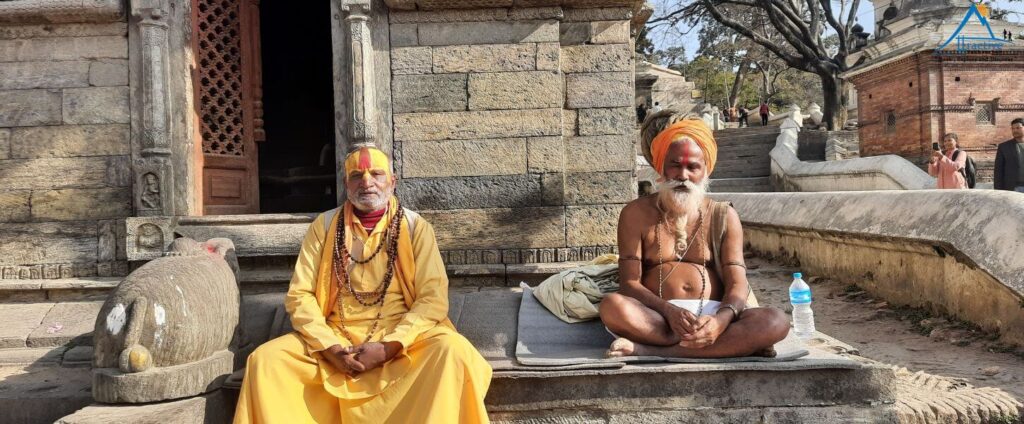
The Pashupatinath Temple is a sacred Hindu pilgrimage site situated on the banks of the Bagmati River in Kathmandu. The temple, which is supposed to have been constructed in the fifth century, has undergone numerous restorations and adjustments. It is devoted to Lord Pashupatinath, who is considered Hinduism’s ultimate creator and the supreme lord of all beings. Pashupatinath is regarded as the savior of the universe and the guardian god of the Nepali people in the Hindu religion.

The temple is one of Hinduism’s holiest places and one of the four main pilgrimage destinations for Hindus. Many Hindu pilgrims travel to Nepal to visit the temple. While international visitors are drawn to the miniature temples, statues of numerous gods and goddesses inside the shrine, and the unique rituals and ceremonies held there, Nepali and Hindu devotees are drawn to the temple for religious reasons. One of the things that you shouldn’t miss while you visit Kathmandu is seeing Sandhya Arati in Pashupatinath.

Places to Visit in Chitwan Tour

Chitwan Tour

Chitwan National Park

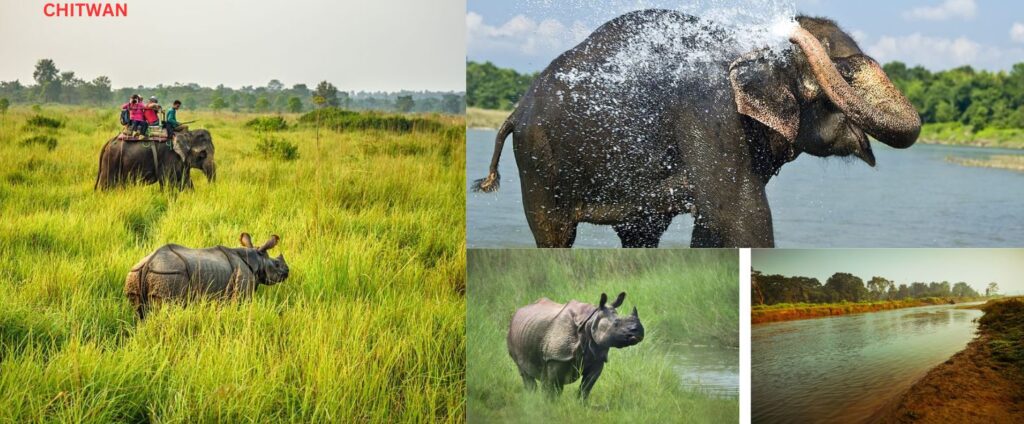
One of the prominent places one shouldn’t miss while in Chitwan is the tour of the Chitwan National Park. Chitwan National Park is listed as UNESCO World Heritage Site. Different species of deer, monkeys, Asian elephants, sloth bears, Bengal tigers, rhinoceroses, and other wildfires are found inside the park. The lush tropical forest that supports a variety of flora, animals, and bird species is one of the attractions of Chitwan National Park.

The activities that visitors shouldn’t miss inside the national park include elephant rides, elephant bathing, bird watching, jeep safaris, and forest walks. Similarly, tourists may get a closer look at the park’s fauna and scenic beauty from the park’s river. The park also offers a special chance to see the Tharu people’s culture and way of life.

Devghat

Devghat, a Hindu pilgrimage site in the Chitwan district of Nepal, is considered one of Nepal’s most sacred places. It is situated at the place where Trishuli and Kali Gandaki rivers meet. It is covered with hills and forests and is known for its breathtaking beauty.

Several devotees go to Devghat to bathe in the river because they think it will wash their sins away. There are also several Hindu temples nearby that draw tourists. Devghat is a religious center for the Hindu religion and culture in Nepal, and it attracts large numbers of pilgrims and tourists throughout the year.

Things to Do in Kathmandu – Chitwan Tour

Eating local foods

One of the major things visitors shouldn’t miss while they are in Kathmandu and Chitwan is eating local foods. Being an agricultural country, the primary sources of Nepalese foods are fresh fruits, vegetables, meats, and grains like rice, wheat, corn, and lentils.

Visitors must try foods like Ghonghi, Taas, Dhikri with Sidra, Patushni, Newari khaja set, etc., while in Chitwan. Similarly, foods like Thakali khana set, Momo, Newari khaja set, Sekuwa, Aloo chop, etc., are popular in Kathmandu.

Roaming around the Thamel neighborhood

Thamel is a neighborhood in Kathmandu, Nepal, known for its bustling streets and vibrant atmosphere. It is a popular tourist destination and is considered the hub of tourism in the city. It is the best place to experience Nepal’s unique culture and beauty. Bars and restaurants in the area also stay open late at night, giving the area a vibrant nightlife.

Thamel is a maze of side streets filled with wonderful stalls selling everything like wooden crafts, musical Instruments, pottery, jewelry, stone carving, paintings, etc. It is better to walk around the Thamel neighborhood during the nighttime.

Hiking

Another rejuvenating activity that one can do in Kathmandu and Chitwan is hiking. Kathmandu is located in Nepal’s hilly region. Hence, there are many hiking trails in Kathmandu that offer splendid views of the city from the top of the hiking trails.

The hiking list in Kathmandu includes Nagarkot hiking, Shivapuri hiking, Kakani hiking, Chandragiri hiking, Chisapani hiking, Namo Buddha hiking, etc. On a clear day, the Chandragiri hike provides a panoramic view of Mount Everest. Likewise, the popular destination to walk around Chitwan is inside the Chitwan National Park. 

FAQ on Kathmandu – Chitwan Tour

Q: What are the things we shouldn’t miss on Kathmandu Chitwan tours?
While we are on Kathmandu and Chitwan tours, we shouldn’t miss visiting famous places like Pashupatinath, Swayambhunath, Boudhanath, Chitwan National park, and others places. Similarly, we should try local foods, go hiking, and experience local culture.

Q: Is Pashupatinath temple in Kathmandu?
Yes, Pashupatinath temple is in Kathmandu.

Q: What are the famous places in Kathmandu?
The famous places in Kathmandu are Pashupatinath temple, Swayambhunath, Boudhanath Stupa, Kathmandu Durbar Square, Bhaktapur Durbar Square, etc.

search

Trekking Mardi Himal: Things To Know

The Mardi Himal Trek is a beautiful and less crowded trek in the Annapurna region of Nepal. Trekking Mardi Himal offers stunning views of the Himalayas, including Mount Annapurna, Mount Machhapuchhre (Fishtail), and Mount Hiunchuli.

The trek takes you through forests, terraced fields, and traditional villages, providing an opportunity to experience the culture and lifestyle of the local people.

Despite the popularity of the trip to Annapurna Base Camp, interest in the less well-known Mardi Himal Base Camp Trek has recently increased. If the length of the Annapurna Trek is too much for you, the Mardi Himal Trek is a great alternative.

On the Mardi Himal Trek, you will travel 42 kilometers over the course of 4 days. You can participate in it without any prior climbing experience, and if you have altitude sickness while on the Trek, you can quickly descend to a lower height.

Here’s everything you need to know about the trekking Mardi Himal:

Important Facts:

Location: Trekking Mardi Himal begins at the village of Phedi, which is close to Pokhara, and is situated in Nepal’s Annapurna region.
Starting Point: Kande & Finishing Point: Siding.

Trek Length: Depending on your schedule and pace, the trek lasts between 10 and 12 days. Distance: 42 KMs.

Difficulty Level: The Mardi Himal Hike is regarded as a moderately difficult to tough trek. To complete this walk, you must be in good physical shape and have previous trekking experience. Highest Elevation:4500m at Mardi Himal Base Camp.

Altitude Sickness: On high-altitude hikes like the Mardi Himal Trek, altitude sickness is prevalent. It’s crucial to adjust appropriately and to keep an eye on your symptoms. It is preferable to descend as soon as you begin to feel uncomfortable.

Views during Mardi Himal Trek

Accommodation: During the walk, lodging is typically provided in tea houses or lodges. The tea houses provide the bare necessities, including food, lodging, and restrooms.

Fees and Permits: Annapurna Conservation Area Permit (ACAP), Trekkers Information Management Centre Card (TMIS).: To participate in the Mardi Himal Trek, you must have a TIMS card and an Annapurna Conservation Area permit. It is important to confirm the most recent information with a local tour operator or the Nepal Tourism Board, as the costs for these permits are subject to change.

Best Time Of The Year For Trek: September through November and March through May are the best months to go on the trekking Mardi Himal. While the monsoon season (June to August) might be wet and slick, winter can be very cold and snowy.

Guides and Porters: Using a guide or porter is often preferred by hikers on the Mardi Himal Trek, while it is feasible to go unaided. This can improve the trek’s comfort and help guarantee a fun and safe journey.

In conclusion, the Mardi Himal Journey is a great trek for anybody looking for an adventure in the Himalayas away from the usual path. The Mardi Himal Trek is a must-visit location for hikers and environment enthusiasts because of its magnificent scenery, vibrant culture, and welcoming residents.

Best Time for Mardi Himal Trek

Considering the weather conditions, April and October are to be preferred for trekking in Nepal. But if you are looking to avoid crowds, it is good to choose March or November. However, the weather conditions may not be ideal in these months, and snow might ruin your Trek.

Annapurna himal view during Mardi Himal Trek

May to September is the monsoon season and the route gets very muddy, whereas, between December to February, the cold is unbearable due to the winter.

What To Pack For Mardi Trek?

When deciding what to carry, you should remember that we are going for a trek and not mountain climbing. Leave your ropes and shackles behind and get everything mentioned on the following list:

  1. Hiking Boots
  2. Hiking Socks
  3. Inner Socks
  4. Trekking Poles
  5. Thermal Baselayer
  6. Fleece Pullover or Jacket
  7. Waterproof Jacket
  8. Hiking Shorts
  9. Hiking Pants
  10. Waterproof Pants
  11. Lightweight Thermal Tops
  12. Rucksack with Rain Cove Daypack
  13. Sandals or Shoes
  14. T-shirts

How Do I Prepare For The Trek?

The Mardi Himal Trek is not extremely difficult as it is shorter, and the route encompasses destinations of lower elevations. The best way to prepare for the Trek is by starting to walk two times a day for sixty minutes so that you get the hang of walking. After you do it for about three weeks, you can then start to trek carrying a backpack of 10 – 15 kgs. These activities will condition you so that you become fit for the Mardi Himal Trek.

How is Trekking Mardi Himal Different?

What differentiates Mardi Himal Trek is that it offers you peculiar views of the unexposed sides of the Annapurna Massif. This trek route started to attract more traffic only in 2011. It was also when various teahouses started to pop up on the route. The final destination of the Trek is the Mardi Himal Base Camp, situated at an elevation of 4500m.

Things You Should Not Do During the Trek

1. Trekking Solo:

Never go on a trek all alone. In case of accidents or emergencies, you will have no one to help. Moreover, without a reliable guide, you might get lost and reach nowhere. Instead, make sure you book your trekking trip with a government-registered agency. They will not only arrange all of your lodging, meals, transportation, guides, and porters but will also take care of all of your travel needs in a professional manner. This will help you enjoy the trip without having to be anxious about anything else.

2. Neglecting Acclimatization:

Especially for people living at sea level, the high altitude may not feel comfortable. Some may find it hard to breathe at high altitudes due to the lack of oxygen present in the atmosphere. Hence we advise you to trek at a slow pace and carry the necessary medications. If required you should descend to lower elevations.

3. Drinking Tap Water:

Even if you see locals drinking from local tap water, you should not follow suit. The tap water may be contaminated and may not be drinkable. Instead, you should carry a mineral water bottle, a UV-ray water filter, or chlorine tabs with you or get boiled water from a nearby hotel or restaurant.

4. Taking Photographs in Prohibited Areas:

Ask your guide whether it is allowed to take pictures in the area you are in. Some temples and monasteries don’t allow you to use your camera. Taking pictures in a prohibited area may land you in trouble.

Insurance for Trekking Mardi Himal

Snowy Mardi Himal

Having travel insurance is mandatory because you will be trekking in altitudes above 3000m. You must ensure in your home country before traveling to Nepal and beginning your Trek. Please bring a copy of your insurance, and your insurance policy must cover medical expenses, helicopter evacuation, and other health-related expenses.

Conclusion for Trekking Mardi Himal:

To conclude, the Mardi Himal Trek will take you off the beaten track. This Trek will give you a chance to experience unexposed and unspoiled parts of the Annapurna region. The area is comparatively less crowded. You will also experience natural and cultural diversity.

Mardi Himal Trek is a cultural melting point of two world religions, Hinduism and Buddhism. The Mardi Himal Trekking journey ascends from lower land to higher elevation, providing mystical mountain scenery of Mt. Dhaulagiri (8,167m), Machhapuchhare (6,993m), Mt. Hiunchuli (6,441m), and Annapurna South (7,010m).

The Mardi Himal Trek begins in Pokhara, a very beautiful city and tourist hub, and then ascends towards Phedi to Dhampus, one of the world’s paradises. This Trek allows us to experience rural life away from the hustle and bustle of city life, making the trip both enjoyable and memorable.

The trekking takes place in traditional villages such as Phedi, Pothana, Landruk, and Sidhing, each with its own culture and identity. There are only a few tea houses and lodges along the route that offer basic facilities and provisions; however, the hospitality, cuisine, and rooms are sophisticated, appetizing, and well-attuned.

Also Read: Mardi Himal Trek

FAQ Trekking Mardi Himal

Q: Is trekking Mardi Himal challenging?
The Mardi Himal walk can be described as difficult because it demands traversing steep, rocky terrain while climbing at a high altitude. Be prepared for the physically challenging conditions because the walk takes you through rural places with few amenities and services.

Hikers should be prepared for rapid fluctuations in temperature and precipitation because the weather can be unpredictable.

Nevertheless, the walk is well worth the effort due to the stunning scenery and the opportunity to see the local cultures. If your physical condition is good and you’ve done some trekking before, you should be able to finish the walk. But you should always pay attention to your body and alter your pace as necessary.

Q: When is the best time to travel in the Mardi Himal area?
The months of September through November and March through May are ideal for travel to the Mardi Himal region. These months provide clear skies, comfortable temperatures, and ideal hiking terrain. You can anticipate clear vistas of the Himalayas during these months and fewer tourists on the treks.

The Mardi Himal region can experience extremely cold and snowy weather from December through February, which makes trekking challenging. The region is prone to heavy rain during the monsoon season (June to August), making the routes slick and raising the risk of landslides.

Therefore, it is advised to schedule your trip during the prime trekking season, which is from September to November and from March to May, if you want to experience the most of the Mardi Himal Trek.

search

Top 5 Places to Visit in Bhutan

Overview of Bhutan

Bhutan, a small, landlocked country in Asia between China and India, is often known as the “land of the dragon.” It lies between Sikkim in the west, West Bengal in the south, and Assam in the east. It also shares borders with China’s Tibet Autonomous Region in the north. There are a lot of places to visit in Bhutan.

Bhutan is smaller than Switzerland and around half the size of the US state of Indiana, with a total area of 38,394 square kilometers. Bhutan’s flag is distinctive compared to other nations’ flags. The yellow portion of the national flag represents action and the king’s secular authority, while the orange lower part symbolizes the spiritual strength of Buddhism.

Similarly, the country is named after the dragon present on the flag. The white color represents purity. The dragon is holding gems in his claws representing the nation’s prosperity.

Bhutan : The Country of Happiness

Bhutan is best known for emphasizing Gross National Happiness (GNH) over Gross Domestic Product (GDP). In 1972, King Jigme Singye Wangchuck introduced the concept of Gross National Happiness. According to him, it is more important to achieve gross national happiness than to attain gross domestic product.

GNH is measured based on four factors: good governance, sustainable socio-economic development, cultural preservation, and environmental conservation. Regarding Bhutan’s geographical features, Bhutan’s terrain is primarily mountainous, with some fertile valleys and savanna, which offers many places to visit in Bhutan.

The geographical distribution of Bhutan consists of three regions: the Great Himalayas, the Lesser Himalayas, and the Duars Plain. Likewise, hospitality and food are the main attractions of this country. Every restaurant and home serves dishes made from red rice, butter, buckwheat, chilies, and cheese made from yak or cow milk.

The preferred vegetable of the country is chili, which comes in all possible varieties and forms (red or green, dried, in pastes or sambals). Bhutan is a cultural diversity country where people of different castes reside in different parts of the country. Bhutanese speak nineteen different languages, including English. Most Bhutanese schools teach in the English language. It is best to visit Bhutan during the spring and winter seasons.

From March to June, it is possible to see a full flowering of jacaranda and rhododendron trees in the springtime. Similarly, during winter, from October to December, a clear sky with little to no rain makes it possible for visitors to enjoy unobstructed views of the snow-capped Himalayan range that borders Bhutan.

List of Top Five Places to Visit in Bhutan

Below we have listed some of the top places to visit in Bhutan. We have explained in detail the places and why they are on the top list of places to visit in Bhutan.

1. Tiger’s Nest or Taktsang Monastery

Tiger's Nest or Taktsang Monastery

Tiger Nest, also known as Paro Takstang, is the most popular location for hiking and capturing the beauty of nature. It is set on a steep cliffside, 3120 meters above sea level and 900 meters off the earth, and it is an amazing, wonderful, and stunning place. Even those on the fastest tours of Bhutan manage to make it to this location, which makes it extraordinary.

Without question, visiting Bhutan for the first time would be incomplete without witnessing the Tiger’s Nest. On a Himalayan cliff, a small group of structures known as the Tiger’s Nest Monastery is present, which is a holy place for Buddhists. And one of Bhutan’s most stunning locations is this perched temple. This monastery has a lengthy history.

It was constructed somewhere in the year 1962 AD. Gyalse Tenzin Rabgye built the innovative temple, which went on to become the national symbol of Bhutan. Guru Padmasambhava meditated in Taktsang Senge Samdup cave for three years, three months, three weeks, and three days where Paro Taktsang was later built.

The optimum times to go to the tiger’s nest are in the summer (June to August), winter (December to May), and monsoon seasons (September to November).

2. Punakha Dzong

Punakha Dzong

Punakha Dzong is also called Pungtang Dewa Chhenbi Phodrang. The meaning of Pungtang Dewa Chhenbi Phodrang is the palace of great happiness or bliss. It serves as Punakha District’s administrative hub in Punakha, Bhutan. Ngawang Namgyal built the dzong in 1637–1638.

It is one of Bhutan’s most beautiful buildings and the country’s second-oldest and largest dzong. It is a six-story building with a central tower situated at an average elevation of 1200 meters (3900 feet) against a beautiful mountain backdrop. Compacted soil and stones were used to construct the building, while wood was used to construct the Dzong’s doors and windows.

The Dzong is 180 meters long, 72 meters wide, and has three courtyards. Punakha Dzong is perhaps the most stunning dzong in the nation, particularly in the spring when the deep purple jacaranda trees bloom flowers and add a rich beauty to the dzong’s distinctively tall white walls. Additionally, every year in either February or March, the dzong hosts the Dromche Festival, also known as the Punakha Festival Dromche Festival.

It is a thrilling experience for all viewers because it features some outstanding exhibits from Buddhist teachings and Bhutanese history. Travelers who arrange a trip to Punakha during Dromche will thus have the opportunity to experience both the stunning dzong and the rich cultural heritage of Bhutan.

The best time to visit Punakha Dzong is between October to April and May to June. It is not possible to visit Punakha Dzong on Sundays. It’s open to visitors from 11-1 PM and 2-4 PM on Saturday and from 9 AM to 5 PM from Monday through Friday.

3. Paro

Paro valley with river

One of the most populated regions in Bhutan and the most popular travel destination in this nation is the Paro valley. Verdant natural surroundings and rice fields surround it in all directions. Paro is also known as the Rice Bowl of Bhutan. There are as many as 155 temples and monasteries in this place, all of which carry ancient values and beliefs.
Furthermore, the only international airport in the nation is at Paro. This place is for you if you like to learn about the local culture while traveling. Paro is also home to Bhutan’s national monument. There are amazing things on every street in Paro.

On every street corner, we can smell the regional specialties, which makes us more hungry. On the street, local sellers regularly sell dishes made with cheese, red rice, butter, buckwheat, and other local and foreign ingredients. Ema Datshi, a dish created with cheese and chilies, is among the most popular dishes in Bhutan.

Additionally, there are a lot of small shops where we may buy souvenirs. Several activities in Paro, Bhutan, can transform your trip into an immersive cultural experience. It’s also a fantastic location for hikers as there are many areas to explore for day walks, like hiking to Drakarpo, Dzongdrakha, Taktsang Monastery, and other nearby monasteries.

4. Thimphu

Thimphu valley places to visit in bhutan

Thimphu, the capital city of Bhutan, is situated in the west-central region of the country. It is also the biggest city in Bhutan. There is no direct flight to Paro, but it is only an hour’s drive from Paro. Although Thimphu is regarded as the nation’s most vibrant city, much traditional Bhutanese art, architecture, and culture are still alive and well there.

In addition, the only national capital city in the world without traffic lights is Thimphu. Throughout Thimphu and Bhutan, people wear only their traditional dress code. Talking about the weather of Thimphu, Thimphu experiences damp and humid summers and an extremely chilly, dry winter season.

The best periods to visit Thimphu are from March to May and from the middle of September until the end of October. While in Thimphu, you can visit various locations, including the Tashichhoe Dzong, the Golf Course, the National Library, the Memorial Chorten, and Dechencholing Palace.

5. DochuLa Pass

DochuLa Pass palces to visit in Bhutan

Bhutan’s Dochula Pass, which connects Thimphu and Punakha, is a stunning mountain pass. It is roughly 20 kilometres from Thimphu, Bhutan’s capital. It is a historical site constructed to recognize the heroism and sacrifices made by the fourth king and the soldiers who died in the 2003 conflict with Assamese rebels.

This pass is famous among travellers because it provides a breathtaking 360-degree panorama of the Himalayan mountain range. Typically, the weather at the pass is cool and misty. However, one can witness a stunning view of the Bhutan Himalayas between October and February. All year round, the Dochula Pass is stunning.

You could occasionally experience snowfall at Dochula Pass and snap the gorgeous mountain spectacularly coated in snow. We at Attractive Travel Nepal will be honored to help you with the various tour services of Bhutan that we provide, as there are many indescribably beautiful places to visit in Bhutan.

Also Read: Bhutan Cultural Tour and Nepal and Bhutan Tour

FAQ on Places to Visit in Bhutan

Q: Is Bhutan a safe place to visit?
One doesn’t need to worry about visiting Bhutan because it is one of the safest countries with very low crime rates.

Q: How can we go to Bhutan?
We can go to Bhutan by airway. There is only one international airport in Bhutan which is Paro International Airport. The total flight duration from Kathmandu, Nepal, to Bhutan is about 1 hour.

Q: What is the best time to visit Bhutan?
It is best to visit Bhutan during the spring and winter seasons. From March to June, it is possible to see a full flowering of jacaranda and rhododendron trees in the springtime. Similarly, during winter, from October to December, a clear sky with little to no rain makes it possible for visitors to enjoy unobstructed views of the snow-capped Himalayan range that borders Bhutan.

search

Sagarmatha National Park: UNESCO World Heritage Site

Overview of Sagarmatha National Park

The word “Sagarmatha” is a Nepali word that is made up of two words “Sagar” and “matha.” “Sagar” means sky, while “matha” means head. Hence, Sagarmatha means the forehead of the sky. The Sagarmatha National Park is one of Nepal’s ten UNESCO world heritage sites.

The National Park is located in the Solukhumbu district, the northeastern part of Nepal, and covers an area of 1,148 square kilometers or 443 square miles. The park is bordered by the Qomolangma National Nature Preserve of Tibet Autonomous Region in the north, while in the south, it is bordered by the Dudh Koshi River.

The National Park is an excellent example of exceptional natural beauty surrounded by majestic peaks and glaciers, including Mount Everest, the world’s highest peak. The significant glaciers inside the park are Khumbu, Imja, Ngozumpa, and Nangpa. Several rare animals live in the park, such as snow leopards and red pandas. Similarly, it is also home to some of the richest biospheres in the world, with an intricate blend of Sherpa culture and the most ecologically significant flora and fauna.

In the same way, we can do various refreshing activities there, like sightseeing, hiking, camping in Gokyo Lake, trekking up to the highest point monastery at Mt. Taboche, chilling at Dudh Koshi River, and so on. We also get the opportunity to learn about the culture and traditions of the Sherpas.

When Was Sagarmatha National Park Established?

The plan to establish the National Park was formally declared at the third international WWF congress held in Bonn, Germany, in 1973. Following that declaration, Sagarmatha National Park was finally established on 19th July 1976. Likewise, it was declared one of the world’s heritage sites in 1979 as Nepal’s first UNESCO world heritage.

The National Park is situated in the Solukhumbu district in the country’s northeastern region and occupies a total area of 1148 square kilometers. The park protects the rich Sherpa culture, Everest Ecosystem, and endangered species. The area also has a buffer zone declared on 1st January 2002. The buffer zone encompasses a total area of 275 square kilometers, including inside human settlements and the park’s surrounding territory.

What Are the Things To Do in Sagarmatha National Park?

This park offers a wide range of activities and adventures. Below are a few of the things we can do in the national park:

Everest himal trek at Sagarmatha National Park

1. Hiking:

Hiking is considered one of the most popular activities inside the Sagarmatha National Park. It is popular among both locals as well tourists. All treks into this park begin with Lukla town. Throughout the trek, one can enjoy mesmerizing natural beauty from the rocky, hilly slopes to the breathtaking views of Himalayan peaks, mountains, and valleys. Travelers can travel on most trails independently, but traveling with a local Sherpa is preferable and more efficient.

2. Trekking:

Another thrilling activity at Sagarmatha National Park is trekking. The treks to Mount Taboche, the Everest Base Camp, and the monasteries are the main trekking activities inside this national park.

3. Camping:

It’s a great idea to camp along the shores of the stunning Gokyo lake if you enjoy excitement and adventure. Gokyo Lake is 4,700–5,000 meters (15,400–16,400 feet) above sea level. Take camping to a new level by pulling the tent from the bag and setting it up under the stars. It is a once-in-a-lifetime chance to view the tallest mountain in the world, Mount Everest, from Gokyo Lake.

4. Sightseeing:

Traveling to Sagarmatha National Park is all about sightseeing. One will see magnificent hills, sloping terrain, wild vegetation, glimpses of the tallest mountains, glaciers, lakes, and more. Take photos of those stunning views and feel the beauty of the surrounding area.

5. Chilling

One of the most extraordinary things to do in the National Park is to spend quality time on the shores of the swift-flowing river, Dudh Koshi river, and feel relaxed. Forget all your worries, as the water in the river flows. Numerous suspension bridges cross the river, and they all provide breathtaking stunning views.

Everest himal trek at Sagarmatha National Park

6. Getting Familiar with Local People:

Nepal is a multi-cultural, multi-ethnic, multi-lingual, and multi-religious country. People with different cultures, religions, traditions, and languages live in different parts of Nepal. In the same way, Sherpas live in Sagarmatha National Park. Sherpas are of Tibetan origin and have Tibetan influence. They celebrate festivals like Dumji, Mani Rimdu, and Losar. Local people are amiable and always smile friendly. We will learn about new cultures and traditions.

Places to Visit in Sagarmatha National Park

Here are a few of the places to visit in the National Park:

  1. Gokyo Lakes
  2. Beautiful monasteries
  3. Local area
  4. Dudh Koshi River

How to Reach Sagarmatha National Park?

Sagarmatha National Park, situated in the Solukhumbu area, is roughly 135 kilometers from Kathmandu. Getting to the park is a difficult job that requires a significant amount of hiking. Continue reading to learn more about how to reach Sagarmatha National Park quickly and easily.

Sagarmatha National Park By Air

The Tenzing-Hillary Airport in the Lukla area is the nearest airport to Sagarmatha National Park. The only international airport in Nepal is in Kathmandu, where visitors arriving from abroad must first arrive. There are frequent flights from the domestic terminal of Tribhuvan International Airport in the capital to the terminal in Lukla; the journey takes about 25 minutes. The remaining distance to Sagarmatha can be traveled in two days of hiking from Lukla.

Sagarmatha National Park By Road

There are no straight road routes into Sagarmatha National Park. The most convenient alternative is to take a bus from Kathmandu to Jiri, a village about 100 kilometers from the park. A 10-day journey from Jiri will get you to Sagarmatha.

Where to Stay at Sagarmatha National Park?

You don’t need to worry about finding a place to stay at the National Park. The following are some of the lodging alternatives available in the National Park:

Everest himal trek at Sagarmatha National Park

Guesthouses and Hotels:

At the National Park, many guesthouses and hotels provide accommodations for locals and foreigners. However, all guesthouses aren’t fully-equipped since the area lies in the Himalayan region of Nepal, where all the facilities have still not been reached. Only a few homestays and lodges provide convenient lodging with basic comforts.

Camping:

Camping is for adventurous people. One can bring their camping gear inside their bag and set up their accommodations wherever they feel most comfortable inside the national park.

Best Time to Visit Sagarmatha National Park

The best time to explore theNational Park is during the autumn and spring, from October-November or March-June, respectively. During the autumn (October to November), the weather is transparent, so we can see brilliant views of the hills, mountains, and natural greenery through our naked eyes. Additionally, hiking around the scenery is delightful due to the mild temperature. Similarly, the environment is clean during the spring (March–June) when the monsoons have passed. The skies are clear, the landscapes seem cleansed and renewed, and beautiful views of the mountains and surroundings are revealed.

And the worst time to visit Sagarmatha is during the summer (July-September) and winter (December-February). The winter season experiences heavy snowfall, and the temperature is extremely low, usually below 0ºC.

Concluding

In the Nepalese Himalayas, a protected region called Sagarmatha National Park is home to several unusual and diverse plant and animal species. Due to the park’s outstanding natural beauty and cultural value, it was named a UNESCO World Heritage Site in 1979. The world’s tallest peak, Mount Everest, is also located in Sagarmatha and attracts tens of thousands of tourists and climbers each year. The park represents natural and cultural preservation and is a significant conservation area.

Frequently Asked Questions

Q: Where can I get Sagarmatha National Park to permit?
The Sagarmatha National Park entry permit is available at the park’s Monjo entrance and the Nepal Tourism Board in Kathmandu. A nearby trekking organization may also help you get the permit. For further information about the specific organization’s policies and regulations, it is preferable to contact them directly.

Q:How much is the entrance fee for Sagarmatha National Park?
Sagarmatha National Park charges 3,000 Nepalese Rupees (NPR) for foreign visitors and 1,500 NPR for SAARC citizens as entrance fees. It would be best to contact the appropriate authorities for any updates or changes to the cost.

Q: Where is Sagarmatha National Park situated?
Sagarmatha National Park is situated close to Mount Everest in Nepal’s Solu-Khumbu region.

Q: When was Sagarmatha National Park enlisted in World Heritage List?
Sagarmatha National Park was enlisted in World Heritage List in 1979, making it Nepal’s first UNESCO World Heritage.

Q: Which was the initial World Heritage Site in Nepal listed?
Sagarmatha National Park is Nepal’s first World Heritage Site.

Q: How to go to Sagarmatha National Park from Kathmandu?
You can reach the National Park in several ways from Kathmandu:

Flight: Flying from Kathmandu to Lukla and then walking into the National Park is the easiest method to get there.

Bus: Another choice is to take the longer but more scenic bus from Kathmandu to Jiri and then hike from there to the park.

Private Drive: You can also rent a private car from Kathmandu to Salleri, from where you can hike to the park.

Before starting the walk to Sagarmatha National Park, it is advised to adequately adapt to the high altitude, regardless of the method of transportation selected.

Q: Which animals are found in Sagarmatha National Park?
Sagarmatha National Park, located in Nepal, is home to several species of animals, including:

  1. Snow Leopard
  2. Himalayan Tahr
  3. Musk Deer
  4. Himalayan Black Bear
  5. Gray Wolf
  6. Eurasian Lynx
  7. Red Panda
  8. Langur monkeys
  9. Blood Pheasant
  10. Danphe (the national bird of Nepal)

These are just some of the notable species found in the park.

search

Chitwan National Park: UNESCO World Heritage Site

UNESCO has designated Chitwan National Park as a World Heritage Site (1984) located in the south-central part of Nepal. It was established in 1973 and covered an area of 932 square kilometres. The park is known for its diverse wildlife, including the Bengal tiger, one-horned rhinoceros, and the Asian elephant, as well as a wide variety of bird species. This is first National Park of Nepal.

The park is also home to the indigenous Tharu people, who have lived there for centuries. The Tharu people have unique culture, customs, and way of life and have played an integral role in conserving the park’s wildlife and ecosystem.

Chitwan National Park offers a wide range of activities, including jungle safaris, elephant rides, canoeing, and bird watching. The park is also a popular destination for trekking and hiking and offers the opportunity to experience the unique culture and way of life of the Tharu people. The park is also important for research and conservation efforts, with many scientists and conservationists studying the park’s wildlife and ecosystem.

Overview of Chitwan National Park

Chitwan National Park is a well-known popular tourist destination in Nepal and is known for its rich biodiversity and cultural heritage. The park is situated in the Terai region of Nepal, in the south-central part of the country, and covers an area of 932 square kilometres.

The national park is home to a wide variety of wildlife, including the Bengal tiger, one-horned rhinoceros, Asian elephant, leopard, sloth bear, crocodile, and over 500 species of birds. The park also has a diverse range of vegetation, including tropical and subtropical forests, grasslands, and wetlands.

Chitwan National Park is also home to the indigenous Tharu people, who have lived there for centuries. The Tharu people have unique culture, customs, and way of life and have played an integral role in conserving the park’s wildlife and ecosystem.

The national park offers visitors a wide range of activities, including jungle safaris, elephant rides, canoeing, and bird watching. Visitors can also go on guided nature walks and learn about the park’s plants and animals. The park also offers opportunities to experience the culture and tradition of the life of the Tharu people, such as visiting their traditional villages and participating in cultural activities. Chitwan National Park is also a popular destination for research and conservation efforts, with many scientists and conservationists studying the park’s wildlife and ecosystem.

History of Chitwan National Park

Chitwan National Park

Chitwan National Park has a long and rich history dating back centuries. The indigenous Tharu people have inhabited the area that is now the park for centuries, and they have played an important role in the conservation of the park’s wildlife and ecosystem. The Tharu people have unique culture, customs, and way of life, closely tied to the park’s natural resources.

The national park was established in 1973 and was declared the country’s first national park. Before this, the area was used primarily for hunting and logging. The park was established to protect the area’s unique wildlife and natural resources and provide a space for research and conservation efforts.

In 1984, Chitwan National Park was declared a UNESCO World Heritage Site, recognizing the park’s significant ecological, cultural and recreational values. The park is also part of the Chitwan-Annapurna Landscape, an important area for biodiversity conservation and sustainable development.

In recent years, the park has faced several challenges, such as the expansion of human settlements, poaching, and habitat destruction. Despite these challenges, the park has managed to maintain a relatively healthy population of Bengal tigers, one-horned rhinoceros, and Asian elephants and continues to be an important destination for conservation and research.

Activities of Chitwan’s National Park

The Chitwan National Park in Nepal offers a variety of activities for visitors, including:

  1. Jungle safari on elephant back or jeep
  2. Bird watching
  3. Canoeing and rafting on the Rapti River
  4. Elephant breeding centre visit
  5. Cultural tours to nearby villages
  6. Nature walks and hiking
  7. Tharu village tour
  8. Visit the crocodile breeding centre
  9. Jungle camping and jungle lodges stay
  10. Photography
  11. Jungle survival training
  12. Elephant safari and wildlife observation
  13. Traditional Tharu stick dance and cultural show
  14. Jeep safari, and many more activities related to nature, culture and adventure.

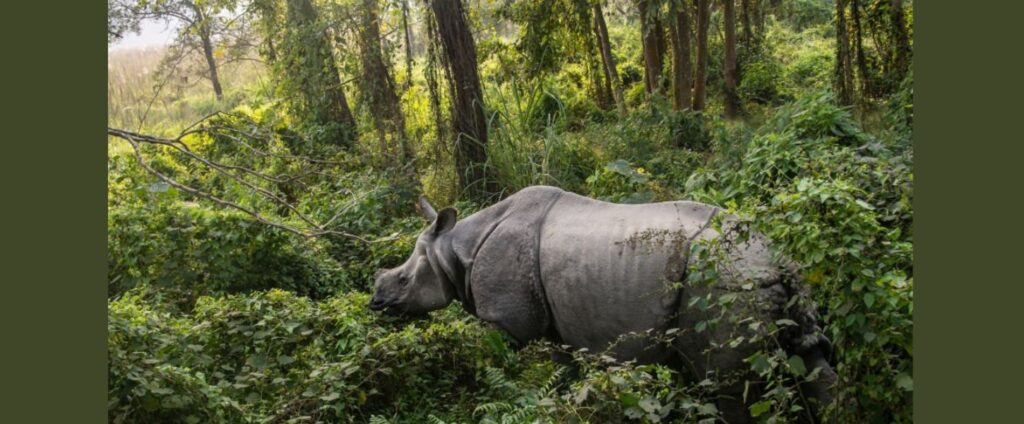
Rhino at Chitwan National Park

Here are some popular things to do in Chitwan National Park:

Jungle Safari: Take an elephant or jeep safari to explore the park’s rich wildlife and diverse ecosystems.

Bird Watching: Chitwan is home to over 500 species of birds, which makes it a paradise for birdwatchers.

Canoeing and Rafting: Explore the Rapti River by canoe or raft and spot crocodiles and other aquatic animals.

Cultural Tours: Visit nearby villages to learn about the local Tharu culture and traditional way of life.

Elephant Breeding Center Visit: Learn about the conservation of elephants and see baby elephants up close.

Nature Walks and Hiking: Take a guided nature walk or hike to explore the park’s diverse flora and fauna.

Jungle Camping: Experience camping in the heart of the jungle and spend a night in a traditional thatched roof hut.

Photography: Capture Chitwan’s beautiful landscapes, wildlife, and culture on camera.

Elephant Bath: Take a dip in the Rapti River with the elephants and get up close and personal with these gentle giants.

Cultural Show: Witness the traditional Tharu stick dance and cultural show performed by the local community.

Jeep safari: Explore the park in a jeep; this will give you a different perspective.

Wildlife Observation: Observe the park’s diverse wildlife, including tigers, rhinos, crocodiles, and many birds and mammals.

Where to Stay at The National Park

Chitwan National Park

There are several options for accommodations in the National Park, Nepal. These include:

  1. Jungle lodges and resorts: These are located inside the national park and offer a true jungle experience. These lodges offer elephant safaris, jungle walks, and bird watching.
  2. Guesthouses and hotels: These are located outside the national park and offer more budget-friendly options. They may also offer activities such as jungle safaris and cultural tours.
  3. Camping: For more adventurous travellers, camping is also an option in Chitwan National Park. Campsites are available inside the national park, and camping equipment can be rented or purchased in nearby towns.

Ultimately the best option depends on your preferences, budget and what activities you are looking to do.

UNESCO Chitwan National Park From Kathmandu: How to Get There

There are several ways to get to Chitwan National Park from Kathmandu, Nepal:

  1. Bus: You can take a bus from Kathmandu to the city of Sauraha, the main entrance to Chitwan National Park. The bus ride takes around 5-6 hours, and buses leave from Kathmandu’s Ratna Park Bus Station.
  2. Private car or taxi: You can also hire a personal car or taxi to take you to the National Park. This is a faster and more comfortable option, but it will be more expensive than taking a bus.
  3. Flight: There are several flights from Kathmandu to Bharatpur Airport near the park. From the airport, you can book a taxi or bus to Sauraha.
  4. Combination of flight and bus or car: This is another way to reach the National Park, a combination of a flight to Bharatpur airport and then a bus or car ride to the park.

It’s also worth noting that once you are in Chitwan, you will need to take a local bus or hire a jeep to reach the park entrance.

Tips for Your Visit at The National Park

Buffalo Chitwan National Park

Here are some important tips to help you make the most of your visit:

  1. Plan ahead: Research the park’s activities and facilities to ensure you’re prepared for your trip.
  2. Bring appropriate clothing: Chitwan National Park has a tropical climate, so bring light, breathable clothing and comfortable shoes for walking.
  3. Respect the wildlife: Chitwan National Park is home to many endangered species, so keep a safe distance from any animals you encounter. Do not try to feed or approach wild animals, and be mindful of the rules and regulations of the park.
  4. Take a guided tour: Guided tours are a great way to learn about the park’s wildlife and ecology, and they can also help you spot animals you might miss on your own.
  5. Be mindful of your impact: Remember to leave no trace and avoid littering in the park.
  6. Do not forget your sunscreen, insect repellent and a hat.
  7. Carry your camera and binoculars; you don’t want to miss capturing the beautiful moments.
  8. Book your stay in advance, as the park is quite popular and can be crowded.
  9. Travel with a local guide; they can give you a better insight into the culture and the people living nearby the park.
  10. Get your vaccines done, if required, to avoid any health issues.

Overall, this National Park offers a unique and diverse wildlife experience. By following these tips, you can enjoy the most of your visit and ensure a safe and enjoyable experience.

FAQ on UNESCO Chitwan National Park

Q: What animals can be found in Chitwan National Park?
A: Chitwan National Park is home to various wildlife, including the Bengal tiger, Indian rhinoceros, Asian elephant, sloth bear, gaur, and several species of deer and monkey. The park is a popular destination for birdwatching, with over 450 species of birds found within its boundaries.

Q: How can I visit Chitwan National Park?
A: Visitors can reach Chitwan National Park by bus or jeep from Kathmandu, Pokhara, or other nearby cities. The park can also be reached by air, with regular flights from Kathmandu to Bharatpur Airport. Once in the park, visitors can participate in various activities such as jungle safari, elephant rides, bird watching, and canoeing.

Q: When is the best season to visit Chitwan National Park?
A: The best time to visit Chitwan National Park is between September and November when the weather is dry and mild, and the animals are more active. However, the park can also be visited during other times of the year, depending on the visitor’s interests.

Q: Is it safe to visit UNESCO Chitwan National Park?
A: Chitwan National Park is considered safe for visitors. The park has well-trained staff and guides who are experienced in leading visitors on safari tours and have a good safety record. However, visitors should be aware that they are entering a wild area and should take the necessary precautions to stay safe, such as not wandering off on their own and following the instructions of the park staff.

search

Changu Narayan Temple: UNESCO World Heritage Site

The Changu Narayan Temple, one of the oldest temples, is almost 3000 years old and is thought to have been constructed in the Lichhavi Era, around the fourth century. The temple, located on a hilltop 4 kilometers north of Bhaktapur, used to be surrounded by a dense champak tree forest and the small community of Changu.

The Manohara river flows alongside the hill, located 12 kilometers east of the capital. The main shrine was built around 325 AD, and the temple was rebuilt in 1702 AD after a terrible fire.

An ancient Hindu temple named Changu Narayan is found in Nepal’s Changunarayan Municipality in the Bhaktapur District atop a tall hilltop, also known as Changu or Dolagiri. This hill is located a few miles north of Bhaktapur and roughly 7 miles (or 12 km) east of Kathmandu. The Hindu population holds great reverence for the Lord Vishnu-dedicated shrine.

According to legend, a monarch of Kashmir offered his daughter Champak to the prince of Bhaktapur for marriage. She is thought to have inspired the name of the temple. Apart from the main temple, several additional shrines are on the property dedicated to Gods and Goddesses such as Chinna Masta, Lord Ganesh, and Lord Krishna.

The temple is devoted to the Hindu deity Lord Vishnu. One of the earliest stone slabs, which belongs to the fifth century and has several inscriptions from the Lichhavi Era, is also found on the grounds of Changu Narayan.

Architecture of Changu Narayan Temple

The Changu Narayan Temple is situated above hills and is encircled by a Champak tree forest. In and near Changu Narayan are residents of the Brahman, Chhetri, Tamang, Newar, and other communities. With the growth of tourism in this area, there are numerous small and medium-sized hotels, restaurants, gift shops, etc. On the route to Changunaran, there is an old stone tap that is thought to have been there since the time of Lichhavi.

Changu Narayan Temple architecture

As far as temples go, Changu Narayan is the oldest in Nepal. Rich embossing artistry makes it a landmark in Nepali temple construction. The temple has a two-story roof supported by a tall stone plinth. Professor Madhan Rimal of the Sociology and Anthropology Department of Tribhuvan University claims that the temple is neither built in the Shikhara architecture nor the pagoda style. In terms of architectural design, he would characterize it as a traditional Nepali temple. At Gokarna Mahadev, you may find a lot of similar qualities. Lord Vishnu-themed statues and works of art surround the shrine.

In the main temple’s courtyard, we may also discover temples dedicated to Lord Shiva, Ashta Matrika, Chhinnamasta, Kileshwor, and Krishna. The temple features four doors, and on either side of each entrance are life-size pairs of various animals, including lions, sarabhas, griffins, and elephants. The struts that support the roof are decorated with carvings of Lord Vishnu’s eleven incarnations and other idols.

Naga carvings are gilded on the entrance door (snakes). At the top of a stone pillar on the main entry gate (i.e., the western entrance gate), we can see the Chakra, Sankha, Kamal, and Khadga. A Sanskrit inscription can be found on these stone pillars.

The stone inscription pillar was built in 464 AD by Licchavi (kingdom) King Manadeva and is regarded as the oldest inscription in Nepal.

History Behind Changu Narayan Temple

In the past, a Gwala, or cow herder, acquired a cow from Sudarshan, a Brahmin. The cow had a reputation for producing a lot of milk. Previously, the cow was taken to Changu by the cow herder for grazing. Changu was then covered with a grove of Champak trees.

Changu Narayan Temple sculptures

A boy used to visit the cow while it was grazing in the shade of a particular tree and sip the animal’s milk. When the cow herder started milking her in the evening and took her home, he only received a minimal amount of milk. This went on for a few days.

He became very discouraged and contacted the Brahmin, complaining that the cow wasn’t giving enough milk. Sudarshan concurred with the cow herder after seeing this with his own eyes. The cow was grazing in the forest the following day, and they watched her during the day.

Both the cow herder and the Brahmin crouched behind the tree. They were shocked when a young black boy emerged from the tree and began guzzling the cow’s milk. The youngster must be the devil, and the tree must be its residence, thought the two indignant men.

So the Champak tree was cut down by the Brahmin. His actions caused fresh human blood to spill out of the tree. Brahmin and the cow herder started to sob as they became terrified that they had done a serious offense. The Brahmin and Cowherd were told by Lord Vishnu, who had just emerged from the tree, that it was not their fault.

Vishnu narrated how, while out hunting in the forest, he had unintentionally killed Sudarshan’s father, committing a heinous crime. After that, cursed for the crime, he rode his mount, “Garuda,” around the globe before coming to rest on the hill at Changu. He lived there by stealing milk from cows and living in anonymity.

Vishnu was beheaded by a Brahmin when the tree was cut down, atoning for his crimes. After hearing these remarks from Lord Vishnu, a cow herder and a Brahmin decided to worship the location and built a tiny shrine in his honor. The location has been revered ever since. Even today, we still see the cow herder’s descendants as Ghutiyars and Sudarshan’s descendants serving as temple priests.

You may also like: Bhaktapur Durbar Square: UNESCO World Heritage Site

Monuments in Changu Narayan Temple

Changu Narayan Temple

Mandeva built a historical pillar in 464 AD.

Garuda: Lord Vishnu’s flying chariot, Garuda, has a human face and is devoted to Vishnu.

Chanda Narayan: A stone sculpture of Vishnu astride a Garuda from the seventh century is called Chanda Narayan (Garuda Narayan). The Nepal Rastra Bank’s 10-rupee paper note features a picture of this sculpture.

Vishnu, Laxmi, and Garuda are depicted on the stone sculpture Sridhar Vishnu, dating to the ninth century.

Vaikuntha Vishnu: It is a sculpture from the 16th century that depicts Vishnu reclining in the Lalitasan position on a six-armed Garuda with Laxmi seated on his lap.

Chhinnamasta: This temple is devoted to Chhinnamasta Devi, who sacrificed her life by beheading herself and giving her blood to feed Dakini and Varnini.

Kileshwor: A pair of little Lord Shiva temples with two stories, thought to have appeared here to guard the hill.

Hindus and Buddhists revere the shrine’s central image as Garuda Narayan and Hariharihari Vahan Lokeshwara, respectively. The priest can only see the image.

Vishworup: The moment from the Bhagwat Gita in which Lord Krishna unveils his universal form to his follower Arjun is depicted in the exquisitely carved stone sculpture known as Vishworup from the seventh century.

Vishnu Vikrant: It is a sculpture of Trivikram Vishnu from the seventh century that portrays the scene from the well-known Hindu narrative between Lord Vishnu and his beloved Bali Raja.

Narasimha: A sculpture of Narasimha, a manifestation of Lord Vishnu, from the seventh century depicts him slaying the demon King Hiranyakasyapa to save his devotee Prahalad.

Kileshwor: A pair of little Lord Shiva temples with two stories, thought to have appeared here to guard the hill.

Hindus and Buddhists revere the shrine’s central image as Garuda Narayan and Hariharihari Vahan Lokeshwara, respectively. The priest can only see the image. After entering the courtyard through the temple’s main entrance (the Eastern gate), you will find the following monument on the right side.

Conclusion

Changu Narayan Temple

The temple is a superb example of Nepali architecture, with ornate embossed wood and metal sculptures. The temple is a two-story structure with a high stone plinth. According to research by Professor Madan Rimal of the department of Sociology and Anthropology, the temple’s architecture is traditional to Nepal. It is similar to that of the Gokarna Mahadev temple. It is neither in the Shikara style nor the Pagoda style.

The temple features four doors, and on each side of each entrance, a life-size pair of animals, such as a lion, sarabha, griffin, or elephant, stands to watch. The 10 forms of Lord Vishnu and other wooden icons can be seen on the temple’s struts.

The temple grounds are lighted during celebrations like the Changu Narayan Jatra, Mahashanan, Haribodhimi Ekadashi, and particularly Nag Panchami.

FAQs

1. Is Changu Narayan World Heritage Site?
A world heritage site is the Changu Narayan Temple. Archeological, historical, and cultural significance can be found in the priceless stone sculpture and antiquated inscriptions.

2. What is Changu Narayan temple famous?
A two-story Lord Vishnu temple in the pagoda style called Changu Narayan is surrounded by age-old carvings and statues. It is said to be the oldest Hindu temple still in use in the Kathmandu Valley till today.

search

Lumbini : UNESCO World Heritage Site

Lumbini is the birthplace of the Gautama Buddha. It’s highly debated when exactly he was born, with estimates ranging from the 11th to the 6th century BC. One of the four holiest locations in Buddhism is the town of Lumbini, which is also the location of the Buddha’s birth, enlightenment, first lecture, and death. These all happened outside, in the wild.  Lumbini, UNESCO listed falls under one of the most visited site by tourist in our country Nepal.

Overview on Lumbini UNESCO Listed

Several stupas at the Kudan archaeological site were constructed to remember significant occasions that happened here with Buddha. The most important was meeting with his father, King Suddhodhana, seven years after attaining enlightenment. Rahula, his son, was ordained there when he was eight.

Additionally, a significant amount of archaeological work has been done in Devadaha, an ancient city located approximately 57 kilometers (35 miles) from Lumbini. Queen Mayadevi, the mother of Buddha, was on her way to her village when she decided to halt and give birth. Several monuments have been built in her honor, and many have since been found here.

Prince Siddhartha, who would later become Buddha, had only just begun his long journey in 623 BC. The religion that would bear his name had also only just begun. Therefore, it should be no surprise that Lumbini has become one of the most treasured locations for Buddhists worldwide.

For tourists, Lumbini is a very spiritual location, and the Sacred Garden that encircles the main Mayadevi Temple is where the peace of the site is most palpable. The garden’s trees are reflected in a sizable water feature that is supposed to be the same pond where Prince Siddhartha received his cleansing bath. Worshipers sit below in profound meditation as prayer flags dangle from the branches and gently wave in the breeze.

History of Lumbini UNESCO Listed

For centuries, the place was ignored. It was first rediscovered in 1895 by a German archaeologist. It is thought that a temple and a swimming pool date back to Buddha’s birth. According to an inscription on a pillar built by the Mauryan Emperor Asoka in 249 BC, the Lord Buddha was born there in the sacred region of Lumbini in the Terai plains of southern Nepal in 623 BC.

The remnants of Lumbini, one of the holiest sites of one of the world’s great faiths, provide significant information regarding the nature of Buddhist pilgrimage centres dating back to the third century BC.

Ashoka pillar Lumbini

The Shakya Tank, the brick constructions in the cross-wall system of the Maya Devi Temple, dating from the third century BC to the present, and the sandstone Ashoka pillar with its Pali inscription in Brahmi writing are all part of the complex of buildings inside the archaeological conservation area.

In addition, there exist the remains of Buddhist stupas (memorial shrines) that date from the third century BC to the fifteenth century AD, as well as the remains of Buddhist viharas (monasteries) that date from the third century BC to the fifth century AD. Archaeological relics connected to the birth of the Lord Buddha are a key component of the site’s development as a Buddhist pilgrimage centre.

Criterion (iii): As the site of the Lord Buddha’s birth, as attested by the inscription on the Asoka pillar, Lumbini’s sacred region is one of the most revered and important locations for one of the major global religions.

Criterion (vi): The archaeological remains of Buddhist monasteries and memorial shrines from the third century BC to the fifteenth century AD provide significant information regarding the character of Buddhist pilgrimage centres from a very early time.

Integrity of Lumbini

Buddhist Temple located in Lumbini

Lumbini’s integrity has been preserved by protecting the archaeological relics inside the property border, which give this site its Outstanding Universal Value. The property’s key features and characteristics have been preserved. The buffer zone further protects the property.

The integrity of the property places a high priority on further excavations of potential archaeological sites and proper protection of the archaeological remains. However, not all archaeological sites are within the property line; certain portions are located in the buffer zone.

There is no risk of development or neglect because the Lumbini Development Trust manages the entire property, including the buffer zone, which is held by the Government of Nepal. However, it has been determined that the property’s integrity is threatened by the effects of industrial growth in the area.

A Journey of Spirit

Pilgrims are often drawn to Lumbini because it is one of the most sacred cities. Buddha purportedly urged his disciples and adherents to visit one of the four holy places. People travel worldwide throughout the year to realise their desire, whether they are wealthy or poor, well or ill.

World Peace Pagoda

It is easier to perceive the physical in this place by also considering the spiritual, as everything is inextricably related to the life and teachings of the Buddha. Growing up in this area significantly influenced his teachings, and his interactions with followers here after attaining enlightenment also affected his legacy.

Many visitors agree that Lumbini’s ambiance fosters a unique spiritual energy and tranquillity regardless of their religion. Millions of people have travelled there to reflect on the meaning of the Buddha’s teachings throughout history, making it more than merely a location from where they were impacted. Pilgrims and monks will sit and meditate as part of their inner journeys under trees, along ponds, or in designated centres.

History of Greater Lumbini: Importance

Beyond its religious significance, Lumbini is regarded as having enormous historical value. This region was inhabited at the time of Buddha’s birth by some minor kingdoms, all of which were interconnected and, ultimately, all of which had some relationship to Buddha.

It would be best if you explored the archaeological sites near Lumbini and the surrounding areas to gain a deeper understanding of Buddha’s life and the world in which he lived. Because of restoration efforts, you may now visit these locations and view the events relevant to his tale that took place there.

Lumbini: Birth place of Lord Buddha

About 30 kilometres (18.5 miles) from Lumbini, one of the significant archaeological investigations has revealed the Ancient City of Kapilavastu. Prince Siddhartha was raised there and resided there till he was 29 years old. It was a prosperous capital city. You can see how he lived in luxury until he decided to give up his material belongings to pursue something more fulfilling here.

Several stupas at the Kudan archaeological site were constructed to remember significant occasions that happened here with Buddha. The most important was meeting with his father, King Suddhodhana, seven years after attaining enlightenment. Rahula, his son, was ordained there when he was eight.

Additionally, a significant amount of archaeological work has been done in Devadaha, an ancient city located approximately 57 kilometers (35 miles) from Lumbini. Queen Mayadevi, the mother of Buddha, was on her way to her village when she decided to halt and give birth. Several monuments have been built in her honour, and many have since been found here.

FAQ On Lumbini UNESCO

Q: What is the renown of Lumbini?
The Lord Buddha, Siddhartha Gautama, was born in Lumbini’s well-known gardens in 623 B.C., quickly becoming a popular destination for pilgrims. It was one of the pilgrims who built the memorial pillar in memory of the Indian king Ashoka.

Q: Why do tourists visit Lumbini?
Explore the area where Buddha spent his early years as Prince Siddhartha and follow in his footsteps. A holy place on earth, Lumbini marks the exact place where Buddha was born.

Q: Did Lumbini belong to India?
The Lord Buddha was born there at Lumbini, a sacred area in the Terai plains of southern Nepal, in 623 BC, according to an inscription on a pillar constructed by the Mauryan Emperor Asoka in 249 BC.

Q: What is the ideal time for visiting Lumbini?
The finest months to visit Lumbini are April and May, when the Buddha Jayanthi, or the birthday of Lord Buddha, is grandly celebrated. For this event, Buddhists from all over the world, particularly those from India and Nepal, come together.

Q: Is a trip to Lumbini UNESCO site worthwhile?
Each year, thousands of pilgrims come to this location to worship, reflect, and study. The temple complex has expanded over time from a single temple to honour the birthplace to a large monastery complex with stunning Buddhist temples that have been donated from all over the world!

search

Patan Durbar Square : UNESCO World Heritage Site

Some of the best artisans in the valley are found in Patan, also known as “Lalitpur,” the city of artisans, which lies 5 kilometers southeast of Kathmandu. Patan Durbar Square is one of the three durbar squares that are all included as UNESCO World Heritage Sites. These artisans have maintained traditional techniques like repoussé and the lost wax method of producing beautiful sculptures.

The city retains its original splendor with its narrow streets, brick homes, and a profusion of well-preserved Hindu temples, Buddhist monasteries (vihars), and monuments. The most frequent sound in Patan is the tinkering of craftsmen hunched over the statuettes they are molding. Hinduism and Buddhism have coexisted and influenced each other in this metropolis for millennia, and both Kathmandu and this city exhibit exceptional religious harmony.

Located in the heart of the city, Patan Durbar Square was formerly the royal palace of the Patan kings. An exhibition of Newari architecture at its pinnacle under the authority of the Malla kings, the plaza is a stunning combination of royal structures, grand courtyards, and graceful pagoda temples. The renovated Keshav Narayan Chowk has been transformed into a bronze artifact museum in one of its many courtyards. The Sundari Chowk is a collection of exquisite wood carvings, stone sculptures, and metal sculptures, including Tusha Hiti’s underground bath.

Two instances of its splendor include the stunning Krishna Temple, constructed in 1637 and boasting 21 gilded spires, and the Manga Hiti, a hidden stone water spout in the palace complex. Shikhara-inspired architecture is thought to have first appeared in Nepal at the Krishna Temple, which is entirely composed of stone.

History of Patan Durbar Square

Scenic view with temples at Patan Durbar Square

It’s unclear what Durbar Square’s history is. The royal square was first thought to have been built by the Malla Kings of Lalitpur. However, it is an old crossroads. The Durbar Square has ties to the Pradhanas, who inhabited the area before the Mallas. There is little concrete evidence to support some historical accounts’ assertions that the Thakuri dynasty improved the area and erected a palace. Patan was undoubtedly a flourishing city in antiquity, according to scholars.

The square underwent significant alterations under the Malla Kings. The majority of the present-day buildings date back to the 1600s when they were built under the rule of King Siddhi Narsingh Malla and his son Srinivasa Sukriti. Purandarasimha, Sivasimha Mall, and Yoganarendra Mall are a few of the noteworthy Malla Kings who made improvements to the square.

The Patan Durbar Square’s Key Attractions

One of the first Buddhist cities is Patan. With 136 bahals, courtyards, and 55 significant temples, it serves as a center for both Buddhism and Hinduism. The majority of these buildings are located close to Durbar Square. Some of the major attractions are described below:

Scenic view with temples at Patan

Museum in Patan
This museum, which houses bronze statues and religious items, is situated inside Durbar Square. As one of Asia’s premier museums, it is highly acclaimed.

Hiranya Varna Mahavihar
This three-story Lokeshwar (Lord Buddha) pagoda was built inside kwabadehul in the twelfth century by King Bhaskar Verma. It is made of gold. Its claim to fame is the “Golden Temple.” Inside the pagoda’s upper storey are two large prayer wheels and two golden sculptures of Lord Buddha.

Golden Window
This was specifically built for King Siddhi Narasingha Malla. His devotion to Lord Krishna and the Buddhist compassion God Karunamaya Lokeshwar is a well-known event in Nepalese religious history.

Temple of Mahaboudha
Featuring five golden pinnacles, this Buddhist temple is constructed in a fascinating Hindu Shikara style. They are shaped like stupas, powerful metaphors for the fundamental components.

Golden Temple
Patan’s golden Buddha temple is the oldest, wealthiest, and most well-known landmark in the world. With its exquisite gold decorations, the building dates back to the 12th century.

Krishna Temple
The renowned temple, the temple of Lord Krishna, constructed in the 17th century, is located in a prominent area of Patan’s palace complex. It is the only temple in Nepal that is entirely made of stone and has 21 shrines. Most of the significant incidents from the Ramayana and the Mahabharata, two ancient Hindu epics, have been carved on their frescoes.

Buddhist Temple
Srinivasa Malla constructed the Bhimsen (Bhin:dya) temple around 1680. It is well known for having three linked golden windows. In the Mahabharata, Bhimsen is a great character. He was well-recognized for his courage and power. He is traditionally revered as a god of commerce and business in Newa. Inside the temple, visitors are not permitted.

Temple of Vishwanath
God Shiva is honored at the Vishwanath Temple. In 1627, it was constructed by Siddhi Narsingh Malla. The roof supports are adorned with sexual carvings that resemble popular images found in Indian Shiva temples. Two stone elephants defend the front entrance of the temple. The sculpture of a bull, Shiva’s chariot, is on the opposite side of the temple. Inside the temple, a stone linga is revered.

Three Courtyards of Patan Durbar Square

Scenic view with temples at Patan Durbar Square

The palace has three main courtyards: Mul Chowk, Sundari Chowk, and Keshav Narayan Chowk. In addition to these courtyards, the complex contains spectacular temples, churches, and historical sites, all known for their delicate carvings and stunning examples of early Newari architecture.

The Keshav Narayan Chowk
To the north of Mul Chowk lies Keshav Narayan Chowk, located inside the Patan Museum. The Keshav Narayan Temple, which sits in the middle of the chowk, is where the name of the chowk originates.

Mul Chowk
The main courtyard is called Mul Chowk. Of the three main chowks, it is both the most well-known and the largest courtyard. The plaza is surrounded by Taleju temples, with the Vidya Temple in its center. The statues of the river goddesses Jamuna on a carved makura and Ganga on a tortoise encircle the entrance to the Shrine of Taleju on the southern side of the courtyard (mythical crocodile).

Sundari Chowk
The Mul Chowk is located south of Sundari Chowk. It is built with a submerged tank called Tusha Hiti. It is now open to the public and is smaller than Mul Chowk. Stone statues of Hanuman, Ganesh, and Nara Singha, a man-lion form of Vishnu, stand to watch at the chowk’s entrance.

As one approaches the chowk, one may notice several neighborhood stores providing typical Newari food. Yomari, kachela, chhoila, black beans, beaten rice, and vegetables are all staples of Newari cuisine, in addition to the rice-based drink called chhyang. Sundari Chowk is famed for its nightlife, and recently, a massive self-illuminating moon was installed there, drawing visitors and locals to the area.

FAQ Of Patan Durbar Square

Q: What year did Patan Durbar Square become a World Heritage Site?
1979 AD marked the designation of Patan Durbar Square as a World Heritage Site.

Q: Why was Patan Durbar Square designated as a World Heritage Site?
The popular tourist destination is Patan Durbar Square. Ancient sites, temples, and shrines known for their magnificent carvings are everywhere throughout the plaza. The former royal palace complex, which also houses a museum with various bronze statues and sacred items, is the hub of Patan’s religious and social life.

Q: Who was the creator of Patan Durbar Square?
The square underwent significant alterations under the Malla Kings. The majority of the present-day buildings date back to the 1600s when they were built under the rule of King Siddhi Narsingh Malla and his son Srinivasa Sukriti.

Language Translate »