Bhaktapur Durbar Square: UNESCO World Heritage Site

The city, also known as “Bhaktapur Durbar Square,” is 15 kilometers away from Kathmandu and is home to several instances of sculptures, woodcarving, and enormous pagoda temples dedicated to various gods and goddesses.
It is a collection of the pagoda- and shikhara-style temples centered on a brick and wood palace with fifty-five windows. The area, which showcases Nepal’s old arts, is one of the Valley’s most endearing architectural showpieces.
The guardian deities peering out from their sanctuaries, the golden shrines of kings sitting atop stone monoliths, and the wood carvings found on struts, lintels, uprights, tympanums, doorways, and windows all seem to compose a well-orchestrated symphony. The two main traditional businesses there are weaving and pottery.
Bhaktapur Durbar square: The most significant of all the tourist attractions at Bhaktapur, Bhaktapur Durbar Square is a well-known tourist hotspot for both domestic and foreign visitors. Newari call this region “Layaku.”
This city’s character is carried by ancient temples and shrines, sculptures, and historical heritage monuments built over various times. Ancient Nepali art highlights include the golden gate, the 55 Window Temple, the Bhupatindara Malla Statue, the Museum, and the Krishna Temple.
You may see the Big Bell, Dog Barking Bell, Siddhilaxmi Temple, Taleju Bhagawati Temple, and more in this location. The Durbar square serves as a gathering place for locals to unwind after a long day, roam around, and have fun.
It is simple to go to this location from various locations in Bhaktapur. Visitors from outside the country must pay a fee to enter this tourist attraction.
Bhaktapur Darbar Square: Major Attractions
Taumadhi Square:
A brick-paved path leads to Taumadhi Square, located east of Durbar Square. Here, a five-story plinth supports the five-roofed Nyatapol temple erected in 1702 and sweeps beautifully into the sky. Stone statues of gods and fantastical animals line the stairway to the temple.
Dattatreya Temple:

Indeed, Tachapal Square—also known as Dattatreya—occupies the center of a street network featuring elaborately decorated homes. Moreover, it projects an alluring atmosphere, serving as the original historic core of Bhaktapur and upper town. Furthermore, a local Hindu monastery known as Math houses the famous Peacock Window, which ancient woodworkers integrated directly into the brickwork.
The Golden Gate of Bhaktapur
According to legend, the Golden Gate stands as the world’s most exquisite and intricately sculpted specimen. Specifically, master artisans depict the Hindu deity Kali and the mythical griffin Garuda atop the doorway alongside two graceful celestial nymphs. Furthermore, the gateway showcases intricate carvings of monsters and other mythical Hindu creatures.
Renowned English art critic and historian Percy Brown praised the monument, writing that the Golden Gate forms “the most magnificent work of art in the entire Kingdom; it rests like a diamond, flashing many facets in the handsome setting of its surrounds.” Ultimately, King Ranjit Malla built this magnificent gateway, which leads visitors directly into the palace’s main courtyard and its legendary fifty-five-windowed structure.
Potter’s Square:

Bolachhen, commonly known as Potter’s Square, is located two minutes walk south of Durbar Square. Here, you may watch potters sculpt wet clay into wide pottery varieties. It contains a display of recently made pottery that has been put outside to dry.
Siddha Pokhari:
Ta-Pukhu, which translates to “great pond,” is the more popular name for Siddha Pukhu, a pond from the Lichhavi era (350-750 AD). It is a serene area of the city where you may watch the fish and enjoy the stone statues of various Hindu and Buddhist gods while letting your tensions melt away.
55 Windows Palace:
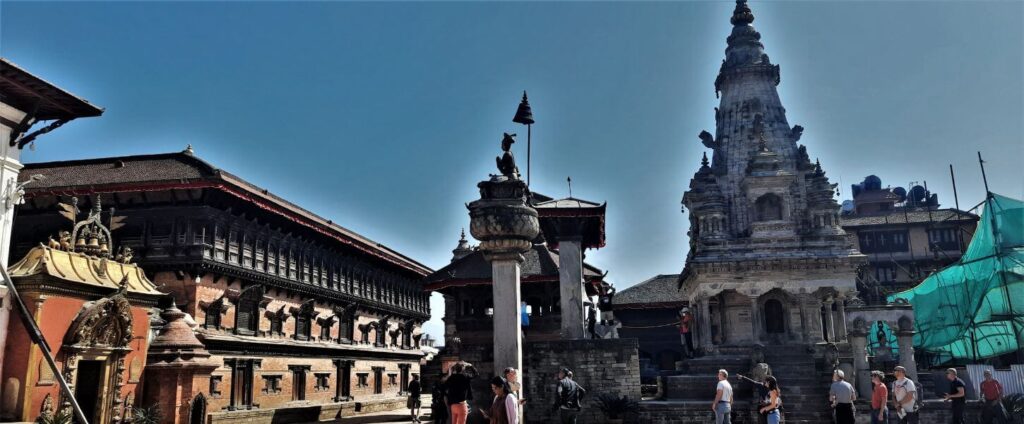
One of the most important works of art in Bhaktapur Durbar Square is the 55 Windows Palace. You can find a lovely setting and exquisitely carved sculptural patterns on windows and doors in the three-story castle. In the 17th century, King Bhupaindra Malla constructed the palace. Its golden gate and a few nearby temples are renowned worldwide as a decorative element of Bhaktapur.
Temple of Nyatapol:
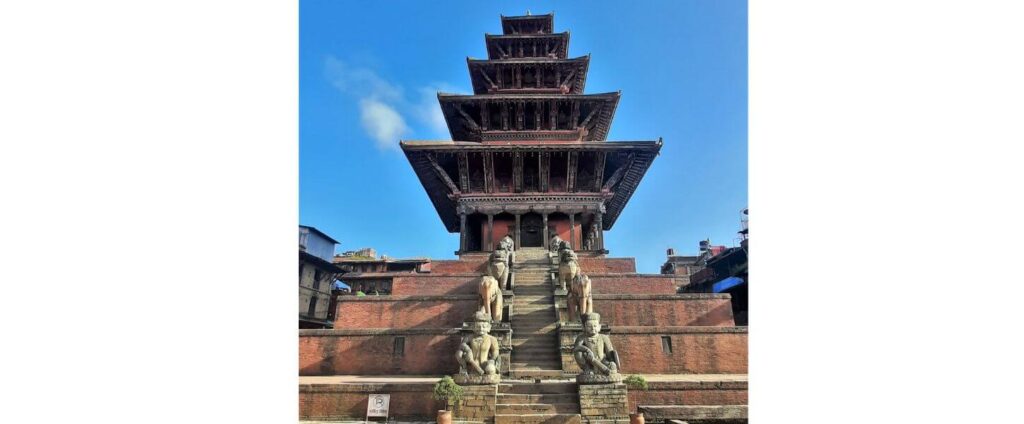
A Five-Storied Temple Nyatapol, Nepal’s tallest and most spectacular pagoda-styled temple, is located at Bhaktapur Municipality’s word number 11. This stunning temple, constructed of wood and clay bricks, is one of Nepal’s greatest architectural achievements. You can find god’s idol inside the temple. The manifestation of wealth, Siddhilaxmi, has been established.
King Bhupatindra Malla constructed this enormous temple in the 16th century, and it is reported that it withstood the devastation of the devastating earthquake in 1933 (except for some minimal injuries to the ceiling of the fifth floor). The follower claimed that the King had laboriously transported bricks for the temple’s building.
The temple’s struts, doors, and windows are decorated with artistically carved divine figures telling divine tales. According to popular belief, the elephant standing over the strong guy in the front is 10 times more powerful than the latter. Thus that is where the deduction is made. As a result, the temple abundantly displays the artistic history of Newar artisans.
Siddhi Lakshmi Temple:

Built in the 17th century, this Sikhara-style temple honors the tantric goddess Siddhi Lakshmi. The entrance to this temple is guarded by statues of numerous animals, including camels, rhinos, horses, and even mythological creatures.
Lion’s Gate:
On either side of this gate are two stunning stone statues of Hindu deities. According to legend, the artisans who created this had their hands severed as soon as he finished them. An envious Bhadgaon King accomplished this so the artist could stop creating similar works of art.
Durbar Simhadhwaka:
The National Art Museum, which has a fantastic collection of Medieval and Licchvai arts, is housed in this palace that King Bhupatindra Malla erected in the 17th century. The statues of two lions standing guard at this palace’s entrance gave it its name. Two enormous statues of the Hindu deity Narsimha are also present.
The Peacock Window:
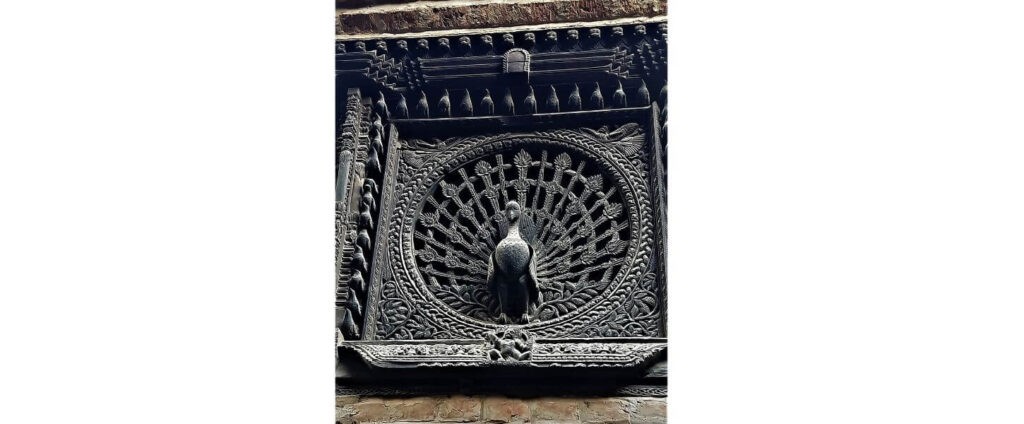
ndeed, travelers find the famous Peacock Window located in the historic Dattatreya square of Bhaktapur. Historically, King Yaksha Malla constructed this architectural marvel in the 15th century, showcasing lovely creative designs. Specifically, visitors discover the window on the second floor of the Pujari Math (shrine) near the main Dattatreya temple.
Among Bhaktapur’s numerous shrines, this math stands as the largest. In the past, royal officials and soldiers connected to King Yaksha Malla resided here. Today, this ancient structure features a variety of artistic shapes. Furthermore, the primary highlight of the building lies in the uniquely intricate woodwork decorating almost every window and door. Art historians suggest that ancient carpenters who worked on this shrine competed fiercely with one another.
All woodwork dates back to the 15th century. Following the recent earthquake, local craftsmen carefully replaced damaged bricks. Culturally, the peacock represents an untamed, stunning bird. While Hindus worship the peacock as the sacred vehicle of Lord Kumar, Buddhists revere Amitabha Buddha.
Because peacocks dance with magnificent grace, anyone observing them experiences joy and renewal. Thus, master carvers likely crafted this small window under Yaksha Malla’s rule to bring good fortune to town residents. Today, the public can view these ancient artworks and handicrafts up close for a set admission fee. Please note that the museum remains closed on Tuesdays and federal holidays.
Vatsala Devi Temple
Directly in front of the royal palace, near the king’s column and the Taleju Bell, stands the majestic Vatsala Devi Temple. Mirroring the famous Krishna temple in Patan, this Shikhara-style shrine utilizes solid sandstone construction and rests upon a striking three-stage plinth. Devotees dedicate this sacred temple to the goddess Vatsala Devi, a powerful manifestation of Goddess Durga.
King Jitamitra Malla originally erected the shrine in 1696 AD. Later, King Bhupatindra Malla rebuilt the visible structure, dating its current form to the late 17th or early 18th century. Behind the temple, visitors discover a traditional water source (Dhunge Dhara) alongside the historic Chayslin Mandap.
Historically, the temple gained immense fame for its massive silver bell, which locals dubbed “the bell of barking dogs” because nearby dogs howled and screamed whenever it rang. King Ranjit Malla hung this enormous bell in 1737 AD to announce evening curfews and morning worship for Goddess Taleju. Although the devastating 2015 Gorkha earthquake completely destroyed the Vatsala Devi Temple itself, the legendary silver bell miraculously survived unharmed.
Kedarnath Temple:
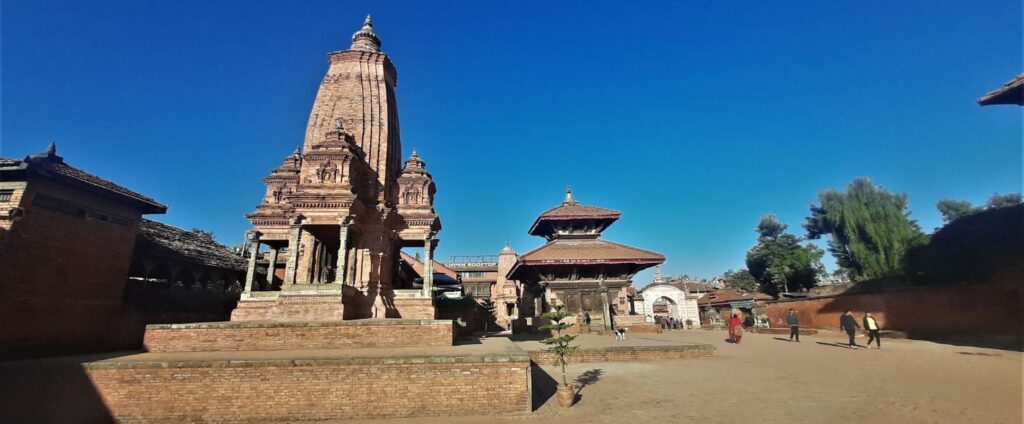
The temple dates back to the 17th century and is very appealing. You can see the entire durbar area, the rest house, and the Vatsala Durga Temple from its eastern pedestal. At the same time, you can see all of the Char Dham temples from the western or front pedestal of the temple.
In total, the temple has five pinnacles, including four subpinnacles. Architecturally, they also all rotate in four different directions. Despite this, it looks magnificent with the Lord Shiva statues there.
The stone pillars’ artistic carvings also appear to enchant onlookers. This temple was built by King Bhupatindra Malla, the most active ruler of the Malla period.
FAQ for Bhaktapur Durbar Square
Q: What makes Bhaktapur Durbar Square so well-known?
The city’s central center, Bhaktapur Durbar Square, is home to various terracotta, stone, and metal sculptures, and wood and stone carvings. Everything about this place is astounding.
Q: When and by whom was Bhaktapur Durbar Square created?
This is the primary building that dominates Durbar Square as a whole—built in the fifteenth century AD, this spectacular structure. King Bhupatindra Malla is kneeling in devotion to God while seated atop a large column.
Q: What time of year is ideal for a trip to Bhaktapur?
Autumn (October-November)
The monsoon retreat brings in the best time of year to travel to Bhaktapur, with cold, crisp temperatures and a clear, perfect sky that offers stunning visitors to the entire city.
Q: What is Bhaktapur’s history?
In the 12th century, King Anand Dev Malla built the city. Until the 15th century AD, Bhaktapur served as the Greater Malla Kingdom’s administrative center in the Kathmandu Valley. The then-Malla monarchs erected many of Bhaktapur’s most important monuments.
Q: What is Nepal’s largest durbar square?
Bhaktapur Durbar Square
Between Kathmandu and Patan, Bhaktapur Durbar Square does have the best durbar square. Having centuries-old temples and loving the fine woodworking elements of temples. Bhaktapur has very polite residents and is quite clean. If this is your first time, remember to visit durbar square.