Top 10 Must-Visit Places During Your Kathmandu Tour

Kathmandu, the bustling capital city of Nepal, is a fabulous spectacle of ancient culture, mysticism, and hectic city life. This city has it all for travellers; from centuries-old ancient temples and sacred stupas to vibrant markets and peaceful hilltops. Regardless of whether you are a history addict, a spiritual guide, a thrill-seeker, or a cultural explorer, the diverse attractions of Kathmandu will all captivate your sense of smell.
This guide brings to you the top 10 must-visit sights in Kathmandu that capture the spirit of this mystical city. Walk through UNESCO World Heritage Sites, hidden gems, and the life of the locals in the middle of the Kathmandu Valley.
Let’s check out the highlights that make Kathmandu a bucket-list destination for travellers across the globe.
1. Swayambhunath Stupa: The Sacred Monkey Temple
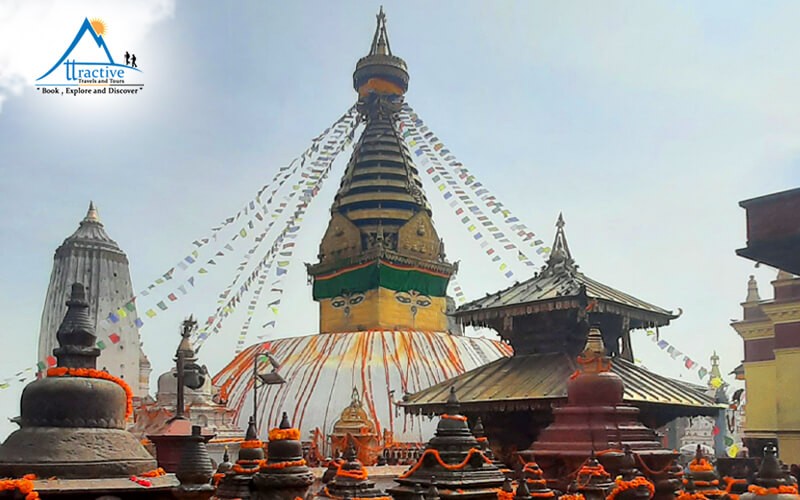
The Swayambhunath Stupa, or Monkey Temple, is one of Kathmandu’s most famous spots. This old Buddhist place, which is over 2,000 years old, lets you climb 365 stone steps to get panoramic views of the entire Kathmandu valley.
What makes this place truly special is the hundreds of sacred monkeys that live there. They’re seen as holy protectors of the temple. Visitors can witness the harmonious coexistence of Hindu and Buddhist traditions living together peacefully, making it a great place to see how religions can get along in Nepal.
2. Pashupatinath Temple: Nepal’s Most Sacred Hindu Shrine
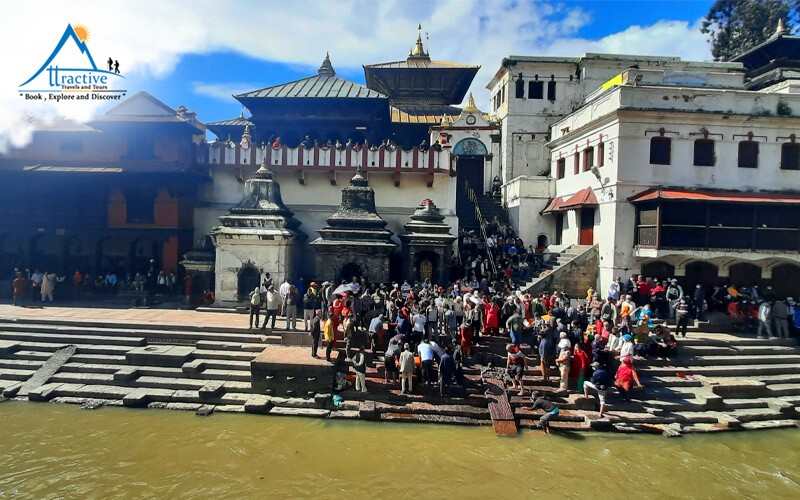
Pashupatinath Temple, a UNESCO Heritage Site, is Nepal’s most sacred Hindu temple, dedicated to Lord Shiva as Pashupati (animal protector). It sits along the holy Bagmati River, covering 246 hectares and has 518 smaller temples besides the main pagoda-style structure.
This century-old pilgrimage site, existing since at least the 5th century BCE, attracts millions of devotees yearly, especially during Maha Shivaratri – the auspicious Shiva night. The temple’s silver-plated doors feature intricate carvings of gods and goddesses, while the golden spire reflects the temple’s immense spiritual importance.
The cremation ghats on the Bagmati River give a profound spiritual experience with the Hindu belief that those cremated here achieve moksha/liberation when cremated within the precincts. The temple complex is home to the Slesh Mantak forest, where deer are free to roam, and monkeys, considered holy, have a free run.
3. Boudhanath Stupa: Tibet’s Sacred Heart in Nepal

Boudhanath Stupa is the world’s largest globular stupa and the centre of Tibetan Buddhism in Nepal. Located 11 kilometres north-east of Kathmandu, it is a UNESCO World Heritage Site and receives more than 3,000 pilgrims annually in the hopes of spiritual enlightenment.
The huge mandala base of the stupa signifies the universal realm, and the whitewashed dome signifies the way towards enlightenment. The 13 golden steps above the harmika signify the way towards enlightenment, and the 108 small depictions of Dhyani Buddha Amitabha go around the base, for the number 108 being a sacred number for the Tibetans.
Following the Tibetan uprising of 1959, there were thousands of Tibetan refugees who came to reside around and within the Boudhanath area and established a vibrant community containing over 50 monasteries and authentic Tibetan restaurants. Pilgrims’ traditional kora (circumambulation) generates a reflective ambience that pleases tourists from all over the globe.
4. Patan Durbar Square: Where Courtyards Meet Tradition

Patan Durbar Square, the oldest among the three Durbar Squares in the Kathmandu Valley, is home to the ancient tradition of Newar art since the 3rd century. It has 136 courtyards and 55 significant temples, making it a living medieval art museum.
The Krishna Temple, considered one of the finest examples of traditional Nepalese architecture, features intricate stone carvings depicting scenes from the Mahabharata and Ramayana. The Patan Museum, housed within the former royal palace, contains an extensive collection of traditional metalwork, woodcarvings, and religious art.
The three principal courtyards of the square – the Mul Chowk, Sundari Chowk, and Keshav Narayan Chowk – offer distinct, unique stories of the architectural legacy of the Malla dynasty. Despite having been damaged by earthquakes in 2015, restoration efforts continue to preserve the legacy of this tribute to Nepal’s heritage.
5. Changu Narayan Temple: Nepal’s Living Heritage
Changu Narayan Temple is Nepal’s oldest Hindu temple, situated on a green hill northeast of Kathmandu among old Newari settlements. It goes back to the 4th century when it was designated a UNESCO World Heritage Site with the recognition as the eternal home of Lord Vishnu.
Surrounded by ancient Newari villages with breathtaking views over rolling hills and distant Himalayan ranges, the temple of Changu Narayan is a cultural treasure and a peaceful haven. During the morning ceremonies and during celebrations, ancient Hindu traditions spring to life with a living cultural experience for the tourist.
The scenic location of the temple with a peaceful atmosphere offers a perfect location for the cultural tourists as well as the trekker looking for an alternative choice other than the more congested temples within the main area in Kathmandu.
6. Kathmandu Durbar Square: The Heart of Royal Tradition

Kathmandu Durbar Square, set in the historic core of Kathmandu city, is one of Nepal’s most iconic UNESCO World Heritage sites. As the coronation and residence site of the Nepalese royal family, the square encapsulates centuries of grandeur, religious ritual, and vibrant Newar artistry. Its traditional architecture, marked by intricately carved wooden windows, multi-roofed temples, and palatial courtyards, makes it a showcase of the valley’s rich cultural legacy.
Must-See Attractions:
i) Kumari Ghar (Residence of the Living Goddess): The main highlight for many visitors, this historic mansion houses the Kumari, Nepal’s living goddess. She appears at the central window for public blessings around 9–11 am and again in the late afternoon, venturing outside only on select religious festival days like Indra Jatra, when her feet never touch the ground.
ii) Basantapur Square Area (Southern Part): This used to be where the royal elephants chilled.It is today filled with souvenir stalls and is a centre for Nepali commerce and daily life.
iii) Durbar Square Area (Western Part): The spiritual and architectural heart of the square, it’s packed with over 50 temples, each reflecting centuries of devotion and craftsmanship.
iv) Hanuman Dhoka Palace (Northeast Part): See the historic palace with access to palace rooms, as well as the Tribhuvan Museum with royal artifacts. Head up the upper floors in the museum for a bird’s eye view above the square. Makhan Street in the area is filled with energy and is especially lively during festivities.
7. Bhaktapur Durbar Square: A Step Back into Medieval Nepal
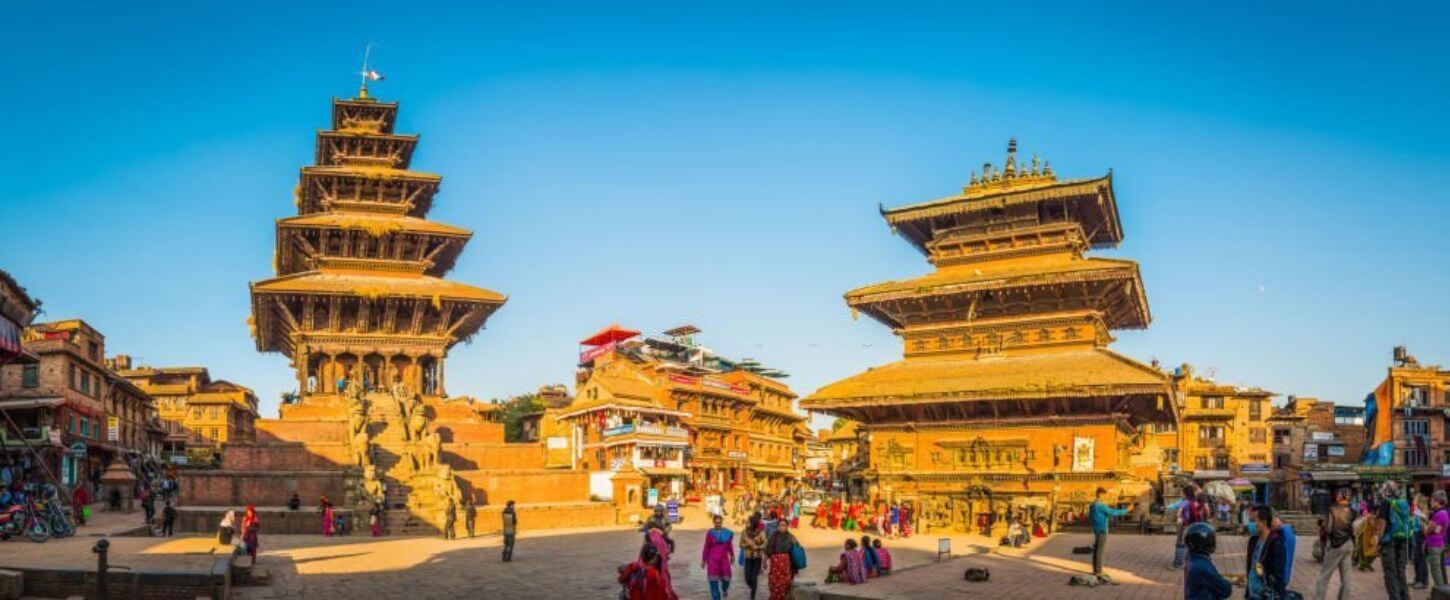
Bhaktapur Durbar Squarebeing a UNESCO treasure, offers unmatched preservation of medieval Newari culture. Bhaktapur Durbar Square represents the grandest of the three royal squares, though earthquakes have reduced its original 99 courtyards to just 15. Built in the 13th century by the Malla kings. It’s a delight for architecture lovers, history enthusiasts, and anyone seeking a more relaxed atmosphere than central Kathmandu.
Top Attractions:
– The 5-tiered Nyatapola Temple, Nepal’s tallest.
– 55-Window Palace and Vatsala Temple.
– Pagoda-style temples with their multi-tiered roofs
– Pottery Square and local artisans at work.
8. Thamel: The Heartbeat of Kathmandu’s Nightlife
No visit to Kathmandu is complete without a taste of Thamel’s vibrant energy buzz, the town’s travellers’ hub. This lively neighbourhood is a maze of narrow streets filled with everything from cozy cafes, craft shops, trek bars, to music bars, all opening 24/7. If you desire to stock up before the Himalayan trek, watch live music, taste a mix of Nepali as well as foreign cuisine, then Thamel has it for you.
Apart from nightlife, Thamel also contains several cultural monuments, including the Vikramshila Mahavihara Monastery and some hidden temples, showcasing the one-thousand-year history of the region. It is a perfect location for trekkers, as well as climbers, who must acclimatize for Himalaya mountaineering.
9. Chandragiri Hills: Cable Car to the Himalayas
Chandragiri Hills is a gem in Kathmandu that shouldn’t be missed by any traveller seeking both natural beauty and cultural significance. This hill station provides stunning vistas over the Kathmandu valley as well as the majestic Himalayas, and is one of the premier spots for postcard-perfect photos. Accessible via a modern cable car, Chandragiri Hills provides a relaxing escape from the city’s bustle, allowing visitors to immerse themselves in lush greenery surroundings and fresh mountain air.
On a clear morning, visitors can witness five of the 14 highest peaks in the world, including a glimpse of Mount Everest. The Bhaleshwor Mahadev Temple at the summit adds spiritual significance to this natural wonder, where King Prithvi Narayan Shah prayed for blessings before conquering the Kathmandu Valley.
As a photography, trek, or a simple, serene escape type of tourist, Chandragiri Hills is an experience you won’t soon overlook in which Nepal’s beauty in nature is equalled by a heritage steeped in tradition.
10. Nagarkot: Sunrise Paradise of the Himalayas

Nagarkot is a hill station just 32 km from Kathmandu, renowned for its breathtaking sunrise views over the Himalayas. Scenic trekking trails join Nagarkot with the Changu Narayan Temple, offering a mixture of mountain views with cultural experiences. From budget guesthouses through mid-range resorts, the hill station features a wide choice of accommodations, each carefully located for maximum Himalayan vistas.
Must-Do Activities:
i) Catch the sunrise from the Nagarkot View Tower.
ii) Walk the Nagarkot–Changu Narayan trail for a cultural trek.
iii) Visit the stone-carved Vishnu statues at the temple.
Other Must-Visit Places in Kathmandu
Even though the already existing sites like Swayambhunath Stupa, Patan Durbar Square, and Boudhanath Stupa are well-known iconic highlights of Kathmandu, there are a series of additional places in the city that showcase its diversity in culture, historical backgrounds, and artwork.
Here are some of the exceptional sites a tourist must visit when in Kathmandu are listed as follows:
Garden of Dreams

The Garden of Dreams is another pearl in the heart of the city, transforming from a neoclassical garden of 1920s restoration into the perfect setting for an afternoon stroll, a quiet read, or just sitting down with a cup of coffee at the Kaiser Café.
- Highlights: Lush lawns, ornate pavilions, beautiful fountains, and historic architecture.
Budhanilkantha Temple

Budhanilkantha Temple is an open-air Hindu temple dedicated to Lord Vishnu that lies on the northern edge of Kathmandu Valley, close to the Shivapuri hills. The temple houses a grand 5-meter-tall black basalt statue of Lord Vishnu in a reclining posture over the coils of the cosmic snake Ananta, known as Shesha, symbolizing the concepts of cosmic stability and preservation. The monument consists of a single carved block, very ancient, from the Licchavi period, dated back to the 5th to 7th century A.D., and it is equally revered by Hindus and Buddhists for its intrinsic spiritual value coupled with remarkable artistic beauty.
- Highlights: The huge reclining dark stone statue of Lord Vishnu, serene pond setting, rich Hindu mythology, important religious ceremonies, and beautiful natural environment.
Kopan Monastery
Kopan Monastery is a renowned Tibetan Buddhist monastery situated on a tranquil hilltop north of Kathmandu, just beyond Boudhanath Stupa. Founded in the 1970s by Lama Thubten Yeshe and Lama Zopa Rinpoche, Kopan Monastery is a spiritual centre for Buddhist study, meditation, and practice. The monastery is especially famous for its structured meditation retreats, courses on Tibetan Buddhist philosophy, and peaceful environment.
- Highlights: Serene gardens, prayer halls, daily rituals, and short meditation retreats open to visitors.
White Monastery (Seto Gumba)
Seto Gumba, also known as the White Monastery, is a striking Tibetan Buddhist monastery perched atop a hill in the Nagarjun area, northwest of Kathmandu. Famous for its serene setting, the monastery offers panoramic views of the Kathmandu Valley and an escape from the city’s bustle. Its beautiful white façade, colorful murals, and peaceful gardens invite visitors for meditation, photography, and spiritual reflection.
- Highlights: Panoramic hilltop views, architecture and intricate murals, Buddhist thangka art and statues.
Narayanhiti Palace Museum

Narayanhiti Palace Museum, once the royal residence of Nepal’s monarchy, is now an essential stop for anyone interested in the nation’s regal heritage. Converted into a public museum in 2008, it stands at the crossroads of history and culture, blending spiritual symbolism with royal opulence.
- Highlights: Lavish throne rooms, royal artifacts and furniture, Victorian-Nepali architecture, and immersive insights into Nepal’s monarchy and historic transition to republic.
Conclusion
Kathmandu is never just a gateway to the Himalayas; it is a living trapestry of culture, religion, spirituality, and adventure. From the panoramic sunrise at Nagarkot to the mystic stairways of Swayambhunath Stupa and then to the grounds of Patan and Bhaktapur, every corner of the valley tells a story of devotion, art, and living for centuries.
It could be anything: going in-depth into the rituals of Pashupatinath, wandering the vibrant lanes of Thamel, or finding some moments of calm in monasteries such as Kopan and Seto Gumba. Kathmandu is a place full of experiences that stay with people long after returning home. Discover more gems, such as Taudaha Lake and the intricate serenity of the Garden of Dreams, to witness the shared history of the city-and-these-days.
Keep in mind, while planning a trip to Kathmandu, that the true spirit of this city rests on a harmonious blend of spiritual places, lively markets, scenic views, and warm hospitality. Let the richness of Kathmandu drizzle into your life!
Download PDF