Patan Durbar Square : UNESCO World Heritage Site

Some of the best artisans in the valley are found in Patan, also known as “Lalitpur,” the city of artisans, which lies 5 kilometers southeast of Kathmandu. Patan Durbar Square is one of the three durbar squares that are all included as UNESCO World Heritage Sites. These artisans have maintained traditional techniques like repoussé and the lost wax method of producing beautiful sculptures.
The city retains its original splendor with its narrow streets, brick homes, and a profusion of well-preserved Hindu temples, Buddhist monasteries (vihars), and monuments. The most frequent sound in Patan is the tinkering of craftsmen hunched over the statuettes they are molding. Hinduism and Buddhism have coexisted and influenced each other in this metropolis for millennia, and both Kathmandu and this city exhibit exceptional religious harmony.
Located in the heart of the city, Patan Durbar Square was formerly the royal palace of the Patan kings. An exhibition of Newari architecture at its pinnacle under the authority of the Malla kings, the plaza is a stunning combination of royal structures, grand courtyards, and graceful pagoda temples. The renovated Keshav Narayan Chowk has been transformed into a bronze artifact museum in one of its many courtyards. The Sundari Chowk is a collection of exquisite wood carvings, stone sculptures, and metal sculptures, including Tusha Hiti’s underground bath.
Two instances of its splendor include the stunning Krishna Temple, constructed in 1637 and boasting 21 gilded spires, and the Manga Hiti, a hidden stone water spout in the palace complex. Shikhara-inspired architecture is thought to have first appeared in Nepal at the Krishna Temple, which is entirely composed of stone.
History of Patan Durbar Square
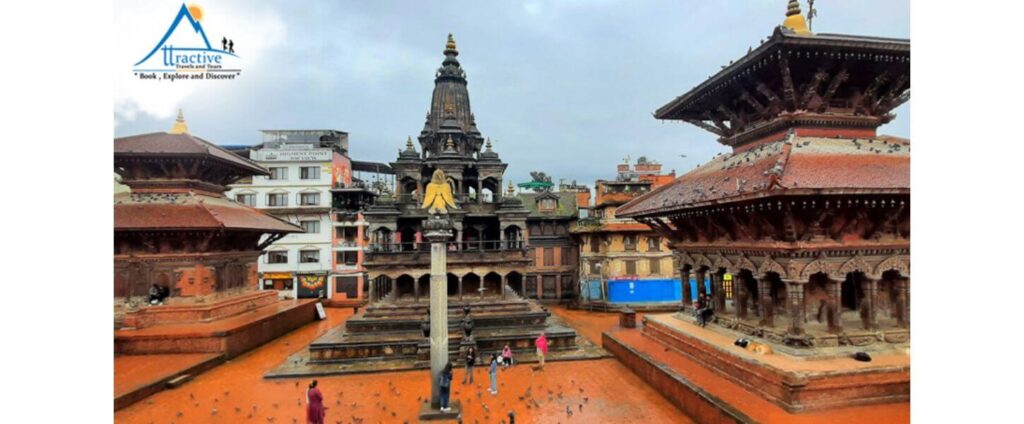
It’s unclear what Durbar Square’s history is. The royal square was first thought to have been built by the Malla Kings of Lalitpur. However, it is an old crossroads. The Durbar Square has ties to the Pradhanas, who inhabited the area before the Mallas. There is little concrete evidence to support some historical accounts’ assertions that the Thakuri dynasty improved the area and erected a palace. Patan was undoubtedly a flourishing city in antiquity, according to scholars.
The square underwent significant alterations under the Malla Kings. The majority of the present-day buildings date back to the 1600s when they were built under the rule of King Siddhi Narsingh Malla and his son Srinivasa Sukriti. Purandarasimha, Sivasimha Mall, and Yoganarendra Mall are a few of the noteworthy Malla Kings who made improvements to the square.
The Patan Durbar Square’s Key Attractions
One of the first Buddhist cities is Patan. With 136 bahals, courtyards, and 55 significant temples, it serves as a center for both Buddhism and Hinduism. The majority of these buildings are located close to Durbar Square. Some of the major attractions are described below:

Museum in Patan
Indeed, this acclaimed museum houses magnificent bronze statues and sacred religious items directly inside Durbar Square. Furthermore, global travel experts highly praise it as one of Asia’s premier cultural institutions.
Hiranya Varna Mahavihar (The Golden Temple)
Specifically, King Bhaskar Verma built this three-story Lokeshwar (Lord Buddha) pagoda inside Kwabadehul in the twelfth century. Moreover, pure gold covers the exterior structure, earning it worldwide fame as the “Golden Temple.” Inside, the pagoda’s upper storey features two large prayer wheels alongside two shimmering golden sculptures of Lord Buddha.
The Golden Window
Historically, master craftsmen built this architectural marvel specifically for King Siddhi Narasingha Malla. Indeed, his deep devotion to Lord Krishna and the Buddhist compassion deity Karunamaya Lokeshwar marks a legendary chapter in Nepalese religious history.
Historic Temples and Architectural Wonders
Temple of Mahaboudha
Featuring five golden pinnacles, master builders constructed this stunning Buddhist temple in a fascinating Hindu Shikara style. Furthermore, artisans shaped these pinnacles like stupas, creating powerful architectural metaphors for the fundamental cosmic elements.
The Original Golden Buddha Temple
Undoubtedly, Patan’s golden Buddha temple stands as the oldest, wealthiest, and most famous landmark globally. Boasting exquisite gold decorations, the sacred building dates back centuries to the 12th century.
Krishna Temple
Located prominently in Patan’s palace complex, King Siddhi Narsingh Malla constructed this renowned shrine to Lord Krishna in the 17th century. Crucially, it stands as the only temple in Nepal crafted entirely from stone, featuring 21 distinct shrines. Moreover, skilled artisans carved major episodes from the ancient Hindu epics—the Ramayana and the Mahabharata—directly onto its stone frescoes.
Bhimsen Temple
King Srinivasa Malla constructed the Bhimsen (Bhin:dya) temple around 1680. Indeed, locals recognize this shrine for its three linked golden windows. Within epic Hindu literature, Bhimsen stands out as a powerful character renowned for exceptional courage and strength. Consequently, the Newa community traditionally reveres him as the god of commerce and business. However, temple authorities restrict public entry inside the inner sanctum.
Temple of Vishwanath
Devotees honor Lord Shiva at the majestic Vishwanath Temple, which King Siddhi Narsingh Malla constructed in 1627. Furthermore, intricate erotic carvings adorn the roof supports, closely resembling popular images found in classical Indian Shiva temples. At the front entrance, two stone elephants fiercely guard the doorway, while a sculpture of Nandi the bull—Shiva’s celestial chariot—rests on the opposite side. Inside, priests and worshippers revere a sacred stone linga
Three Courtyards of Patan Durbar Square
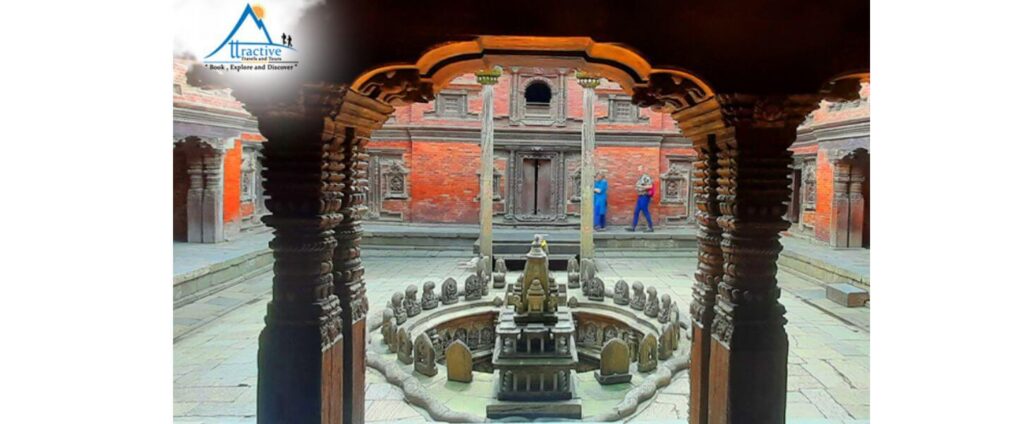
Indeed, the royal palace features three main courtyards: Mul Chowk, Sundari Chowk, and Keshav Narayan Chowk. Furthermore, this complex encompasses spectacular temples and historical sites, showcasing delicate carvings and stunning examples of early Newari architecture. Therefore, travelers find endless cultural treasures here.
Keshav Narayan Chowk
Locally, Keshav Narayan Chowk sits to the north of Mul Chowk, housing the renowned Patan Museum. Specifically, the Keshav Narayan Temple anchors the middle of this chowk, giving the courtyard its famous name. Thus, visitors easily locate this historical hub.
Mul Chowk
Among the three main areas, Mul Chowk reigns as both the largest and most well-known courtyard. Indeed, Taleju temples surround the spacious plaza, featuring the Vidya Temple right in its center. Moreover, magnificent stone statues of the river goddesses Jamuna (riding a carved makura) and Ganga (riding a tortoise) guard the entrance to the Shrine of Taleju on the southern side.
Sundari Chowk and Local Food Culture
Directly south of Mul Chowk lies Sundari Chowk. Although smaller than Mul Chowk, it features a unique submerged tank named Tusha Hiti, which remains open to the public today. Furthermore, stone statues of Hanuman, Ganesh, and Nara Singha (the man-lion incarnation of Vishnu) vigilantly guard the entrance.
As visitors approach this area, neighborhood shops offer authentic Newari food. Specifically, staples include yomari, kachela, chhoila, black beans, beaten rice, vegetables, and the traditional rice-based drink called chhyang. Additionally, Sundari Chowk boasts a vibrant nightlife scene where a massive self-illuminating moon sculpture draws crowds of tourists and locals alike.
Frequently Asked Questions About Patan Durbar Square
Q: What year did Patan Durbar Square become a World Heritage Site?
In fact, international authorities designated Patan Durbar Square as a World Heritage Site in 1979 AD.
Q: Why did experts designate Patan Durbar Square as a World Heritage Site?
Because this popular tourist destination brims with ancient structures, temples, and shrines adorned with magnificent carvings. Furthermore, the former royal palace complex houses a museum featuring rare bronze statues, serving as the social and religious heart of Patan.
Q: Who originally created Patan Durbar Square?
Historically, Malla Kings shaped the square significantly. Specifically, King Siddhi Narsingh Malla and his son Srinivasa Sukriti oversaw the construction of most present-day buildings during the 1600s.
Download PDF