search

Chitwan National Park: UNESCO World Heritage Site

UNESCO has designated Chitwan National Park as a World Heritage Site (1984) located in the south-central part of Nepal. It was established in 1973 and covered an area of 932 square kilometres. The park is known for its diverse wildlife, including the Bengal tiger, one-horned rhinoceros, and the Asian elephant, as well as a wide variety of bird species. This is first National Park of Nepal.

The park is also home to the indigenous Tharu people, who have lived there for centuries. The Tharu people have unique culture, customs, and way of life and have played an integral role in conserving the park’s wildlife and ecosystem.

Chitwan National Park offers a wide range of activities, including jungle safaris, elephant rides, canoeing, and bird watching. The park is also a popular destination for trekking and hiking and offers the opportunity to experience the unique culture and way of life of the Tharu people. The park is also important for research and conservation efforts, with many scientists and conservationists studying the park’s wildlife and ecosystem.

Overview of Chitwan National Park

Chitwan National Park is a well-known popular tourist destination in Nepal and is known for its rich biodiversity and cultural heritage. The park is situated in the Terai region of Nepal, in the south-central part of the country, and covers an area of 932 square kilometres.

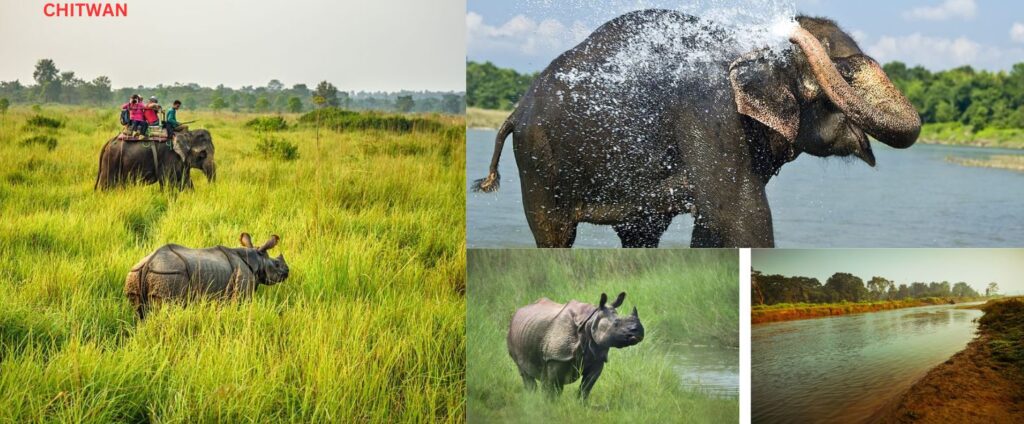
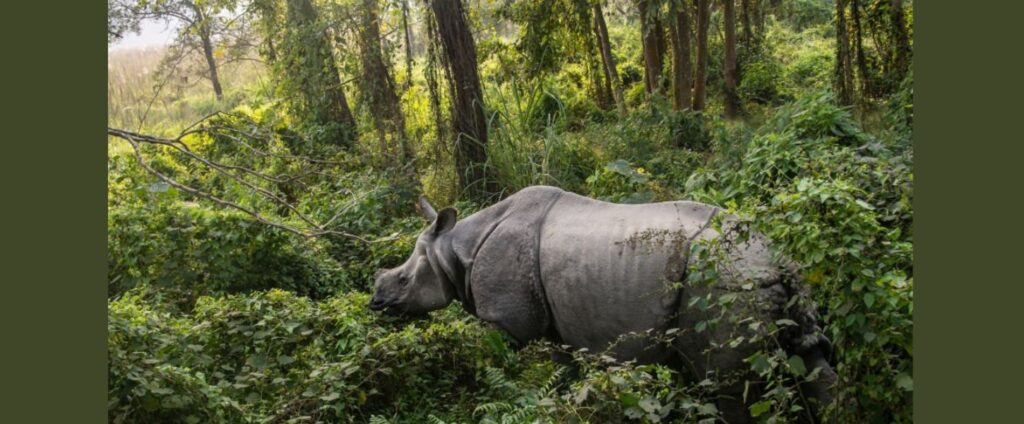
The national park is home to a wide variety of wildlife, including the Bengal tiger, one-horned rhinoceros, Asian elephant, leopard, sloth bear, crocodile, and over 500 species of birds. The park also has a diverse range of vegetation, including tropical and subtropical forests, grasslands, and wetlands.

Chitwan National Park is also home to the indigenous Tharu people, who have lived there for centuries. The Tharu people have unique culture, customs, and way of life and have played an integral role in conserving the park’s wildlife and ecosystem.

The national park offers visitors a wide range of activities, including jungle safaris, elephant rides, canoeing, and bird watching. Visitors can also go on guided nature walks and learn about the park’s plants and animals. The park also offers opportunities to experience the culture and tradition of the life of the Tharu people, such as visiting their traditional villages and participating in cultural activities. Chitwan National Park is also a popular destination for research and conservation efforts, with many scientists and conservationists studying the park’s wildlife and ecosystem.

History of Chitwan National Park

Chitwan National Park

Chitwan National Park has a long and rich history dating back centuries. The indigenous Tharu people have inhabited the area that is now the park for centuries, and they have played an important role in the conservation of the park’s wildlife and ecosystem. The Tharu people have unique culture, customs, and way of life, closely tied to the park’s natural resources.

The national park was established in 1973 and was declared the country’s first national park. Before this, the area was used primarily for hunting and logging. The park was established to protect the area’s unique wildlife and natural resources and provide a space for research and conservation efforts.

In 1984, Chitwan National Park was declared a UNESCO World Heritage Site, recognizing the park’s significant ecological, cultural and recreational values. The park is also part of the Chitwan-Annapurna Landscape, an important area for biodiversity conservation and sustainable development.

In recent years, the park has faced several challenges, such as the expansion of human settlements, poaching, and habitat destruction. Despite these challenges, the park has managed to maintain a relatively healthy population of Bengal tigers, one-horned rhinoceros, and Asian elephants and continues to be an important destination for conservation and research.

Activities of Chitwan’s National Park

The Chitwan National Park in Nepal offers a variety of activities for visitors, including:

  1. Jungle safari on elephant back or jeep
  2. Bird watching
  3. Canoeing and rafting on the Rapti River
  4. Elephant breeding centre visit
  5. Cultural tours to nearby villages
  6. Nature walks and hiking
  7. Tharu village tour
  8. Visit the crocodile breeding centre
  9. Jungle camping and jungle lodges stay
  10. Photography
  11. Jungle survival training
  12. Elephant safari and wildlife observation
  13. Traditional Tharu stick dance and cultural show
  14. Jeep safari, and many more activities related to nature, culture and adventure.

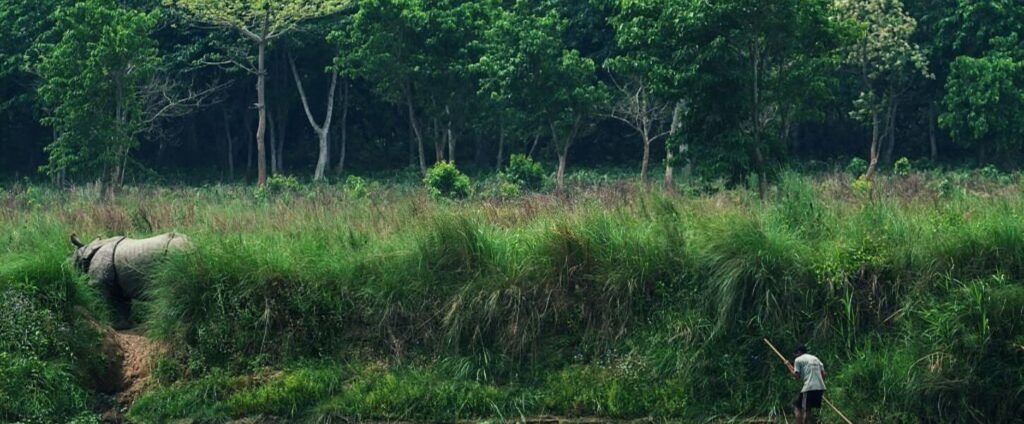
Rhino at Chitwan National Park

Here are some popular things to do in Chitwan National Park:

Jungle Safari: Take an elephant or jeep safari to explore the park’s rich wildlife and diverse ecosystems.

Bird Watching: Chitwan is home to over 500 species of birds, which makes it a paradise for birdwatchers.

Canoeing and Rafting: Explore the Rapti River by canoe or raft and spot crocodiles and other aquatic animals.

Cultural Tours: Visit nearby villages to learn about the local Tharu culture and traditional way of life.

Elephant Breeding Center Visit: Learn about the conservation of elephants and see baby elephants up close.

Nature Walks and Hiking: Take a guided nature walk or hike to explore the park’s diverse flora and fauna.

Jungle Camping: Experience camping in the heart of the jungle and spend a night in a traditional thatched roof hut.

Photography: Capture Chitwan’s beautiful landscapes, wildlife, and culture on camera.

Elephant Bath: Take a dip in the Rapti River with the elephants and get up close and personal with these gentle giants.

Cultural Show: Witness the traditional Tharu stick dance and cultural show performed by the local community.

Jeep safari: Explore the park in a jeep; this will give you a different perspective.

Wildlife Observation: Observe the park’s diverse wildlife, including tigers, rhinos, crocodiles, and many birds and mammals.

Where to Stay at The National Park

Chitwan National Park

There are several options for accommodations in the National Park, Nepal. These include:

  1. Jungle lodges and resorts: These are located inside the national park and offer a true jungle experience. These lodges offer elephant safaris, jungle walks, and bird watching.
  2. Guesthouses and hotels: These are located outside the national park and offer more budget-friendly options. They may also offer activities such as jungle safaris and cultural tours.
  3. Camping: For more adventurous travellers, camping is also an option in Chitwan National Park. Campsites are available inside the national park, and camping equipment can be rented or purchased in nearby towns.

Ultimately the best option depends on your preferences, budget and what activities you are looking to do.

UNESCO Chitwan National Park From Kathmandu: How to Get There

There are several ways to get to Chitwan National Park from Kathmandu, Nepal:

  1. Bus: You can take a bus from Kathmandu to the city of Sauraha, the main entrance to Chitwan National Park. The bus ride takes around 5-6 hours, and buses leave from Kathmandu’s Ratna Park Bus Station.
  2. Private car or taxi: You can also hire a personal car or taxi to take you to the National Park. This is a faster and more comfortable option, but it will be more expensive than taking a bus.
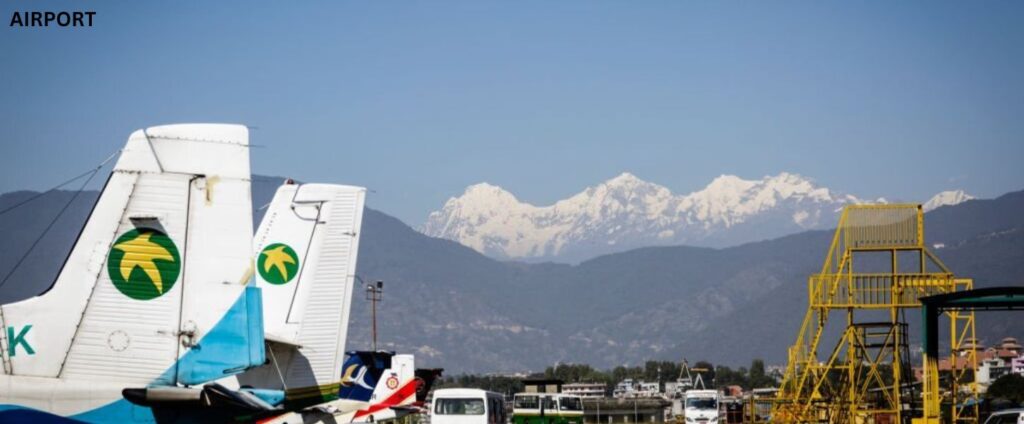
  3. Flight: There are several flights from Kathmandu to Bharatpur Airport near the park. From the airport, you can book a taxi or bus to Sauraha.
  4. Combination of flight and bus or car: This is another way to reach the National Park, a combination of a flight to Bharatpur airport and then a bus or car ride to the park.

It’s also worth noting that once you are in Chitwan, you will need to take a local bus or hire a jeep to reach the park entrance.

Tips for Your Visit at The National Park

Buffalo Chitwan National Park

Here are some important tips to help you make the most of your visit:

  1. Plan ahead: Research the park’s activities and facilities to ensure you’re prepared for your trip.
  2. Bring appropriate clothing: Chitwan National Park has a tropical climate, so bring light, breathable clothing and comfortable shoes for walking.
  3. Respect the wildlife: Chitwan National Park is home to many endangered species, so keep a safe distance from any animals you encounter. Do not try to feed or approach wild animals, and be mindful of the rules and regulations of the park.
  4. Take a guided tour: Guided tours are a great way to learn about the park’s wildlife and ecology, and they can also help you spot animals you might miss on your own.
  5. Be mindful of your impact: Remember to leave no trace and avoid littering in the park.
  6. Do not forget your sunscreen, insect repellent and a hat.
  7. Carry your camera and binoculars; you don’t want to miss capturing the beautiful moments.
  8. Book your stay in advance, as the park is quite popular and can be crowded.
  9. Travel with a local guide; they can give you a better insight into the culture and the people living nearby the park.
  10. Get your vaccines done, if required, to avoid any health issues.

Overall, this National Park offers a unique and diverse wildlife experience. By following these tips, you can enjoy the most of your visit and ensure a safe and enjoyable experience.

FAQ on UNESCO Chitwan National Park

Q: What animals can be found in Chitwan National Park?
A: Chitwan National Park is home to various wildlife, including the Bengal tiger, Indian rhinoceros, Asian elephant, sloth bear, gaur, and several species of deer and monkey. The park is a popular destination for birdwatching, with over 450 species of birds found within its boundaries.

Q: How can I visit Chitwan National Park?
A: Visitors can reach Chitwan National Park by bus or jeep from Kathmandu, Pokhara, or other nearby cities. The park can also be reached by air, with regular flights from Kathmandu to Bharatpur Airport. Once in the park, visitors can participate in various activities such as jungle safari, elephant rides, bird watching, and canoeing.

Q: When is the best season to visit Chitwan National Park?
A: The best time to visit Chitwan National Park is between September and November when the weather is dry and mild, and the animals are more active. However, the park can also be visited during other times of the year, depending on the visitor’s interests.

Q: Is it safe to visit UNESCO Chitwan National Park?
A: Chitwan National Park is considered safe for visitors. The park has well-trained staff and guides who are experienced in leading visitors on safari tours and have a good safety record. However, visitors should be aware that they are entering a wild area and should take the necessary precautions to stay safe, such as not wandering off on their own and following the instructions of the park staff.

search

Changu Narayan Temple: UNESCO World Heritage Site

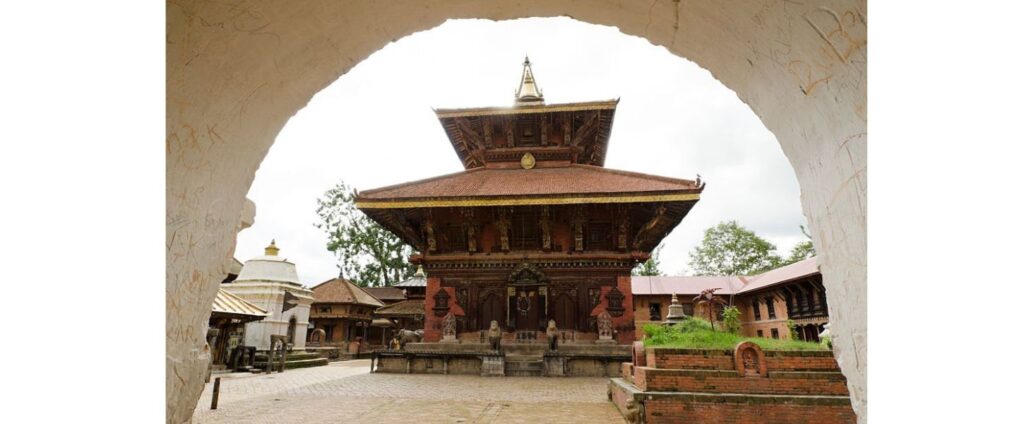
The Changu Narayan Temple, one of the oldest temples, is almost 3000 years old and is thought to have been constructed in the Lichhavi Era, around the fourth century. The temple, located on a hilltop 4 kilometers north of Bhaktapur, used to be surrounded by a dense champak tree forest and the small community of Changu.

The Manohara river flows alongside the hill, located 12 kilometers east of the capital. The main shrine was built around 325 AD, and the temple was rebuilt in 1702 AD after a terrible fire.

An ancient Hindu temple named Changu Narayan is found in Nepal’s Changunarayan Municipality in the Bhaktapur District atop a tall hilltop, also known as Changu or Dolagiri. This hill is located a few miles north of Bhaktapur and roughly 7 miles (or 12 km) east of Kathmandu. The Hindu population holds great reverence for the Lord Vishnu-dedicated shrine.

According to legend, a monarch of Kashmir offered his daughter Champak to the prince of Bhaktapur for marriage. She is thought to have inspired the name of the temple. Apart from the main temple, several additional shrines are on the property dedicated to Gods and Goddesses such as Chinna Masta, Lord Ganesh, and Lord Krishna.

The temple is devoted to the Hindu deity Lord Vishnu. One of the earliest stone slabs, which belongs to the fifth century and has several inscriptions from the Lichhavi Era, is also found on the grounds of Changu Narayan.

Architecture of Changu Narayan Temple

The Changu Narayan Temple is situated above hills and is encircled by a Champak tree forest. In and near Changu Narayan are residents of the Brahman, Chhetri, Tamang, Newar, and other communities. With the growth of tourism in this area, there are numerous small and medium-sized hotels, restaurants, gift shops, etc. On the route to Changunaran, there is an old stone tap that is thought to have been there since the time of Lichhavi.

Changu Narayan Temple architecture

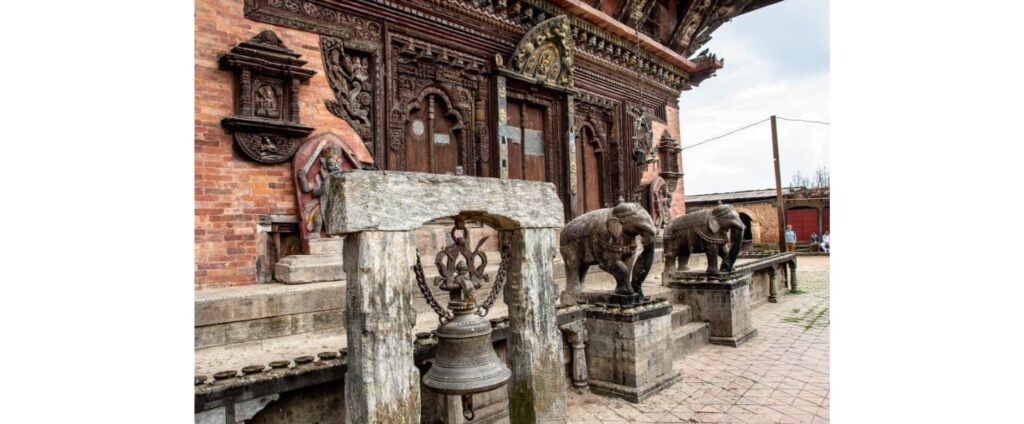
As far as temples go, Changu Narayan is the oldest in Nepal. Rich embossing artistry makes it a landmark in Nepali temple construction. The temple has a two-story roof supported by a tall stone plinth. Professor Madhan Rimal of the Sociology and Anthropology Department of Tribhuvan University claims that the temple is neither built in the Shikhara architecture nor the pagoda style. In terms of architectural design, he would characterize it as a traditional Nepali temple. At Gokarna Mahadev, you may find a lot of similar qualities. Lord Vishnu-themed statues and works of art surround the shrine.

In the main temple’s courtyard, we may also discover temples dedicated to Lord Shiva, Ashta Matrika, Chhinnamasta, Kileshwor, and Krishna. The temple features four doors, and on either side of each entrance are life-size pairs of various animals, including lions, sarabhas, griffins, and elephants. The struts that support the roof are decorated with carvings of Lord Vishnu’s eleven incarnations and other idols.

Naga carvings are gilded on the entrance door (snakes). At the top of a stone pillar on the main entry gate (i.e., the western entrance gate), we can see the Chakra, Sankha, Kamal, and Khadga. A Sanskrit inscription can be found on these stone pillars.

The stone inscription pillar was built in 464 AD by Licchavi (kingdom) King Manadeva and is regarded as the oldest inscription in Nepal.

History Behind Changu Narayan Temple

In the past, a Gwala, or cow herder, acquired a cow from Sudarshan, a Brahmin. The cow had a reputation for producing a lot of milk. Previously, the cow was taken to Changu by the cow herder for grazing. Changu was then covered with a grove of Champak trees.

Changu Narayan Temple sculptures

A boy used to visit the cow while it was grazing in the shade of a particular tree and sip the animal’s milk. When the cow herder started milking her in the evening and took her home, he only received a minimal amount of milk. This went on for a few days.

He became very discouraged and contacted the Brahmin, complaining that the cow wasn’t giving enough milk. Sudarshan concurred with the cow herder after seeing this with his own eyes. The cow was grazing in the forest the following day, and they watched her during the day.
Both the cow herder and the Brahmin crouched behind the tree. They were shocked when a young black boy emerged from the tree and began guzzling the cow’s milk. The youngster must be the devil, and the tree must be its residence, thought the two indignant men.

So the Champak tree was cut down by the Brahmin. His actions caused fresh human blood to spill out of the tree. Brahmin and the cow herder started to sob as they became terrified that they had done a serious offense. The Brahmin and Cowherd were told by Lord Vishnu, who had just emerged from the tree, that it was not their fault.

Vishnu narrated how, while out hunting in the forest, he had unintentionally killed Sudarshan’s father, committing a heinous crime. After that, cursed for the crime, he rode his mount, “Garuda,” around the globe before coming to rest on the hill at Changu. He lived there by stealing milk from cows and living in anonymity.

Vishnu was beheaded by a Brahmin when the tree was cut down, atoning for his crimes. After hearing these remarks from Lord Vishnu, a cow herder and a Brahmin decided to worship the location and built a tiny shrine in his honor. The location has been revered ever since. Even today, we still see the cow herder’s descendants as Ghutiyars and Sudarshan’s descendants serving as temple priests.

You may also like: Bhaktapur Durbar Square: UNESCO World Heritage Site

Monuments in Changu Narayan Temple

Changu Narayan Temple

Mandeva built a historical pillar in 464 AD.

Garuda: Lord Vishnu’s flying chariot, Garuda, has a human face and is devoted to Vishnu.

Chanda Narayan: A stone sculpture of Vishnu astride a Garuda from the seventh century is called Chanda Narayan (Garuda Narayan). The Nepal Rastra Bank’s 10-rupee paper note features a picture of this sculpture.

Vishnu, Laxmi, and Garuda are depicted on the stone sculpture Sridhar Vishnu, dating to the ninth century.

Vaikuntha Vishnu: It is a sculpture from the 16th century that depicts Vishnu reclining in the Lalitasan position on a six-armed Garuda with Laxmi seated on his lap.

Chhinnamasta: This temple is devoted to Chhinnamasta Devi, who sacrificed her life by beheading herself and giving her blood to feed Dakini and Varnini.

Kileshwor: A pair of little Lord Shiva temples with two stories, thought to have appeared here to guard the hill.

Hindus and Buddhists revere the shrine’s central image as Garuda Narayan and Hariharihari Vahan Lokeshwara, respectively. The priest can only see the image.

Vishworup: The moment from the Bhagwat Gita in which Lord Krishna unveils his universal form to his follower Arjun is depicted in the exquisitely carved stone sculpture known as Vishworup from the seventh century.

Vishnu Vikrant: It is a sculpture of Trivikram Vishnu from the seventh century that portrays the scene from the well-known Hindu narrative between Lord Vishnu and his beloved Bali Raja.

Narasimha: A sculpture of Narasimha, a manifestation of Lord Vishnu, from the seventh century depicts him slaying the demon King Hiranyakasyapa to save his devotee Prahalad.

Kileshwor: A pair of little Lord Shiva temples with two stories, thought to have appeared here to guard the hill.

Hindus and Buddhists revere the shrine’s central image as Garuda Narayan and Hariharihari Vahan Lokeshwara, respectively. The priest can only see the image. After entering the courtyard through the temple’s main entrance (the Eastern gate), you will find the following monument on the right side.

Conclusion

Changu Narayan Temple

The temple is a superb example of Nepali architecture, with ornate embossed wood and metal sculptures. The temple is a two-story structure with a high stone plinth. According to research by Professor Madan Rimal of the department of Sociology and Anthropology, the temple’s architecture is traditional to Nepal. It is similar to that of the Gokarna Mahadev temple. It is neither in the Shikara style nor the Pagoda style.

The temple features four doors, and on each side of each entrance, a life-size pair of animals, such as a lion, sarabha, griffin, or elephant, stands to watch. The 10 forms of Lord Vishnu and other wooden icons can be seen on the temple’s struts.

The temple grounds are lighted during celebrations like the Changu Narayan Jatra, Mahashanan, Haribodhimi Ekadashi, and particularly Nag Panchami.

FAQs

1. Is Changu Narayan World Heritage Site?
A world heritage site is the Changu Narayan Temple. Archeological, historical, and cultural significance can be found in the priceless stone sculpture and antiquated inscriptions.

2. What is Changu Narayan temple famous?
A two-story Lord Vishnu temple in the pagoda style called Changu Narayan is surrounded by age-old carvings and statues. It is said to be the oldest Hindu temple still in use in the Kathmandu Valley till today.

search

Lumbini : UNESCO World Heritage Site

Lumbini is the birthplace of the Gautama Buddha. It’s highly debated when exactly he was born, with estimates ranging from the 11th to the 6th century BC. One of the four holiest locations in Buddhism is the town of Lumbini, which is also the location of the Buddha’s birth, enlightenment, first lecture, and death. These all happened outside, in the wild.  Lumbini, UNESCO listed falls under one of the most visited site by tourist in our country Nepal.

Overview on Lumbini UNESCO Listed

Several stupas at the Kudan archaeological site were constructed to remember significant occasions that happened here with Buddha. The most important was meeting with his father, King Suddhodhana, seven years after attaining enlightenment. Rahula, his son, was ordained there when he was eight.

Additionally, a significant amount of archaeological work has been done in Devadaha, an ancient city located approximately 57 kilometers (35 miles) from Lumbini. Queen Mayadevi, the mother of Buddha, was on her way to her village when she decided to halt and give birth. Several monuments have been built in her honor, and many have since been found here.

Prince Siddhartha, who would later become Buddha, had only just begun his long journey in 623 BC. The religion that would bear his name had also only just begun. Therefore, it should be no surprise that Lumbini has become one of the most treasured locations for Buddhists worldwide.

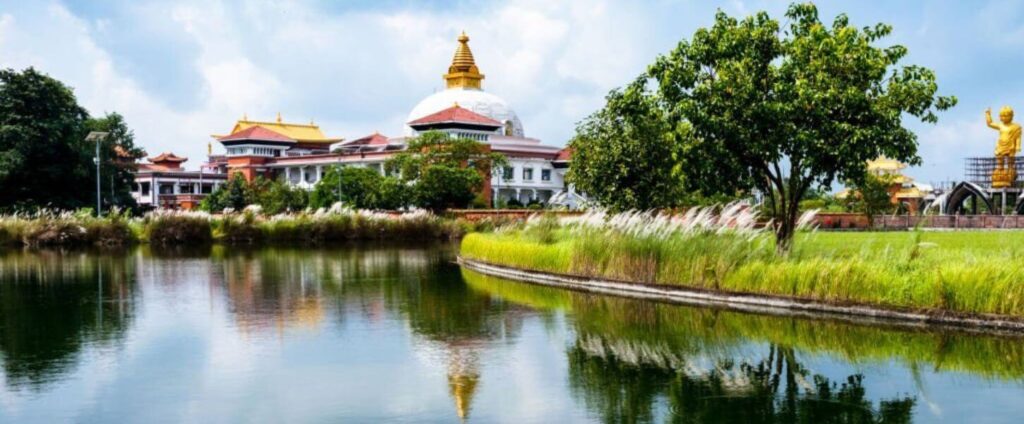
For tourists, Lumbini is a very spiritual location, and the Sacred Garden that encircles the main Mayadevi Temple is where the peace of the site is most palpable. The garden’s trees are reflected in a sizable water feature that is supposed to be the same pond where Prince Siddhartha received his cleansing bath. Worshipers sit below in profound meditation as prayer flags dangle from the branches and gently wave in the breeze.

History of Lumbini UNESCO Listed

For centuries, the place was ignored. It was first rediscovered in 1895 by a German archaeologist. It is thought that a temple and a swimming pool date back to Buddha’s birth. According to an inscription on a pillar built by the Mauryan Emperor Asoka in 249 BC, the Lord Buddha was born there in the sacred region of Lumbini in the Terai plains of southern Nepal in 623 BC.

The remnants of Lumbini, one of the holiest sites of one of the world’s great faiths, provide significant information regarding the nature of Buddhist pilgrimage centres dating back to the third century BC.

Ashoka pillar Lumbini

The Shakya Tank, the brick constructions in the cross-wall system of the Maya Devi Temple, dating from the third century BC to the present, and the sandstone Ashoka pillar with its Pali inscription in Brahmi writing are all part of the complex of buildings inside the archaeological conservation area.

In addition, there exist the remains of Buddhist stupas (memorial shrines) that date from the third century BC to the fifteenth century AD, as well as the remains of Buddhist viharas (monasteries) that date from the third century BC to the fifth century AD. Archaeological relics connected to the birth of the Lord Buddha are a key component of the site’s development as a Buddhist pilgrimage centre.

Criterion (iii): As the site of the Lord Buddha’s birth, as attested by the inscription on the Asoka pillar, Lumbini’s sacred region is one of the most revered and important locations for one of the major global religions.

Criterion (vi): The archaeological remains of Buddhist monasteries and memorial shrines from the third century BC to the fifteenth century AD provide significant information regarding the character of Buddhist pilgrimage centres from a very early time.

Integrity of Lumbini

Buddhist Temple located in Lumbini

Lumbini’s integrity has been preserved by protecting the archaeological relics inside the property border, which give this site its Outstanding Universal Value. The property’s key features and characteristics have been preserved. The buffer zone further protects the property.

The integrity of the property places a high priority on further excavations of potential archaeological sites and proper protection of the archaeological remains. However, not all archaeological sites are within the property line; certain portions are located in the buffer zone.

There is no risk of development or neglect because the Lumbini Development Trust manages the entire property, including the buffer zone, which is held by the Government of Nepal. However, it has been determined that the property’s integrity is threatened by the effects of industrial growth in the area.

A Journey of Spirit

Pilgrims are often drawn to Lumbini because it is one of the most sacred cities. Buddha purportedly urged his disciples and adherents to visit one of the four holy places. People travel worldwide throughout the year to realise their desire, whether they are wealthy or poor, well or ill.

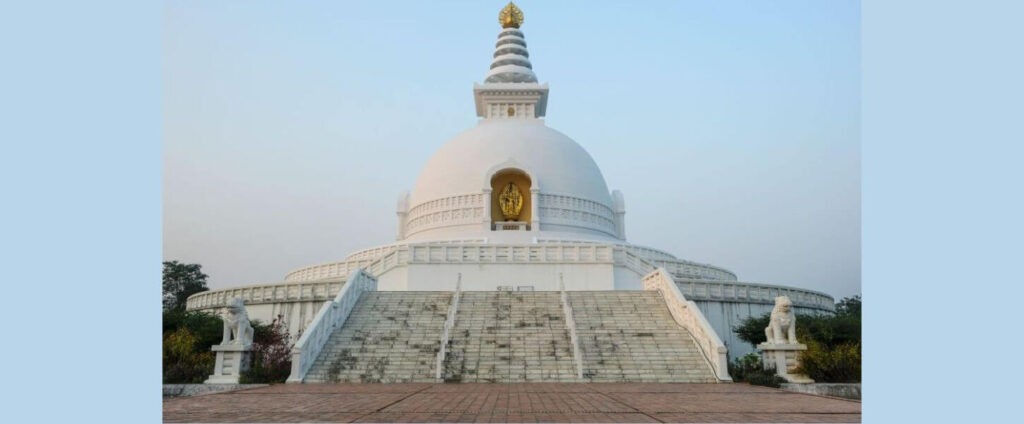
World Peace Pagoda

It is easier to perceive the physical in this place by also considering the spiritual, as everything is inextricably related to the life and teachings of the Buddha. Growing up in this area significantly influenced his teachings, and his interactions with followers here after attaining enlightenment also affected his legacy.

Many visitors agree that Lumbini’s ambiance fosters a unique spiritual energy and tranquillity regardless of their religion. Millions of people have travelled there to reflect on the meaning of the Buddha’s teachings throughout history, making it more than merely a location from where they were impacted. Pilgrims and monks will sit and meditate as part of their inner journeys under trees, along ponds, or in designated centres.

History of Greater Lumbini: Importance

Beyond its religious significance, Lumbini is regarded as having enormous historical value. This region was inhabited at the time of Buddha’s birth by some minor kingdoms, all of which were interconnected and, ultimately, all of which had some relationship to Buddha.

It would be best if you explored the archaeological sites near Lumbini and the surrounding areas to gain a deeper understanding of Buddha’s life and the world in which he lived. Because of restoration efforts, you may now visit these locations and view the events relevant to his tale that took place there.

Lumbini: Birth place of Lord Buddha

About 30 kilometres (18.5 miles) from Lumbini, one of the significant archaeological investigations has revealed the Ancient City of Kapilavastu. Prince Siddhartha was raised there and resided there till he was 29 years old. It was a prosperous capital city. You can see how he lived in luxury until he decided to give up his material belongings to pursue something more fulfilling here.

Several stupas at the Kudan archaeological site were constructed to remember significant occasions that happened here with Buddha. The most important was meeting with his father, King Suddhodhana, seven years after attaining enlightenment. Rahula, his son, was ordained there when he was eight.

Additionally, a significant amount of archaeological work has been done in Devadaha, an ancient city located approximately 57 kilometers (35 miles) from Lumbini. Queen Mayadevi, the mother of Buddha, was on her way to her village when she decided to halt and give birth. Several monuments have been built in her honour, and many have since been found here.

FAQ On Lumbini UNESCO

Q: What is the renown of Lumbini?
The Lord Buddha, Siddhartha Gautama, was born in Lumbini’s well-known gardens in 623 B.C., quickly becoming a popular destination for pilgrims. It was one of the pilgrims who built the memorial pillar in memory of the Indian king Ashoka.

Q: Why do tourists visit Lumbini?
Explore the area where Buddha spent his early years as Prince Siddhartha and follow in his footsteps. A holy place on earth, Lumbini marks the exact place where Buddha was born.

Q: Did Lumbini belong to India?
The Lord Buddha was born there at Lumbini, a sacred area in the Terai plains of southern Nepal, in 623 BC, according to an inscription on a pillar constructed by the Mauryan Emperor Asoka in 249 BC.

Q: What is the ideal time for visiting Lumbini?
The finest months to visit Lumbini are April and May, when the Buddha Jayanthi, or the birthday of Lord Buddha, is grandly celebrated. For this event, Buddhists from all over the world, particularly those from India and Nepal, come together.

Q: Is a trip to Lumbini UNESCO site worthwhile?
Each year, thousands of pilgrims come to this location to worship, reflect, and study. The temple complex has expanded over time from a single temple to honour the birthplace to a large monastery complex with stunning Buddhist temples that have been donated from all over the world!

search

Patan Durbar Square : UNESCO World Heritage Site

Some of the best artisans in the valley are found in Patan, also known as “Lalitpur,” the city of artisans, which lies 5 kilometers southeast of Kathmandu. Patan Durbar Square is one of the three durbar squares that are all included as UNESCO World Heritage Sites. These artisans have maintained traditional techniques like repoussé and the lost wax method of producing beautiful sculptures.

The city retains its original splendor with its narrow streets, brick homes, and a profusion of well-preserved Hindu temples, Buddhist monasteries (vihars), and monuments. The most frequent sound in Patan is the tinkering of craftsmen hunched over the statuettes they are molding. Hinduism and Buddhism have coexisted and influenced each other in this metropolis for millennia, and both Kathmandu and this city exhibit exceptional religious harmony.

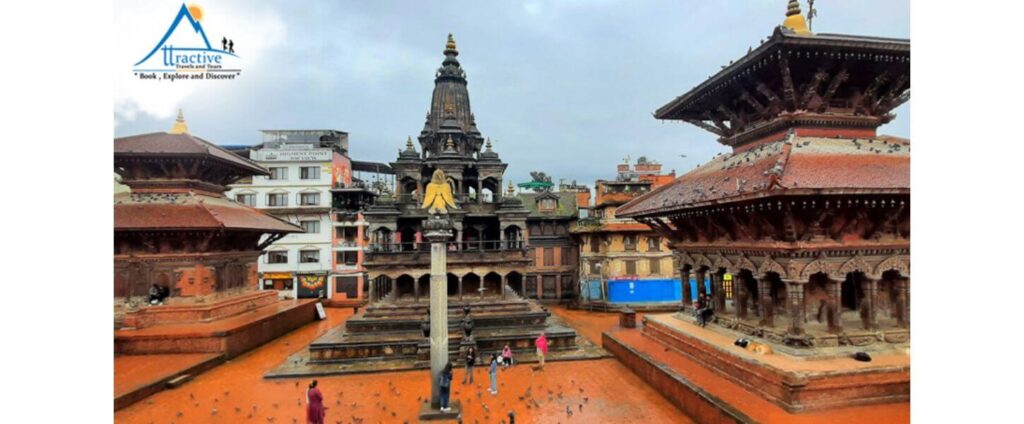
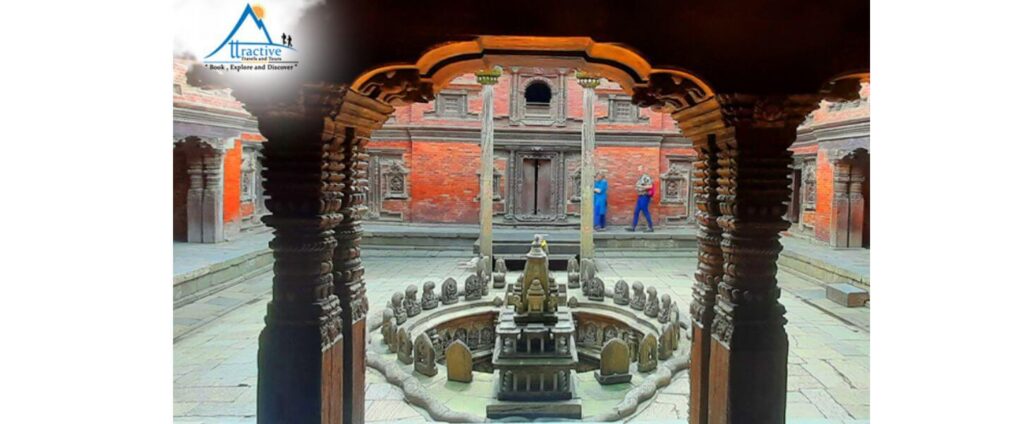
Located in the heart of the city, Patan Durbar Square was formerly the royal palace of the Patan kings. An exhibition of Newari architecture at its pinnacle under the authority of the Malla kings, the plaza is a stunning combination of royal structures, grand courtyards, and graceful pagoda temples. The renovated Keshav Narayan Chowk has been transformed into a bronze artifact museum in one of its many courtyards. The Sundari Chowk is a collection of exquisite wood carvings, stone sculptures, and metal sculptures, including Tusha Hiti’s underground bath.

Two instances of its splendor include the stunning Krishna Temple, constructed in 1637 and boasting 21 gilded spires, and the Manga Hiti, a hidden stone water spout in the palace complex. Shikhara-inspired architecture is thought to have first appeared in Nepal at the Krishna Temple, which is entirely composed of stone.

History of Patan Durbar Square

Scenic view with temples at Patan Durbar Square

It’s unclear what Durbar Square’s history is. The royal square was first thought to have been built by the Malla Kings of Lalitpur. However, it is an old crossroads. The Durbar Square has ties to the Pradhanas, who inhabited the area before the Mallas. There is little concrete evidence to support some historical accounts’ assertions that the Thakuri dynasty improved the area and erected a palace. Patan was undoubtedly a flourishing city in antiquity, according to scholars.

The square underwent significant alterations under the Malla Kings. The majority of the present-day buildings date back to the 1600s when they were built under the rule of King Siddhi Narsingh Malla and his son Srinivasa Sukriti. Purandarasimha, Sivasimha Mall, and Yoganarendra Mall are a few of the noteworthy Malla Kings who made improvements to the square.

The Patan Durbar Square’s Key Attractions

One of the first Buddhist cities is Patan. With 136 bahals, courtyards, and 55 significant temples, it serves as a center for both Buddhism and Hinduism. The majority of these buildings are located close to Durbar Square. Some of the major attractions are described below:

Scenic view with temples at Patan

Museum in Patan
This museum, which houses bronze statues and religious items, is situated inside Durbar Square. As one of Asia’s premier museums, it is highly acclaimed.

Hiranya Varna Mahavihar
This three-story Lokeshwar (Lord Buddha) pagoda was built inside kwabadehul in the twelfth century by King Bhaskar Verma. It is made of gold. Its claim to fame is the “Golden Temple.” Inside the pagoda’s upper storey are two large prayer wheels and two golden sculptures of Lord Buddha.

Golden Window
This was specifically built for King Siddhi Narasingha Malla. His devotion to Lord Krishna and the Buddhist compassion God Karunamaya Lokeshwar is a well-known event in Nepalese religious history.

Temple of Mahaboudha
Featuring five golden pinnacles, this Buddhist temple is constructed in a fascinating Hindu Shikara style. They are shaped like stupas, powerful metaphors for the fundamental components.

Golden Temple
Patan’s golden Buddha temple is the oldest, wealthiest, and most well-known landmark in the world. With its exquisite gold decorations, the building dates back to the 12th century.

Krishna Temple
The renowned temple, the temple of Lord Krishna, constructed in the 17th century, is located in a prominent area of Patan’s palace complex. It is the only temple in Nepal that is entirely made of stone and has 21 shrines. Most of the significant incidents from the Ramayana and the Mahabharata, two ancient Hindu epics, have been carved on their frescoes.

Buddhist Temple
Srinivasa Malla constructed the Bhimsen (Bhin:dya) temple around 1680. It is well known for having three linked golden windows. In the Mahabharata, Bhimsen is a great character. He was well-recognized for his courage and power. He is traditionally revered as a god of commerce and business in Newa. Inside the temple, visitors are not permitted.

Temple of Vishwanath
God Shiva is honored at the Vishwanath Temple. In 1627, it was constructed by Siddhi Narsingh Malla. The roof supports are adorned with sexual carvings that resemble popular images found in Indian Shiva temples. Two stone elephants defend the front entrance of the temple. The sculpture of a bull, Shiva’s chariot, is on the opposite side of the temple. Inside the temple, a stone linga is revered.

Three Courtyards of Patan Durbar Square

Scenic view with temples at Patan Durbar Square

The palace has three main courtyards: Mul Chowk, Sundari Chowk, and Keshav Narayan Chowk. In addition to these courtyards, the complex contains spectacular temples, churches, and historical sites, all known for their delicate carvings and stunning examples of early Newari architecture.

The Keshav Narayan Chowk
To the north of Mul Chowk lies Keshav Narayan Chowk, located inside the Patan Museum. The Keshav Narayan Temple, which sits in the middle of the chowk, is where the name of the chowk originates.

Mul Chowk
The main courtyard is called Mul Chowk. Of the three main chowks, it is both the most well-known and the largest courtyard. The plaza is surrounded by Taleju temples, with the Vidya Temple in its center. The statues of the river goddesses Jamuna on a carved makura and Ganga on a tortoise encircle the entrance to the Shrine of Taleju on the southern side of the courtyard (mythical crocodile).

Sundari Chowk
The Mul Chowk is located south of Sundari Chowk. It is built with a submerged tank called Tusha Hiti. It is now open to the public and is smaller than Mul Chowk. Stone statues of Hanuman, Ganesh, and Nara Singha, a man-lion form of Vishnu, stand to watch at the chowk’s entrance.

As one approaches the chowk, one may notice several neighborhood stores providing typical Newari food. Yomari, kachela, chhoila, black beans, beaten rice, and vegetables are all staples of Newari cuisine, in addition to the rice-based drink called chhyang. Sundari Chowk is famed for its nightlife, and recently, a massive self-illuminating moon was installed there, drawing visitors and locals to the area.

FAQ Of Patan Durbar Square

Q: What year did Patan Durbar Square become a World Heritage Site?
1979 AD marked the designation of Patan Durbar Square as a World Heritage Site.

Q: Why was Patan Durbar Square designated as a World Heritage Site?
The popular tourist destination is Patan Durbar Square. Ancient sites, temples, and shrines known for their magnificent carvings are everywhere throughout the plaza. The former royal palace complex, which also houses a museum with various bronze statues and sacred items, is the hub of Patan’s religious and social life.

Q: Who was the creator of Patan Durbar Square?
The square underwent significant alterations under the Malla Kings. The majority of the present-day buildings date back to the 1600s when they were built under the rule of King Siddhi Narsingh Malla and his son Srinivasa Sukriti.

search

Top 10 Adventure Activities In Nepal

When one thinks about Nepal, one envisions a stunning tapestry of Hindu temples and Buddhist monasteries, the massive, snow-capped Himalayas, lush forests, and clear rivers. Nepal may be little in comparison to India and China, but that does not mean it should be disregarded. Offering a lot of adventure activities in Nepal. The state has more to offer than just breathtaking scenery; Nepal is unrivalled if you’re looking for adventure. The combination of limitless fun and thrill offered by the adventurous sports accessible here doubles the area’s majestic beauty.

As you engage in some of Nepal’s most engaging recreational activities, let your heart race with excitement. If you participate in one of these sports, you will get a strong adrenaline surge. So, leave your hotel beds and do something you will never forget. Some of these things you could have already completed in other nations, but the real significance resides in completing them in Nepal, which is home to the breathtaking Himalayas. Here is a comprehensive collection of these incredible thrillers.

1. Trekking

Trekking adventure activities of Nepal

When you think of adventure in Nepal, this comes to mind immediately. That is reasonable, given that this is where you have the best chance to learn about the Himalayas. Nepal is a wonderland for trekkers worldwide since it is home to eight of the ten highest peaks in the world. Every year, about 20,000 trekkers travel to Nepal for thrill and adventure.

The geography of the Himalayas offers some of the most beautiful trekking trails. It is understandable why Nepal is at the top of the list for hikers worldwide. As you set out on your wonderful tour, you will be in awe of the Himalayan ranges’ majesty. You will also be amazed by the primitive way of life of these mountain people.

2. White Water Rafting

In terms of whitewater rafting, one of the best destinations in the world is Nepal. As you engage in one of the most thrilling river rafting and kayaking adventures here, splash in the cool waters. The rush of excitement peaks as you row along serpentine routes surrounded by rocks and boulders.

The majority of the rivers in this area flow down from the Himalayan mountains, which are covered in snow. Your river rafting adventure is even more picturesque because of the emerald forests and clear skies. Watersports enthusiasts, you must not miss this; the thrill is out of this world.

Nepal’s best rafting spots include:
1. River Seti
2. River Trishuli
3. River Sun Koshi
4. River Karnali.

3. Paragliding and Parahawking

parahawking in Pokhara

Do you want to glide high in the clear sky of Nepal, heart racing? It would be best if you do not skip the adventure of paragliding in Nepal. Exhilarating panoramas of villages, monasteries, lakes, verdant jungles, and temples can be seen. Fly alongside eagles, kites, and Himalayan griffins. A recent activity worth mentioning is parahawking. By maintaining a piece of meat on your gloved hands, you can feed the birds while you are in the air.

Best Paragliding Locations in Nepal:

  1. Himalayas
  2. Annapurna range
  3. Due to its fantastic scenery, Pokhara is the finest location for paragliding. As you soar through the air, the area’s lakes appear as tiny blue dots. Sarangkot serves as the starting point, whereas Lakeside, Khahare, and Khapaudi serve as the finishing points.

What qualifications are needed to paraglide in Pokhara, Nepal?
There are no particular prerequisites in Pokhara, Nepal if you’re a regular individual wishing to paraglide. But a pilot needs a license and some flying experience to fly for gliding.

4. Jungle Safari

Chitwan jungle safari with rhino.

Nature lovers, including wildlife enthusiasts, now have more opportunities thanks to Nepal’s rich biodiversity. You can drive a jeep through the deep bush or ride an elephant. Some of the most unusual species in the world can be found in the southern plains of the nation, known as Terai.

You have enough land to explore the country’s natural wildness because natural reserves, national parks, and wildlife sanctuaries cover about 16% of the country’s land area. Elephants, one-horned rhinos, and crocodiles are the endangered animals to look out for in this area. And if you spot the gorgeous Royal Bengal Tiger, consider yourself lucky!

Nepal’s Best Jungle Safaris:

  1. Chitwan National Park
  2. Bardiya National Park

5. Canyoning Adventure Activity

You must participate in canyoning while visiting Nepal. The area’s high altitude and particular topography guarantee a canyoning experience unlike any other in your life. Canyoning is one of the most exhilarating and adventurous adventures on Nepal’s rivers. You will be ecstatic to view the exquisite scenery in the distance as you ascend over the golden rocks. Canyoning is even more enticing by the magnificent waterfalls that cascade into small pools.

Canyoning in Nepal: The Best Places

  1. The waterpark at the Jalbire Canyon
  2. Bhotekoshi Valley (about 100 km from Kathmandu)
  3. Kakani ( about 35 km from Kathmandu)
  4. Marsyangdi Valley
  5. Sisneri (about 30 km from Kathmandu)

6. Bungee Jumping

One of the world’s most exhilarating activities is bungee jumping. Take a free fall off the world’s steepest gorges and have an experience you won’t find anywhere else. One of the top bungee experts in New Zealand created the bungee leap in Nepal. The welcoming and knowledgeable jumpers here guarantee your safe freefall and fantastic adrenaline rush.

In Nepal, there are primarily 3 locations for bungee jumping. Three are located in Kusma, Bhotekoshi, and Pokhara, respectively.

Kusma is the second-highest bungee location in the world among the three in Nepal. The height of Kusma Bungee is 228 metres. Pokhara’s bungee jump is 70 metres high, whereas the Bhotekoshi bungee is 160 metres high.

7. Rock Climbing

This adventure sport has grown significantly in popularity in recent years. Rock climbing in Nepal’s mountains is a truly exceptional and thrilling experience. As you ascend the challenging slopes, sweat beads form, but every drop is worth the excitement and adventure.

Several fantastic rock climbing alternatives are available nationwide for amateur, intermediate, and expert climbers. You will adore pushing your limits with these rocks in Nepal. The surrounding, densely vegetated area greets you with open arms as you wound your way to the peak.

8. Heli-Skiing

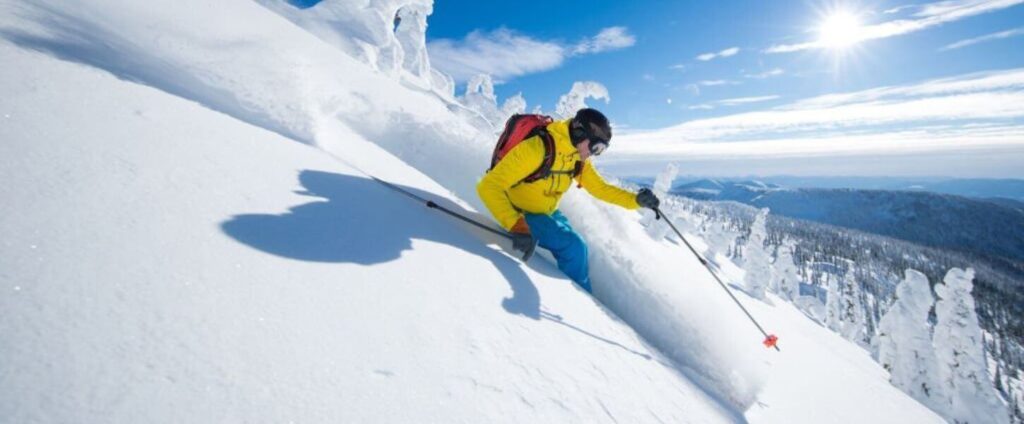
Skiing in the snowy mountains.

While sliding down the unspoiled, pure slopes, take in a mind-blowing spectacular view of the Nepali mountains. These days, heli-skiing is relatively popular, and you can experience this thrill in Nepal. The distant mountain slopes are even more exciting and enjoyable to explore in the powdery snow. As you enjoy skiing here, the magnificent Nepalese Himalayas let you see their majesty and glory. Ski enthusiasts, this is the perfect place to test your abilities!

Best Skiing Locations in Nepal:

  1. Annapurna range
  2. Mount Fishtail
  3. Dhaulagiri
  4. Makulu
  5. Cho Oyu
  6. Kanchenjunga
  7. Dolpo Region

9. Zip Flyer Adventure Activity

Buckle up because Nepal offers some of the most exhilarating zip lines to experience. You will have minutes of intense thrill and adventure thanks to the steep and lengthy zip lines here. The lush, emerald forests and high mountain peaks that tower over them will astound you. The area’s amazing natural splendour enhances the zip-lining experience.

Another daring sport you can enjoy in Pokhara, Nepal, is Zip Flyer, offered by Highground Nepal, in addition to Bungee Jumping and Swing. Enjoy the 1800-metre-long, 56-degree inclined, steepest, quickest, and longest Zipline in the world.

If you wish to enjoy a zip line while you are in Kathmandu, go to Dhulikhel, which is the closest area. They do offer various packages, like classic, Superman, and pair, and the cost of each varies.

10. Skydiving from Everest Region

Skydiving in everest region

Do you ever have dreams about flying? Take this opportunity to be ready for a skydive in Nepal. It is the most incredible experience to make you feel on top of the world.

Comparatively speaking to other adventurous activities in Nepal, skydiving is one of the more recent adventure sports. The majority of skydiving is done from two locations: Pokhara and Everest. The skydivers take off from either Kala Pathar or Gorak Shep at Everest.

Concluding

The outdoor activities in Nepal will captivate you. It offers so many activities that you can have endless fun and excitement. The Himalayan nation offers extreme adventure activities because of its breathtaking scenery and mountains.

In addition to the ones mentioned above, Nepal offers a wide range of adventurous activities. Adventure seekers have long been drawn to Nepal. The wonders of the country entice travellers from around the world.

Additionally, for an adventurous experience, if this is your first time in Nepal, I recommend bungee jumping or swinging. Additionally, Pokhara offers ziplining and paragliding for your enjoyment.

You can call us, send a direct WhatsApp message, or email us if you need any help with adventure activities in Nepal.

FAQ for Adventure Activities In Nepal

Q: Can you find adventure in Nepal?
Nepal, surrounded by eight of the highest mountains in the world, is a haven for thrill seekers.

Q: What are the most popular adventure activities in Nepal?
The most popular adventure sports include bungee jumping, swinging, paragliding, and ziplining because they are simple to perform and less expensive than skydiving, trekking, etc.

Q: Which locations provide outdoor adventure activities close to Kathmandu?
Popular locations close to Kathmandu offering outdoor adventure sports, including hiking, biking, ziplining, bungee jumping, swinging, etc., include Nagarkot, Dhulikhel, Chisapani, and Bhotekoshi.

search

Bhaktapur Durbar Square: UNESCO World Heritage Site

The city, also known as “Bhaktapur Durbar Square,” is 15 kilometers away from Kathmandu and is home to several instances of sculptures, woodcarving, and enormous pagoda temples dedicated to various gods and goddesses.

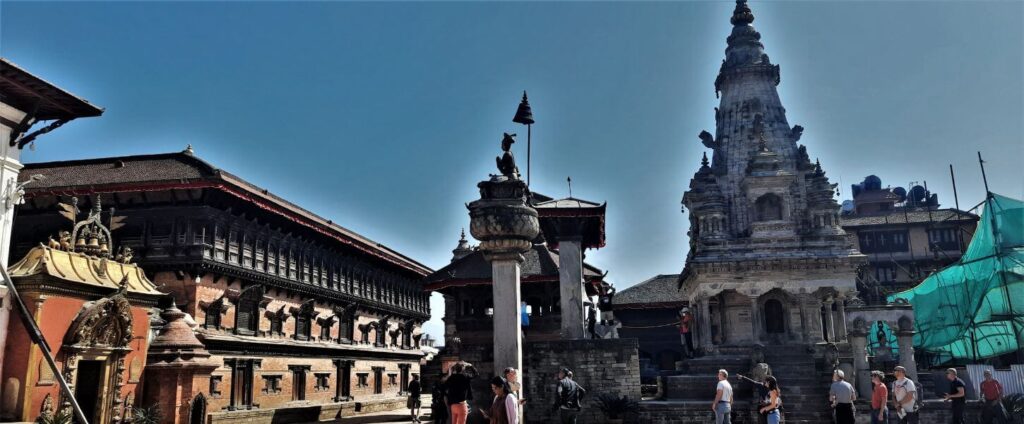
It is a collection of the pagoda- and shikhara-style temples centered on a brick and wood palace with fifty-five windows. The area, which showcases Nepal’s old arts, is one of the Valley’s most endearing architectural showpieces.

The guardian deities peering out from their sanctuaries, the golden shrines of kings sitting atop stone monoliths, and the wood carvings found on struts, lintels, uprights, tympanums, doorways, and windows all seem to compose a well-orchestrated symphony. The two main traditional businesses there are weaving and pottery.

Bhaktapur Durbar square: The most significant of all the tourist attractions at Bhaktapur, Bhaktapur Durbar Square is a well-known tourist hotspot for both domestic and foreign visitors. Newari call this region “Layaku.”

This city’s character is carried by ancient temples and shrines, sculptures, and historical heritage monuments built over various times. Ancient Nepali art highlights include the golden gate, the 55 Window Temple, the Bhupatindara Malla Statue, the Museum, and the Krishna Temple.

You may see the Big Bell, Dog Barking Bell, Siddhilaxmi Temple, Taleju Bhagawati Temple, and more in this location. The Durbar square serves as a gathering place for locals to unwind after a long day, roam around, and have fun.

It is simple to go to this location from various locations in Bhaktapur. Visitors from outside the country must pay a fee to enter this tourist attraction.

Bhaktapur Darbar Square: Major Attractions

Taumadhi Square:

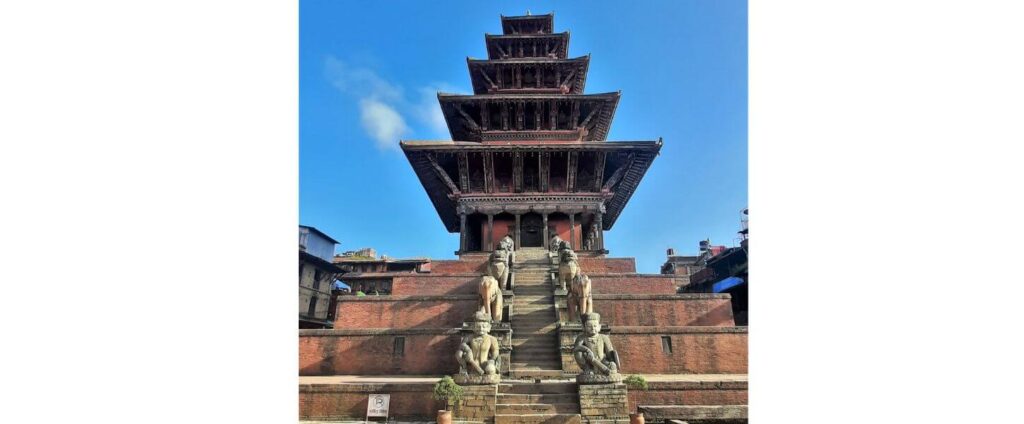
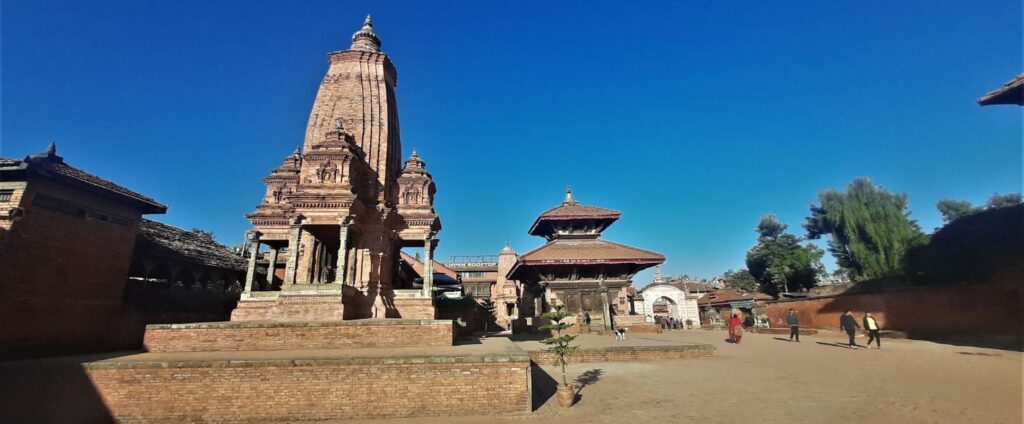
A brick-paved path leads to Taumadhi Square, located east of Durbar Square. Here, a five-story plinth supports the five-roofed Nyatapol temple erected in 1702 and sweeps beautifully into the sky. Stone statues of gods and fantastical animals line the stairway to the temple.

Dattatreya Temple:

Dattatreya Temple

Tachapal Square, also known as Dattatreya, is located at the center of a network of streets dotted with elaborately decorated homes. It has an alluring atmosphere. It serves as the original center of Bhaktapur and the center of uptown. A Hindu monastery in this area called Math houses the Peacock Window, built into the wall.

Golden Gate:

According to legend, the Golden Gate is the world’s most exquisite and intricately sculpted specimen. The Hindu deity Kali and Garuda, a mythological griffin, are depicted atop the door, and two celestial nymphs are also present. It is decorated with intricately detailed monsters and other mythical Hindu creatures.

The Golden Gate is “the most magnificent work of art in the entire Kingdom; it is situated like a diamond, flashing many facets in the handsome setting of its surrounds,” according to Percy Brown, a renowned English art critic, and historian. The gate, which King Ranjit Malla built, leads to the palace’s main courtyard and its fifty-five windowed structure.

Potter’s Square:

Bhaktapur Pottery Square

Bolachhen, commonly known as Potter’s Square, is located two minutes walk south of Durbar Square. Here, you may watch potters sculpt wet clay into wide pottery varieties. It contains a display of recently made pottery that has been put outside to dry.

Siddha Pokhari:

Ta-Pukhu, which translates to “great pond,” is the more popular name for Siddha Pukhu, a pond from the Lichhavi era (350-750 AD). It is a serene area of the city where you may watch the fish and enjoy the stone statues of various Hindu and Buddhist gods while letting your tensions melt away.

55 Windows Palace:

55 Window Palace


One of the most important works of art in Bhaktapur Durbar Square is the 55 Windows Palace. You can find a lovely setting and exquisitely carved sculptural patterns on windows and doors in the three-story castle. In the 17th century, King Bhupaindra Malla constructed the palace. Its golden gate and a few nearby temples are renowned worldwide as a decorative element of Bhaktapur.

Temple of Nyatapol:

Nyatapol Temple

A Five-Storied Temple Nyatapol, Nepal’s tallest and most spectacular pagoda-styled temple, is located at Bhaktapur Municipality’s word number 11. This stunning temple, constructed of wood and clay bricks, is one of Nepal’s greatest architectural achievements. You can find god’s idol inside the temple. The manifestation of wealth, Siddhilaxmi, has been established.

King Bhupatindra Malla constructed this enormous temple in the 16th century, and it is reported that it withstood the devastation of the devastating earthquake in 1933 (except for some minimal injuries to the ceiling of the fifth floor). The follower claimed that the King had laboriously transported bricks for the temple’s building.

The temple’s struts, doors, and windows are decorated with artistically carved divine figures telling divine tales. According to popular belief, the elephant standing over the strong guy in the front is 10 times more powerful than the latter. Thus that is where the deduction is made. As a result, the temple abundantly displays the artistic history of Newar artisans.

Siddhi Lakshmi Temple:

Siddhi Laxmi Temple Bhaktapur

Built in the 17th century, this Sikhara-style temple honors the tantric goddess Siddhi Lakshmi. The entrance to this temple is guarded by statues of numerous animals, including camels, rhinos, horses, and even mythological creatures.

Lion’s Gate:

On either side of this gate are two stunning stone statues of Hindu deities. According to legend, the artisans who created this had their hands severed as soon as he finished them. An envious Bhadgaon King accomplished this so the artist could stop creating similar works of art.

Durbar Simhadhwaka:

The National Art Museum, which has a fantastic collection of Medieval and Licchvai arts, is housed in this palace that King Bhupatindra Malla erected in the 17th century. The statues of two lions standing guard at this palace’s entrance gave it its name. Two enormous statues of the Hindu deity Narsimha are also present.

The Peacock Window:

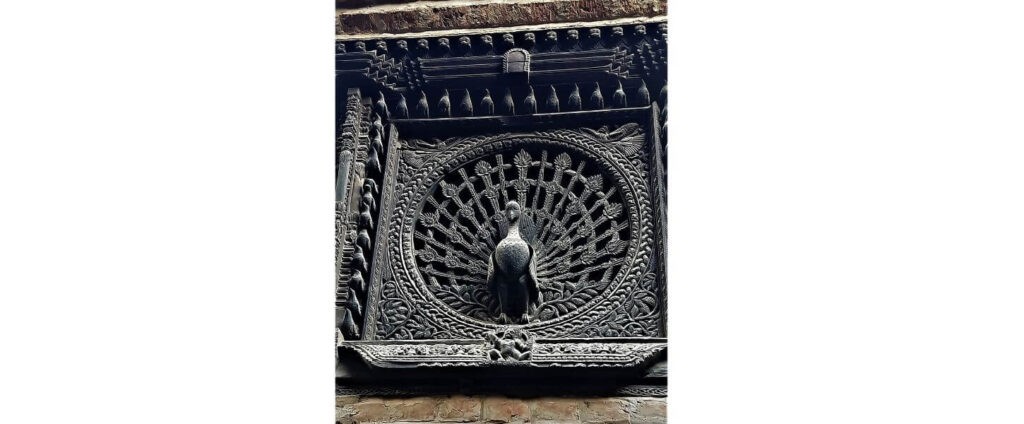
The Peacock Window

Located in Dattararya in Bhaktapur, The Peacock Window is a well-known tourist attraction. The monarch Yaksha Malla constructed it in the 15th century and has a lovely creative design. Near the main Dattatraya temple, on the second floor of the Pujari shrine, is where you’ll find the Peacock Window.

Among the several shrines in Bhaktapur, it is the biggest. There once resided soldiers and royal officials who were connected to King Haksha. This ancient temple features a variety of artistic shapes. The primary highlight of this structure is the uniquely creative design on almost every window and door. The carpenters who worked on constructing this shrine may have competed with one another.

The building’s whole woodwork is from the fifteenth century. The shrine’s bricks were replaced after the earthquake destroyed the originals. The peacock is a stunning and untamed bird. Buddhists revere Abhitav Buddha, while Hindus worship the peacock as the representative of God Kumar.

Peacocks dance so beautifully that anyone who watches them will have a pleasant and beneficial day. That is why a little window may have been constructed under Yaksha Malla’s rule so that time would favor the town’s residents. The public can view the old artwork and handicrafts in this building up close for a set admission cost. On Tuesdays and federal holidays, the museum is still closed.

Vatsala Devi Temple:

The Vatsala Devi Temple is situated at the front of the palace, near the king’s monument, and close to the Taleju Bell. Like the Krishna temple in Patan, this Shikhara-style temple is entirely made of sandstone and rests on a three-stage plinth. It is devoted to the goddess Vatsala Devi, a manifestation of Durga.

King Jitamitra Malla first erected the shrine in 1696. However, the visible building was rebuilt by King Bhupatindra Malla and dates to the late 17th or early 18th century. Dhunge Dhara, a water source, and the Chayslin Mandap are behind the temple. It was most well-known for its silver bell, which locals called “the bell of barking dogs” because when rung, the dogs nearby cried and screamed.

King Ranjit Malla hung the enormous bell in 1737 AD to announce curfews. Every morning, when worshiping the goddess Taleju, it was rung. The 2015 Gorkha earthquake destroyed the Temple, but the bell was unharmed.

Kedarnath Temple:

Kedarnath Temple

The temple dates back to the 17th century and is very appealing. You can see the entire durbar area, the rest house, and the Vatsala Durga Temple from its eastern pedestal. At the same time, you can see all of the Char Dham temples from the western or front pedestal of the temple.

In total, the temple has five pinnacles, including four subpinnacles. Architecturally, they also all rotate in four different directions. Despite this, it looks magnificent with the Lord Shiva statues there.

The stone pillars’ artistic carvings also appear to enchant onlookers. This temple was built by King Bhupatindra Malla, the most active ruler of the Malla period.

FAQ for Bhaktapur Durbar Square

Q: What makes Bhaktapur Durbar Square so well-known?
The city’s central center, Bhaktapur Durbar Square, is home to various terracotta, stone, and metal sculptures, and wood and stone carvings. Everything about this place is astounding.

Q: When and by whom was Bhaktapur Durbar Square created?
This is the primary building that dominates Durbar Square as a whole—built in the fifteenth century AD, this spectacular structure. King Bhupatindra Malla is kneeling in devotion to God while seated atop a large column.

Q: What time of year is ideal for a trip to Bhaktapur?
Autumn (October-November)
The monsoon retreat brings in the best time of year to travel to Bhaktapur, with cold, crisp temperatures and a clear, perfect sky that offers stunning visitors to the entire city.

Q: What is Bhaktapur’s history?
In the 12th century, King Anand Dev Malla built the city. Until the 15th century AD, Bhaktapur served as the Greater Malla Kingdom’s administrative center in the Kathmandu Valley. The then-Malla monarchs erected many of Bhaktapur’s most important monuments.

Q: What is Nepal’s largest durbar square?
Bhaktapur Durbar Square
Between Kathmandu and Patan, Bhaktapur Durbar Square does have the best durbar square. Having centuries-old temples and loving the fine woodworking elements of temples. Bhaktapur has very polite residents and is quite clean. If this is your first time, remember to visit durbar square.

search

Nagarkot Sunrise Trip | Nagarkot Sightseeing

Take a leisurely hiking journey through Nepal’s landscape and culture to experience the breathtaking Nagarkot sunrise.

Watch the far-off Himalayas illuminated by the early morning sun, then climb to Changu Narayan, a UNESCO World Heritage Site. As you travel, stop at tiny eateries for breakfast and lunch to taste the local culture as you pass through the Brahmin, Tamang, and Newari communities.

For those who are enthusiastic, energetic, and health-conscious, Nagarkot is an excellent destination. It is the place to enjoy the Himalayan panoramas, weather permitting, as it has several fantastic hiking trails and good nature hikes.

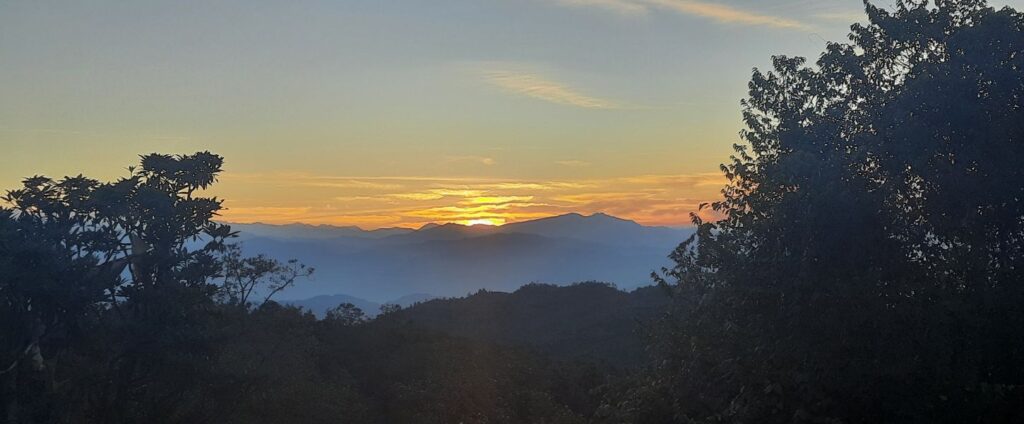
Nagarkot sunrise is a magnificent experience because the morning dawn transforms the colors of the snow-capped Himalayas.

Nagarkot is a peaceful, unhurried retreat from the bustling metropolis of Kathmandu. It is a perfect place to unwind and recharge after the chaos of Kathmandu with delectable meals and leisurely exploring.

You may go on hikes in the Nagarkot region, taking you through Nepal’s stunningly green countryside with stunning mountain views, serene pine woods, and peaceful villages.

Nagarkot Sunrise And Sunset Views With Panoramic Scenery

Nagarkot View

The hill town of Nagarkot is well known for its panoramic sunrise and sunset views. Many tourists get up early and go for Nagarkot sunrise trekking to view the magnificent dawn, majesty, and glory of the Himalayas.

One of the most popular tourist destinations, it offers breathtaking views of the High Himalayan Ranges, sunrise, and sunset, as well as breathtaking vistas of picturesque landscapes and hills covered with big cities.

Many tourists prefer coming to Nagarkot in the spring when the surrounding valleys burst into a vibrant rainbow of flower colors. Against the calm backdrop of the snow-covered mountains, the blooms are stunning.

Nagarkot Sunrise and Sunset Views of the Himalayas in eastern Nepal include Mount Everest, the Langtang Range, Ganesh Himal, Ghaurisankar, Rolwaling Himal, and other snow-covered mountain ranges. Additionally, Nagarkot provides a birds-eye overview of the Kathmandu Valley.

Himalayas View from Nagarkot

How Far Is Nagarkot From Kathmandu?

Since it is only 17 miles (28 kilometers) from the heart of the city of Kathmandu, the hilltop town of Nagarkot is a well-liked short-getaway destination. The quickest and easiest way to go is via private transfer. Which takes you from the Kathmandu Valley through the foothills of the Himalayas.

The drive to Nagarkot is safe as the road passes through several villages. The bus option is less expensive and takes about one and a half hours.

Alternatively, you can hike one of Nepal’s most well-liked short hikes from the outskirts of Kathmandu, arriving at Nagarkot in about 5 hours. Nagarkot is one of Nepal’s most well-liked short treks and is suitable for hikers of all levels, despite some steep areas.

While traveling through forests of oak, pine, and rhododendron, you’ll see the Kathmandu Valley and the snow-capped Himalayan peaks.

Nagarkot Sunrise Hike

Nagarkot Sunrise View

For those with a tight schedule who yet want to experience the thrill of hiking and the splendor of the Himalayas, Nagarkot Day Hike is appropriate.

For outdoor enthusiasts, it is a fantastic location since it offers a variety of activities, including trekking to Nagarkot, nature walks, paragliding, village sightseeing, and hiking tours.

The Nagarkot hike is a fantastic adventure that takes you through a thick pine forest to a view tower from which you can get a panoramic view of the magnificent Himalayan Ranges and the Kathmandu valley.

With our Nagarkot Hike Tour, you may get away from the bustling Kathmandu Valley and into Nagarkot’s peaceful, tranquil setting. This hilltop is the perfect vacation spot in Nepal because it is a place for relaxation and replenishment.

Nagarkot ranks in the top 5 of Nepal’s best dawn viewing destinations. Most passengers take the Nagarkot Sunrise Tour in the morning to take in the breathtaking views of the sunrise and the surrounding snow-capped mountains.

Itinerary

Day 1: Take a drive to Nagarkot and hike to the Changu Narayan Temple, then take a drive to Kathmandu

Since you will visualize the sunrise over the Himalayas from Nagarkot View Point, the Nagarkot Sunrise hike begins at around 4 am from your hotel in Kathmandu. The drive there takes about an hour and a half. Once we arrive, we will view the sunrise view before serving breakfast at the hotel in Nagarkot.

We hike from Changu Narayan Temple, which takes about 3–4 hours. To Changu Narayan Temple, visit the temple, which is a part of Nepal’s UNESCO Cultural Heritage, and then take the bus back to our accommodation in Kathmandu.

Paragliding in Nagarkot

Paragliding from Nagarkot is a fantastic experience that ranges from adrenaline-pumping twists. It turns to a truly refreshing experience floating above the stunning wilderness. The scenic views of the Himalayas, forests, beautiful green valleys, and Mongolian villages.

It is accompanied by lovely hills and mountains and is away from the congested area of the city.

Paragliding in Nagarkot delivers a classic surge of adrenaline. Vistas of Everest amid the snow-capped Himalayas and valleys outside of the crowded urban area.

Lapsiphedi, which is 1,905 meters above sea level, serves as the takeoff point for paragliding flights across the Annapurna, Manaslu, Ganesh Himal, Langtang, and Jugal mountain ranges.

FAQs About Nagarkot Sunrise

Some of the frequently asked questions about Nagarkot Sunrise are listed below.

What was the Earlier Name of Nagarkot?

The earliest name of Nagarkot is Kangra. Kangra is a town in western Himachal Pradesh, northwest India, near the Beas River and the southernmost tip of the Himalayan foothills. At an elevation of 2,409 feet (734 meters), the village is situated along a rail line just south-southwest of Dharmshala.

Does it Snow in Nagarkot?

This mountain range receives a lot of winter snow and is another well-liked destination for snow activities. A great place to see unrivaled sunrise and sunset views is Nagarkot.

What Is The Best Time to Visit Nagarkot?

The spring months of March and April and the early winter months of October and November are the ideal times to visit Nagarkot. In the spring, the weather is good, and the hills are stunning since the brightest flowers are in full bloom. These months are ideal for outdoor activities like hiking and paragliding.

View from Nagarkot

Is Nagarkot Worth Visiting?

For seeing the Himalayas, Nagarkot is the perfect destination. Nagarkot is a fascinating place that is well worth visiting. It also provides a variety of adventurous activities. It is a well-known tourist destination in Nepal and receives a lot of visitors.

Can we see Mount Everest from Nagarkot?

Yes, you can see Mount Everest from Nagarkot. There are spectacular sunrise views of the Himalayas, including Mount Everest and other peaks in eastern Nepal’s Himalayas. Besides providing a birds-eye view of Kathmandu, Nagarkot allows visitors to admire the valley from a height.

What are the Things to do in Nagarkot?

Nagarkot provides views of 8 of Nepal’s 13 Himalayan mountain peaks. These consist of the Numbur , the Mahalangur (Everest Range), the Langtang , the Jugal , the Ganesh Himal , and the Annapurna and the Manaslu Range. The following are some activities to do in Nagarkot:

  1. Paragliding in Nagarkot
  2. Observe the Nagarkot sunrise
  3. Enjoy the hike at Nagarkot
  4. Enjoy trekking in Nagarkot
  5. Climb the tower at Nagarkot View Point
  6. Ride a mountain bike.

What is the Sunrise Time at Nagarkot, Nepal?

On the Sunrise and Sunset website, you can view sunrise and sunset time at Nagarkot for the entire month.

What is Nagarkot’s Height?

Nagarkot is situated at the height of 2174 meters. It offers a panoramic view of Kathmandu city, encompassing Shivapuri National Park and various mountains, including Mount Everest, due to its altitude.

Our staff at Attractive Travels has the expertise to plan an unforgettable vacation to Nepal, Bhutan, or Tibet in the Himalayan region, home of Mt. Everest. We will be happy to fulfill your request to see a beautiful sunrise. We have a team of devoted, knowledgeable, skilled tour directors, tour guides, trekking leaders, and field personnel.

Prakash Aryal is one of our highly skilled team members who are among them. While pursuing his additional education, he started his job in tourism in 2007 as an administrative assistant. He is one of our most knowledgeable tour guides and will provide you with an unforgettable experience in Nepal.

search

Kathmandu Durbar Square: UNESCO World Heritage Site

Durbar Square in Kathmandu, where successive kings have sat and governed over Nepal for a very long time, and new kings have been crowned to the continuous pounding of drums and trumpets. The majestic Kathmandu Durbar Square is just one of the country’s three squares.

The location continues to be Kathmandu’s traditional architecture’s most impressive heritage. Although the devastating earthquake of 2015 left its mark on the structure and caused about a dozen areas of the grounds to collapse, it has retained much of its previous beauty.

The Durbar Square area comprises three loosely connected squares: Basantapur Square, the site of a former elephant stable, the main Durbar Square on the west, and a smaller area housing the entrance to Hanuman Dhoka.

The complex’s western portion is where the main Durbar square is located, with the open Basantapur Square area located in the complex’s southern half. The former building once served as a stable where royal elephants were kept for a long time. Today, it is a location with gift shops.

The second half of the square is located in the northeastern corner of the complex. The majestic Hanuman Dhoka Complex’s entrance is situated here, and a lovely collection of temples are hidden behind it.

The area is a bustling walkway that links numerous streets for the general populace. The Durbar is crowded with people during holidays like Dashain, Indra Jatra, Machhindranath Jatra, and Gaijatra, even though it is no longer used for coronations. In 1979, UNESCO designated the whole Durbar Square complex as a World Heritage Site.

Past Glory of Kathmandu Durbar Square

Basantapur area in Kathmanu Durbar Square

The Malla Kings, the first kings to rule over Kathmandu following its independence, once used the Kathmandu Durbar Square as their capital. Later, Prithvi Narayan Shah, who had invaded the Kathmandu Valley in 1769, chose it as a royal residence. This was followed by additional Shah Kings who succeeded one another and ruled the nation till 1896.

The building of this affluent area has been credited to the renowned Sankharadev, despite the absence of any recorded archival records that describe its historical past. The three-roofed Taleju Temple in the northern part of the compound is thought to have been built by Ratna Malla, the first monarch of the autonomous city.

He is also credited with building the temples on the property dedicated to Kotilingeshwara, Jagannath, Mahendreswara, and Mahadev. The five acres of flat area that makeup Kathmandu Durbar Square still display a wonderful, ancient feel. The square complex, with its ponds encircled by palaces, quadrangle courtyards, and temples displaying old paintings, is unquestionably the jewel in Nepal’s glittering crown.

Kathmandu Durbar Square’s Top Attractions

Kathmandu Durbar Square Attractions

Due to several factors, Kathmandu Durbar square is a popular tourist destination. The stunning buildings of worship and expansive courtyards add to the area’s already stunning aesthetics. The area has great historical significance and has been the site of numerous coronation rituals. The following list includes a handful of the many attractions within the square complex.

1. Taleju Temple

At a great height of 36.6 meters, the sacred sanctuary constructed by King Ratna Malla is a temple dedicated to the Goddess Taleju Bhawani. The center of the temple is adorned with a magnificent deity statue with four heads and 10 arms, and the area is charming due to the elaborate metalwork. A sanctum for the Kumari, known as the Living Goddess in Nepal, can be found inside the temple.

2. Jagannath Temple

The octagonal Krishna Temple was built during Pratap Malla’s reign and is completely dedicated to Lord Krishna. According to legend, this worship site was constructed as a memorial to two of his former kings. The walls of this temple are decorated with lovely images of Lord Krishna and two goddesses who are thought to be his wives.

3. Trailokya Mohan Narayan Temple

Lord Vishnu is honored in the complex’s five-roofed temple. The holy sanctum of the temple, which is decorated with antique paintings and portraits of the deity, exudes a magical aura that draws in many worshippers.

4. Kalbhairav Temple

Ancient legend describes Kalbhairav as a terrifying manifestation of Lord Shiva. The god, present in the Durbar Square complex in a great and majestic shape, welcomes several people each year.

5. Hanuman Dhoka

Hanuman Dhoka Museum

The Hanuman Dhoka Palace Complex, which includes a museum, is maybe the Kathmandu Durbar Square’s main draw. The structure, which served as a royal residence until 1886, now draws countless residents and visitors.

This tourist destination provides insight into the culture and architectural style that predominated in ancient Nepal. The museum is a fantastic place to find artifacts from the Malla dynasty. In addition, this location is the setting for the tale of Prithvi Narayan Shah’s rule and the unification of Nepal.

6. Kumari Bahal

The Kumari Bahal is a stunning old palace where she resides while she is the chosen Devi. It is a three-story traditional building composed of red bricks and wood with ornately carved balconies, windows, and doors resembling Buddhist Viharas.

In the middle of the 18th century, Jaya Prakash Malla constructed this building. It also holds a stupa decorated with Saraswati symbols and a sizable chariot used to transport the Kumari around the city during the yearly Indra Jatra celebration. Kumari’s presence is thought to protect the community and the area.

The massive earthquake that struck Nepal in 2015 barely damaged the Bahal while severely impacting the surrounding area. This is allegedly some indication that the villagers connect to the grace or strength of the Kumari.

7. Sattal Singha

Singha Sattal, also known as Silyan Sattal, is a traditional inn. A shrine to Natyeshwar, the God of Dance, is located inside the Sattal. The first construction took place in the 12th century.

8. Temple of Kabindrapul

The God of Music resides in this wooden temple from the 17th century. Another name for Kabindrapul Temple is Dhansa Dega.

9. Ashok Binayak (also called Maru Ganesh)

A modest Ganesh shrine called Ashok Binayak can be seen in the Kathmandu Durbar Square’s Eastern section. The shrine has bars surrounding it and is one story. There are gold-plated walls within.

10. Gaddi Baithak

A structure called Gaddi Baithak is situated just across from Kumari Ghar. Following the 2015 earthquake, the monument has finally been reconstructed. It is a white neoclassical structure that Prime Minister Chandra Samsher Rana first constructed in 1908 AD.

11. Kotilingeshwara Mahadev Temple

One of the most significant structures created by King Pratap Malla in the 17th century is the Kotilingeshwara Mahadev Temple. Three metallic circle roofing and a round design characterize the temple.

12. Shiva Parvati Temple

The magnificent Shiva Parvati Temple, which houses Lord Shiva and his consort Goddess Parvati, is situated in Durbar Square’s religious district. It is frequently visited by pilgrims and tourists and is just as significant as the Kumari Bahal or the Kasthamandap. Every square inch of the temple wall, which Bahadur Shah built in the 18th century, is covered in incredibly detailed carvings.

13. Bhagwati Temple

The Durbar Square’s Bhagwati Temple was originally a Narayan temple. In the eighteenth century, Jagajaya Malla constructed it. It is believed that Prithvi Narayan Shah stole the Narayan idol and replaced it with a statue of Bhagwati.

14. Great Bell

King Rana Bahadur Shah erected the Great Bell in 1797. The Degutaleju temple’s neighboring beautiful bell runs during the temple’s puja.

15. Degutaleju Temple

A component of the Hanuman Dhoka is the Degutaleju Temple. It has three roofs and a shrine to Taleju, the personal goddess of King Malla.

16. The column of King Pratap Malla

A stone pillar known as King Pratap Malla’s column, also known as Pratap Dhwaj, featured a statue of the King facing the Degutaleju shrine. The 2015 earthquake destroyed the statue, but the pillar is still there.

17. Indrapur Temple

This temple is devoted to Indra, as the name would imply. However, a Lingam within suggests the shrine is devoted to Lord Shiva. Additionally, a Garuda may be seen on the southern side, indicating that the temple is devoted to Lord Vishnu.

18. Tana Deval Temple

The Taleju temple is situated right in front of the Tana Deval Temple. The temple includes three carved doors, and Mother Goddess-themed painted struts. The wall encloses the temple.
Getting To Kathmandu Durbar Square
The magnificent heritage site is conveniently located in the Kathmandu Valley and is reachable by both private and public transportation. If you follow the Amrit Marg, it is only three kilometers from Kathmandu’s center. Taxis or local buses are available. From Kathmandu, walking to Durbar Square takes more than 30 minutes.

Earthquake 2015

Nepal Army at resque during earthquake 2015

After a severe earthquake struck Nepal on April 25, 2015, a sizable portion of the southern Durbar Square was destroyed, and the surviving buildings developed physical fractures and crevices. A devastating earthquake had already struck Kathmandu Durbar Square in 1934. However, the complex was immediately renovated, and in no time was it restored to its magnificent state. The renovation efforts since the earthquake of 2015 have not yet met expectations.

The Kathmandu Durbar Square is a historical landmark and a source of national pride. The competent authorities must act swiftly to ensure that it remains a place of awe and pride for future generations. The Kathmandu Durbar Square has been and continues to be the center of Nepal’s rich history in terms of cultural heritage and religion, sovereignty, pride, and economy. Even though natural disasters have changed the complex’s buildings’ design, they continue to draw visitors because of their rich atmosphere.

The Kathmandu Durbar Square: What to Know Before You Go?

  1. To see the Kathmandu Durbar Square more authentically, go there early in the day when there are fewer tourists.
  2. The Living Goddess Kumari briefly manifests herself at the Kumari Ghar’s main window between 9 and 11 a.m. and around 4 p.m. It is completely against the law to take photos, but if you’re fortunate, you might be able to receive a blessing.
  3. If you want to fully appreciate your visit, sign up for a guided tour or hire a guide in advance! A guide should be hired when visiting areas like Kathmandu Durbar Square. Once there, avoid using a guide because it might be challenging to distinguish between authentic and bogus sources.
  4. Only one day’s worth of tickets is available. The tourist center close to Kumari Ghar, however, will let you exchange your ticket for a Visitor Pass that will be good for the remainder of your visa (it is free, and you need your entrance ticket, your passport and an ID photo).

FAQ

Q. Why is Kathmandu’s Durbar Square so well-known?
There are three squares in the Kathmandu Valley of Nepal, with Kathmandu Durbar Square being one of them. Durbar Square is an important location for Buddhist and Hindu rituals, holy rites, royal celebrations, and royal coronations (the word “durbar” means “palace” or “a court held by a prince”).

Q. What is Kathmandu Durbar Square’s alternate name?
Hanuman Dhoka
Basantapur Durbar and Hanuman Dhoka are additional names for Kathmandu Durbar Square, a historic durbar square in the heart of Kathmandu.

Q. Do you have to pay to get into Durbar Square?
Kathmandu’s Durbar Square entrance cost is NPR 150 (INR 94) for citizens of SAARC nations other than Nepalese, for whom it is free, and NPR 1000 for citizens of China and other international nations.

search

Nepal Sightseeing Places

Nepal has an abundance of unique sightseeing places and destinations, most of which you must already be familiar with. In the following list, we will discuss some exciting locations that you should definitely check out. In case you are wondering where to head next, we recommend that you consider visiting some of these interesting places that are listed below.

1. Devi’s Falls:

This rummaging waterfall which flows into a cave is situated in the Kaski District (Pokhara). It is quite a popular tourist attraction and is also known as the ‘Patale Chango’, which translates to ‘Underworld’s Waterfall’. The water body falls into a tunnel and then re-emerges in an underground cave nearby called the Gupteshwor Mahadev Cave. The waterfall’s source is the Phewa Lake, and it is best to visit the place during the monsoon season. During the rainy season, the water flows frantically through its restricted, narrow course which is confined by boulders.

2. Chamere Gufa:

This name directly translates to ‘the bat cave’, and it is Nepali Bruce Wayne’s hideout.
In Pokhara, Nepal’s Kaski District, there is a solutional cave named the Bat Cave. On the walls and roof of the cave, horseshoe bats are reported to live.

It is a show cave and one of Pokhara’s most famous tourist spots. A limestone cave that features many carvings of Hindu deities, this structure was discovered in 1983. A single entrance and exit lead to the cave. The exit is more narrow than the entry and requires climbing.

According to indigenous religion, only individuals who have not sinned should travel through the exit hole. The woodland surrounds the cave. It is not far from the neighbouring Mahendra Cave. The cave is U-shaped, with sculptures of Hindu deities inside. During the winter, up to 18 different kinds of bats may be found in the cave.

3. Mahendra Cave (Andhero Bhavan):

Nepal Sightseeing Places: Mahendra Cave

Discovered in the 1950s, this cave is named after King Mahendra Bir Bikram Shah Dev. It is believed that the king read about the place in the Newari language newspaper and immediately visited it afterwards. The cave is situated in the western region of Pokhara.

If you decide to venture into the cave, you will find a statue of Lord Shiva inside its dark passages.

4. Shuklaphanta National Park:

In the Terai region of far-western Nepal is a national park, which is a former hunting ground for royalty. This Park is adjacent to the Kishanpur Wildlife Sanctuary and the Pilibhit Wildlife Reserve in the Indian subcontinent.

Shuklaphanta National Park is a national park in Nepal’s Terai region, containing 305 km2 of open grasslands, woodlands, riverbeds, and tropical wetlands at elevations ranging from 174 to 1,386 meters. It is flanked on the west and south by the Mahakali River.

5. Shivapuri Nagarjun National Park:

Shivapuri Nagarjun National Park, Nepal’s eighth national park, was created in 2002. It is called Shivapuri Peak, found in the nation’s military mid-hills on the northern outskirts of the Kathmandu Valley.

Q: What is the Shivapuri Nagarjun National Park well-known for?
Mammalian species recorded in the park include the Himalayan Black bear, leopard, jungle cat, and rhesus monkey. The park also has 177 bird species, including at least 9 vulnerable species, 102 butterfly species, many rare and endangered species, and 129 mushroom species.

6. Garden of Dreams:

Nepal Sightseeing Places: Garden Of Dreams

The Garden of Dreams, also known as the Garden of Six Seasons, is a 1920 neo-classical garden in Kaiser Mahal Kathmandu, Nepal. Kishore Narshingh designed the gardens, which span 6,895 square metres (74,220 square feet) and include three pavilions, an amphitheatre, ponds, pergolas, and urns. It had been neglected since the mid-1960s, following the death of its sponsor, Kaiser Sumsher Rana. But it was recently restored with the assistance of the Austrian government.

The ancient neo-classical garden at Keshar Mahal was to be removed in 1998 to make way for the building of a commercial area. However, on the suggestion of Karna Shakya, Minister of Education Arjun Narsingha KC immediately halted demolition operations and made the site available to the public under the new name “The Garden of Dreams.”
Non-Nepalis must pay 400 Nepali rupees to access the Garden of Dreams. Nepali people pay 150 rupees.

7. International Mountain Museum:

The museum opened its doors on February 5, 2004. The museum’s principal display rooms are the Hall of Great Himalayas, the Hall of Fame, and the Hall of World Mountains. Visits to the museum fell drastically between 2015 and 2016, and revenue fell by half due to the country’s 2015 earthquakes. Since its inception, the museum has had 2.1 million visitors in 2019.

The museum closed in March 2020 because of the covid-19 epidemic and reopened in November 2020. About 100,000 domestic and foreign tourists visit the International Mountain Museum (IMM) every year. IMM records, documents, and illustrates historical and contemporary mountain and mountaineering advancements from throughout the world.

8. Hiranya Varna Mahavihar:

Nepal Sightseeing Places: Hiranya Varna Mahavihar

King Bhaskar Varman constructed this golden pagoda of Shakyamuni Buddha in the twelfth century. The golden picture and a big prayer wheel may be seen on the highest story of the pagoda.

Hiranya Varna Mahavihar was created where a rat pursues a cat, according to folklore. In 1994, rats were still being fed at the location, but this may have altered over time. One visitor reported seeing a lot of rats at the temple in 2000 but no rats in 2021.

During the 2015 earthquake, the courtyard structures received structural damage. Rehabilitation began in July 2021.

Q: What is Hiranyavarna Mahavihar’s style?
Nepalese bahal architecture.
Hiranya Varna Mahavihar is styled after a Nepalese bahal. The courtyard is a nearly square, rectangular area. There is a little entry in the western corner, but the main entrance is on Kwalakhu Road on the southeastern side.

9. Tengboche Monastery:

Tengboche Monastery, also known as Dawa Choling Gompa, is a Tibetan Buddhist monastery of the Sherpa group located in Tengboche village in Khumjung in the Khumbu area of eastern Nepal. The monastery is the biggest gompa in Nepal’s Khumbu area, standing at 3,867 meters.

Q: Tengboche monastery, how ancient is it?
The monastery is the biggest gompa in Nepal’s Khumbu area, standing at 3,867 meters (12,687 feet). Lama Gulu constructed it in 1916 with close ties to its mother monastery, the Rongbuk Monastery in Tibet. It was damaged by an earthquake in 1934 and afterwards restored.

10. Kailashnath Mahadev Statue:

In terms of height, the Kailashnath Mahadev Statue is the highest Shiva sculpture in the world. The Garuda Wisnu Kencana Statue in Bali, Indonesia, is the highest Hindu deity statue. It is located in Sanga, Kavrepalanchok District, Nepal, approximately 20 kilometres from Kathmandu.

On a daily, about 5,000 people visit the monument; on holidays, national holidays, and Hindu festivals, the number grows dramatically. Because of the number of visitors, the monument has aided religious tourism in Nepal, both locally and globally, increased local economic activity, and influenced the development of adjacent communities.

Q. How tall is the statue, and what material is it made of?
The monument stands 143 feet (43.5 meters) tall and comprises copper, zinc, concrete, and steel.

Q. What is fair for individuals, particularly students?
There is no fee to access the temple area.

11. Dakshinkali Temple:

Nepal Sightseeing Places: Dakshinkali Temple

The Dakshinkali Temple gets its name from a combination of the terms ‘Dakshin,’ which means south,’ and the name ‘Kali,’ which represents the deity worshipped here. The Goddess’s idol is pictured standing on top of a corpse, symbolizing the victory of good over evil.

The four-armed idol, adorned with a sword in one hand, a skull cap in another, and a severed head in the third, portrays an image of an influential, empowered divine figure who has arrived to vanquish evil and emerge triumphant.

The Dakshinkali Temple is barely a kilometer from the town of Pharping and is about 22 kilometers from Kathmandu. The temple is one of Nepal’s most prominent and is devoted to the ferocious and dreaded Goddess Kali. This temple’s reputation stems from its rites and traditions.
Animals, particularly uncastrated male goats and cockerels, are sacrificed at this sacred site twice a week as a gift to Lord Shiva’s furious wife. Rani Rashmoni, a devotee of Kali, erected the shrine in 1855.

Q: Who constructed the Dakshinkali Temple?
The Dakshinkali temple is situated around 17 kilometers south of Kathmandu. This is Goddess Kali’s temple. King Pratap Malla built this temple.

12. Manakamana Temple:

Manakamana Temple is a Hindu temple devoted to the goddess Bhagwati, an avatar of Parvati. It is located in the hamlet of Manakamana in the Gorkha District of Nepal’s Gandaki Province.
Previously, the only method to access the Manakamana temple was to go on a three-hour-long challenging hike. A cable car now connects Kurintar, 5 kilometers (3.1 miles) east of Mugling, to Manakamana. The cable car travels 2.8 kilometers (1.7 miles) in approximately 10 minutes.

Q: What is the significance of the Manakamana Temple?
It is a holy site for the Hindu Goddess Bhagwati, a manifestation of Parvati. Manakamana is derived from two words: “mana,” which means “heart,” and “kamana,” which means “desire.” It is thought that anyone who makes a wish from their heart here will have their desire granted.

13. Budhanilkantha Temple:

Nepal Sightseeing Places: Budhanilkantha Temple

Budhanilkantha Temple (Nepali: ) is a Hindu open-air temple dedicated to Lord Mahavishnu in Budhanilkantha, Nepal. The Narayanthan Temple, also known as Budhanilkantha Temple, is distinguished by the massive reclining figure of Lord Mahavishnu.

Budhanilkantha Temple is located at the northern end of the Kathmandu Valley, beneath Shivapuri Hill. Golfutar Main Rd, Budhanilkantha 44600 is the address. The Budhanilkantha Temple is located around 12 kilometers from Tribhuvan International Airport.

Q: Why is Vishnu known as Budhanilkantha?
However, the temple is named Budhanilkantha. It does not derive from the Buddha; instead. Budhanilkantha has a Sanskrit origin that means ‘Old Blue Throat,’ a moniker bestowed to Lord Shiva by gods after the Lord ingested poison to save the world.

Conclusion

Nepal is famous for many sightseeing places. But you will be amazed at how much the list could go on. Nepal has many world heritage sites that UNESCO has listed. The places mentioned earlier are some of them. We hope that this article helped you in some way to get to know Nepal a bit more deeply. We Attractive Travel and Tours also provide service of Nepal tours to various sites. You can contact us if you have any queries.

search

World Heritage Sites in Nepal

World Heritage Sites are areas that belong to everyone on the planet, according to the UN governing organization UNESCO. There are a number of monuments in Nepal that are listed as UNESCO World Heritage sites.

These world heritage sites in Nepal are incredible accomplishments of human creativity. Some of these date back more than 2500 years.

You may visit several of these sites inside the Kathmandu Valley in a single day because of their close proximity. Only three of the sites classified as UNESCO World Heritage Sites are outside of the capital city Kathmandu.

How Many World Heritage Sites Are There in Nepal?

Nepal features a total of 4 major World Heritage Sites:

The Kathmandu Valley and Lumbini Province (Cultural Heritage); Chitwan National Park and Sagarmatha National Park (falling under Natural Heritage/Conservation Areas), respectively.

The United Nations Educational, Scientific and Cultural Organization (UNESCO) has several criteria for selection on its World Heritage List. These requirements establish on many cultural and natural factors. Every site must possess an ‘outstanding universal value as a prerequisite for the list.

An understanding of the history and roots of every Nepalese sub-culture and tribe is crucial, along with the religions that connect to them. The sites described below demonstrate cultural and natural wonders that prove to be timelessly valuable heritage.

(I) The Kathmandu Valley-World Heritage Sites in Nepal-

The Kathmandu Valley Heritage Site received the earliest mention on the UNESCO World Heritage Site in 1979. The area comprises various uniquely remarkable locations within itself, and the list below provides brief descriptions of each site:

» Bhaktapur Durbar Square:

This ancient royal Palace is in Bhaktapur (a.k.a. Khwopa). The Kshatriya Dynasty (Malla Dynasty), which ruled until the late 17th century, had established a royal residence here.

Post-subjugation of this compound by the Gorkhali forces, and due to earthquakes that came afterward, the Palace lost most of its original structures. Finally, it succumbed to the buildings that now remain.

The remaining structures are a fine example of Nepalese architecture – more precisely, the Sikhara style. The 55-window Palace, courtyards, sandstone temples, statues of kings, mythical creatures and animals, fountains, and pagodas are all exemplary works of architecture.

The most notable Temple within the Bhaktapur Durbar Square is the Taumadhi Square, which hosts the tallest pagoda-style Temple, the Nyatapola Temple (also called the Panch Talee Mandir). Public entry inside this Temple is prohibited since it houses a tantric incarnation of a Mother Goddess.

» Patan Durbar Square:

This historical site is in Lalitpur, the southern part of the Kathmandu valley. This was another residence of the royal kings of the Malla Dynasty. The structures are composed predominantly of red bricks in the style of Newari Architecture (Indigenous people of the Kathmandu Valley).

This area has 136 courtyards and 55 temples, and some feature intricate erotic carvings on their roofs. The temples closely resemble other Shiva temples in the Indian subcontinent.

» Kathmandu Durbar Square:

Located in the anterior of the former royal Palace is yet another extravagant showcase of traditional historical Newari architecture: The Kathmandu Durbar Square. Its origin dates back to the 3rd century of the Licchavi dynasty and acts as a central royal palace for many prominent rulers. (like the pre-eminent Prithvi Narayan Shah)

The site hosts the famous Hanuman Dhoka Complex across five acres of land occupying the central region of the Kathmandu Valley.

» Boudhanath:

Boudhanath, the biggest stupa in Nepal, was built upon the remains of the Kassapa Buddha. Kassapa Buddha was the predecessor of a renowned figure in Buddhism, Siddharta Gautama. Kassapa was a giant being (about 10 meters in height, according to legends) and lived to a prosperous age of 2000.

After the 2015 earthquake, the stupa’s spire was subject to severe damage, and the entire structure above the dome had to undergo renovation. Donations from various Buddhist groups and volunteers facilitated the repairs of this ancient structure. Rumors are that the funds have amounted to a gross total of over 2 million US dollars.

The Prime Minister of Nepal during that time, Mr. Pushpa Kamal Dahal, facilitated the inauguration of this monument.

» Swayambhunath Temple:

In the western part of the Kathmandu Valley lies a sacred Buddhist Pilgrimage Site known as Swayambhu (colloquial) or simply the Monkey Temple. The rich diversity of trees on this hill gives it the name Phags.Pa Shing.Kun (Tibetan transliteration), meaning ‘Sublime Trees.’ The site houses several temples, stupas, and shrines that date back to the Licchavi Era.

The main stupa has Buddha’s eyes painted on its central axis and a number ‘1’ (Devanagari) in between, resembling a nose. A tall stretch of stairs that run up to the face of the Temple characterizes this monument. A motorable road rises around the back hill and ends a few staircases below the back of the stupa. A small pond with a wishing fountain and several souvenir shops can be found where this motorable road ends.

From this hilltop, you can witness a cinematic view of the Valley and the urban agglomeration that foils the city.

» Changunarayan Temple:

It is on a hill north of Bhaktapur, populated by a dense forest of Champak trees. Consecrated to Lord Vishnu (The Preserver of cosmic order), this pagoda is the oldest Temple in the history of Nepal. You can observe many elaborate carvings of the incarnations of Lord Vishnu, Laxmi, and Garuda on this structure.

King Haridatta Barma built the Temple in the 4th century of the Licchavi era. The trees bloom intensely fragrant flowers from June through September. Jean Patou’s ‘Joy,’ the second best-selling perfume in the world, derives its ingredients from the essential oils of Champaca flowers.
The tree associates itself with Buddhist enlightenment in the Theravedana (doctrine of the elders). The Theravedana considers itself to be the oldest of the Buddhist Scriptures.

» Pashupatinath Temple:

This Hindu Temple dedicated to Lord Shiva, ‘The Destroyer,’ is among the 275 most significant Shiva temples on the continent. (The Thevara Sthalam). Pashupati is the god of animals—an incarnation of Lord Shiva. It is also the National Deity of Nepal.

The two-level-roofed pagoda style of architecture consists of copper and gold coverings, and the doors are silver sheets.

Mahashivratri and Teej are the two most prominent festivals celebrated in the Temple. In 2014, anticipating over seven lakhs of devotees for the festival of Shivratri, two popular banks set up ATM vending machines and counters inside the Temple. This demonstrates the sheer volume of devotees this World Heritage Site draws during its major religious festivals.

(II) Lumbini Province-World Heritage Sites in Nepal-

This site is accredited as the birthplace of the Lord Buddha himself. The holy site of Lumbini is devoid of any commercial institutions.

The Theravada monasteries lie on the east section of the site. Alternately, the Mahayana and Vajrayana monasteries lie to the west. A long water canal separates these two sections, providing motorboat tours along this canal. Nipponzan Myohoji built the peace pagoda here in 2001.

In 1896, a monolithic pillar was discovered that is said to have marked the visit of Ashoka the Great. This occurrence substantiates that Buddha was born under the Bodhi Tree here. A temple honoring Buddha’s mother—the Maya Devi Temple (adjoining the sacred pool – Puskarni), also stands within the premises of the Lumbini Heritage Site.

Hindus believe Lord Buddha was an incarnation of Vishnu, so this is also a Hindu Pilgrimage Site for many people. In April and May, countless Hindus flock to this site to worship Rupa Devi/Maya Devi, the Mother Goddess of Lumbini.

(III) Chitwan National Park-World Heritage Sites in Nepal-

Established in 1973, this was the first national park in Nepal. It falls under category two of the International Union for the Conservation of Nature. (IUCN)

The park area is maintained parallel to tourism goals, encouraging visitors without disrupting the animal habitat. Under the strict supervision of the Department of National Parks and Wildlife Conservation, it aims to conserve all flora and fauna. In addition, this department also collects regular censuses on Endangered Species.

However, It is within the subtropical central terai of Nepal, with parts of it along the river valleys of the Sivalik Hills. The swamps, grasslands, and forests here were a hunting ground for the aristocracies during winters. Big game hunting was a common sport for centuries, and targets were chiefly sloth bears, elephants, rhinoceroses, tigers, and leopards.

(IV) Sagarmatha National Park-World Heritage Sites in Nepal-

Sagarmatha means ‘the Peak of Heaven’ in Nepali, although many are inclined to translate the words directly—meaning Sagar = Sky and Matha = Head. This area in the Himalayas of eastern Nepal (Solukhumbu District) also falls under category II of the IUCN, designating it as a national park. The elevation of this area ranges from 2,845 meters to 8,848 meters.

It shares an international border with Tibet to its North, and southwards gives birth to the highest river (elevation-wise)–the Dudh Koshi. This river is the highest navigable white water, drawing the attention of several adrenaline junkies.

Sharing a considerable portion of the Sacred Himalayan Landscape, this area is tormented by the constant threat of climate change. The ramifications are grievously unjust—especially for the self-sustaining community of the Sherpa people.

Moreover, there are already two distinct species near endangerment—-the red panda and the snow leopard. Climate change is a collective blunder caused by human ignorance, industrialization, and apathy.

Which is the First World Heritage Site in Nepal?

The Sagarmatha National Park and the Kathmandu Valley were the first places in Nepal to be included on the World Heritage Site list; both were added in 1979.

Conclusion

However, all conclusive efforts to preserve the World Heritage Sites in Nepal were initiated a little behind schedule. In other words, what remains now holds more extreme significance than ever before. We hope we will make more enthusiastic efforts to preserve our cultural heritage. About a dozen areas in Nepal are still on the tentative list of the UNESCO World Heritage Committee. Some examples are the Bharti Temple Complex of Dailekh, Sinja Valley, Ram Janaki Temple, and Nuwakot Palace Complex.

Language Translate »