Dashain in Nepal 2026: Dates, Traditions, Culture & Travel Guide for Tourists
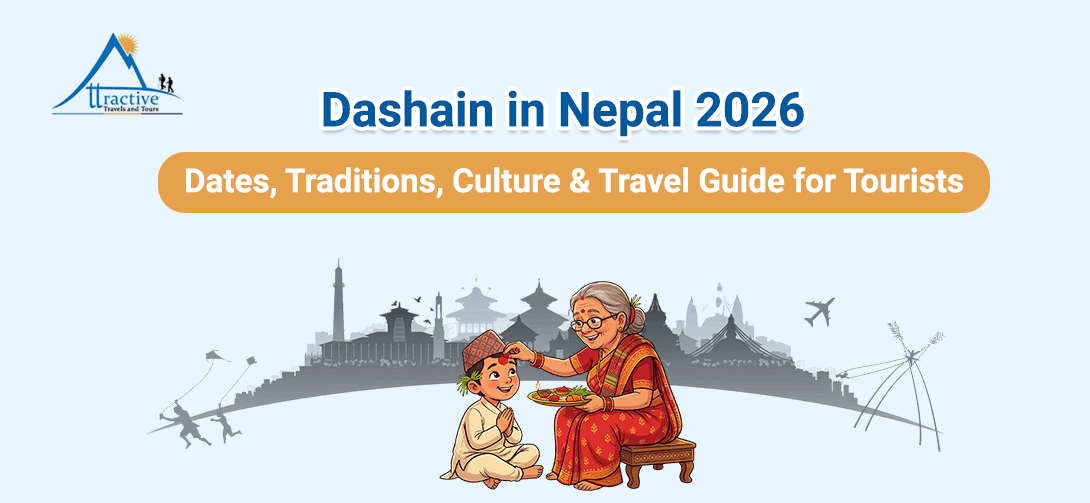
Dashain is considered to be the longest Hindu festival celebrated in Nepal. In 2026, the day for performing Ghatasthapana for Dashain would be October 11, whereas the day for performing Vijaya Dashami (Dashain Tika) would be October 21, and Kojagrat Purnima would be October 25.
However, for tourists, Dashain in Nepal provides much more than just experiencing the festival. This is an important time in Nepal tourism since this is the season when many tourists come for trekking in Nepal, day hikes, cultural tours, and mountain adventures.
Moreover, it is also the time when family members meet at their homes, temples get busy, and festivities happen all around.
When Is Dashain in Nepal in 2026?
The important festival dates for Dashain in Nepal 2026 are:
– Ghatasthapana: October 11
– Phulpati: October 17
– Maha Ashtami: October 18
– Maha Navami: October 20
– Vijaya Dashami and Dashain Tika: October 21
– Kojagrat Purnima: October 25
The main tika time is traditionally announced according to the Nepali Panchang. Travelers planning to receive Dashain tika should check the official auspicious timing closer to the festival date.
Why Online Calendars Sometimes Show Different Dashain Dates
Dashain follows the Lunar calendar. The festival is computed according to the Nepali Panchang calendar system.
Therefore, there could be differences in some online calendars in relation to particular rituals. Travelers should check an updated Nepali calendar before departure, especially if their itinerary depends on a particular festival date or tika time.
Dashain 2026 Date Table at a Glance
Occasion 2026 Date Significance
| Ghatasthapana | October 11 | Beginning of Dashain |
| Phulpati | October 17 | Important seventh-day ritual |
| Maha Ashtami | October 18 | Major worship of Durga |
| Maha Navami | October 20 | Important ninth-day rituals |
| Vijaya Dashami | October 21 | Main tika and jamara day |
| Kojagrat Purnima | October 25 | Closing day of the festival |
These are the main dates travelers should know. The entire festival follows a longer sequence of rituals. Still, visitors do not need to memorize every individual day to understand Dashain in Nepal.
What Is Dashain and Why Does It Matter to Nepali Families?
Dashain festival is very much associated with religion, families, traditions, and homecoming. It is generally considered to be the most important Hindu festival in Nepal, which lasts for about two weeks.
For many Nepalese people, Dashain means returning home. People working or studying away from their families often travel to their hometowns before the main celebrations. This seasonal migration may cause heavy traffic on roads, buses, and internal flights.
This festival also alters the rhythm of day-to-day life. People will clean up their houses, buy new clothes, cook different food, meet their relatives and perform certain religious rituals. This mixture lends cultural importance to Dashain in Nepal.
The Story of Goddess Durga and the Victory of Good Over Evil
In relation to the religious aspect of the Dashain festival, the narrative focuses on the victory of Goddess Durga over the demon Mahishasura.
The triumph of Goddess Durga signifies the triumph of good over evil, which contributes to the understanding of the cultural significance of Dashain. The goddess is worshiped in the course of the festival through various rituals.
The 15 Days of Dashain Explained
Although visitors do not need to follow every day of the festival, understanding its progression helps explain why Dashain lasts for so long.
Ghatasthapana and the Planting of Jamara
Ghatasthapana marks the beginning of Dashain. Families establish a sacred space and begin growing Jamara, usually from barley and other grains. The Jamara grows during the festival and is later used with tika on Vijaya Dashami. This first day begins the religious period leading toward the main family celebration.
Phulpati, Maha Ashtami and Maha Navami
Phulpati is an important seventh-day celebration, followed by Maha Ashtami and Maha Navami. These days include different forms of worship, offerings, and religious rituals. Practices vary between families and communities. While some perform the act of animal sacrifice as a tradition, others practice vegetarianism.
Vijaya Dashami: Tika and Jamara Day
Vijaya Dashami is the central day of the festival. Younger family members visit elders to receive dashami tika, Jamara, blessings, and sometimes gifts or money. The tika preparation involves rice, yogurt, and vermilion.
It is common for the family to make rounds of visiting different relatives’ houses during the day, which makes it an important part of the Dashain celebrations.
Kojagrat Purnima and the Close of the Festival
Kojagrat Purnima marks the end of the main Dashain period. This day is celebrated on the full moon and marks the end of the festival. People slowly revert to their normal lives, but this period of closure can differ in each community.
How People Celebrate Dashain in Nepal
The easiest way to understand Dashain in Nepal is to look at ordinary family life rather than large public events. People buy new clothes, clean their house, cook food, pay respect to their elderly family members and meet their relatives.
Kite flying and traditional bamboo swings, known as ping, are also associated with the festival. These activities are especially visible around communities where families gather during the holiday period.
Dashain Food and Festive Traditions
Food is an important part of Dashain celebrations. There are many foods that can be prepared by a family during Dashain, such as dal-bhat, meat dishes, sel-roti, pickles, sweet foods, and others. There is no one specific menu for Dashain across all families and regions in Nepal.
Is Dashain Celebrated the Same Way Across Nepal?
No. Dashain in Nepal is observed nationwide, but regional variations may exist depending on where you are in the Kathmandu Valley, hills, Terai, or elsewhere.
Celebrations of Dashain are affected by religion, ethnicity, traditions of the family and local cultures. While some people attach importance to the rituals performed at temples, others give more significance to gathering within families, food and blessings.
Experiencing Dashain in Kathmandu and Pokhara
In Kathmandu, many residents leave the city to return home. This can make the capital noticeably quieter during the main festival period. Pokhara is more relaxed in its atmosphere, which makes it suitable for tourists who wish to blend culture and mountains in their vacation plan.
A Kathmandu-Pokhara tour can also help tourists experience two of the most sought-after destinations in Nepal, while allowing time for day hikes and cultural experiences.
Can You Travel to Nepal During Dashain 2026?
Yes, you can travel to Nepal during Dashain. Still, the holiday may influence transportation services, office hours, and some other facilities.
During this time, many Nepalese people return to their homes, and as such, bus travel and flights may be quite crowded. Certain business operations may also be limited during important holidays.
This does not mean that traveling during Dashain is difficult. It simply means that some extra planning is useful, especially around the main festival date.
Practical Tips for Getting Around During the Festival
Arrange transport and accommodation in advance, particularly where your trip involves internal flights and popular trekking circuits. Find out about operating hours before going to the museum, restaurant or any other service.
Take some cash, as the operating hours and method of payment will differ on public holidays. Expect some delays due to traffic congestion on the roads.
Discover Nepal’s mountains, culture, and exciting adventures through Attractive Travels & Tours.
Trekking in Nepal During Dashain
Dashain falls during the main autumn travel season, making it possible to combine the festival with trekking in Nepal. Trekking can be undertaken in the Annapurna region, Everest region, and Langtang region during this period.
Travelers can choose anything from a major Himalayan trek to day hikes, a shorter route, or even peak climbing for a more demanding mountain adventure.
Everest Base Camp Trek During Dashain
The Everest Base Camp trek is one of Nepal’s most recognized Himalayan journeys. During Dashain, the festival is more visible in lower communities and settlements in the Everest region than in the high Sherpa Buddhist areas closer to Everest Base Camp.
Other options for those who have limited time on their side and prefer a shorter Himalayan journey include the Everest View Trek.
It combines the beauty of the mountains and the culture of the Sherpa villages while not demanding the complete Everest Base Camp tour. The helicopter return is another alternative for those looking for a quicker tour.
Annapurna Base Camp and Mardi Himal Trek During Dashain
Annapurna Base Camp Trek and Mardi Himal Trek are good alternatives for people who have limited time for trekking. These treks provide Himalayan views and an experience of the villages of the Annapurna region.
Travelers can also include day hikes around the Annapurna region if they prefer not to commit to a longer trek. Such opportunities help make it easier to blend your mountaineering activities into the overall Dashain experience in Nepal.
Langtang Valley Trek and Manaslu Circuit Trek During Dashain
The Langtang Valley Trek provides mountain scenery along with the chance to see the Tamang villages of the Langtang region. The trek is also fairly easy to access from Kathmandu.
The Manaslu Circuit Trek provides a longer Himalayan journey through varied landscapes and local communities. Both routes can be considered during the autumn season, although travelers should plan transportation and accommodation around the festival period.
City Tours and Short Trips for Travelers Who Prefer Culture Over Altitude
Not every visitor wants a multi-day trek. Tourism during Dashain in Nepal is possible through city tours, heritage tours, hiking trips, and road tours.
Kathmandu can provide you with historical squares, temples, traditional quarters, and cultural sites. Pokhara will give you the experience of lakes and mountains. The jeep tour will also come in handy for visiting places other than the main cities.
A day hike or short trek can also be combined with culture tours if you do not have time to make a longer trip in the Himalayas. A trip from Kathmandu to Pokhara will also be another sensible choice for travelers seeking an amalgam of cultural and natural tours.
Dashain Beyond Nepal: Bhutan and Tibet Combo Trips
Travelers with more time can extend a Nepal journey into neighboring Himalayan destinations. Bhutan offers a different cultural and religious experience through its Buddhist heritage, monasteries, and mountain landscapes.
Tibet provides a different point of view with its high-altitude terrain, Buddhist culture, and pilgrimage sites.
Touring Nepal along with either Bhutan or Tibet will add spice to your vacation in the Himalayas by going beyond a single Hindu festival and a single country. Travelers are advised to verify the current travel regulations before planning an inter-country tour.
Discover Nepal through carefully planned cultural, sightseeing, and adventure tours.
Meet the People Behind Your Dashain Trip
A local guide can make a cultural journey easier to understand. During Dashain in Nepal, a knowledgeable guide can explain why particular rituals take place, help visitors understand local customs, and advise them on when photography or participation is appropriate.
This local context can be especially useful because Dashain is experienced differently from one family and community to another. A good guide helps visitors observe respectfully rather than turn private traditions into a tourist performance.
Dashain Etiquette for Foreign Visitors
Foreign visitors can respectfully observe Dashain celebrations, but it is important to remember that this is primarily a religious and family festival.
Be properly dressed while visiting temples or houses. Do not take pictures without permission, especially during personal family events. Avoid interrupting ceremonies or rituals, and do as your local hosts/guides suggest.
Receiving Tika and Jamara as a Guest
If you have been offered tika and jamara, greet the elders with Namaste and do what they do. Receiving tika is optional, and you have the right to refuse if you don’t feel like it. If you accept, let the ritual be performed and accept the blessing gracefully.
Conclusion: Experiencing Dashain in Nepal in 2026
Dashain in Nepal could be aptly referred to as a religious and familial celebration as opposed to a touristic one. The festival carries great significance due to its association with worship rituals, family reunions, homecoming, feasting, and blessings.
This festival could add one more cultural element for those travelers who will be visiting Nepal in the month of October 2026. They can combine this festivity with Everest Base Camp Trek, Annapurna Base Camp Trek, Langtang Valley Trek, Mardi Himal Trek, Manaslu Circuit Trek, Everest View Trek, and a city-based tour.
You can also include day hikes, a short trek, or a jeep tour depending on your schedule. Timing your trip around the right festival date can help you experience the country during one of its most culturally significant periods.
Plan Your Dashain 2026 Trip with Attractive Travels and Tours
Scheduling a trip to Nepal during the Dashain festival offers many opportunities for planning an itinerary. For instance, one may select a mountain trekking package, cultural tour to Nepal, short trek, day hikes, or a combination of Kathmandu, Pokhara, and other destinations.
Attractive Travels and Tours provides trekking and tour packages which can be customized according to your travel plan. You can opt for treks in the Everest region, the Annapurna region, or even the Langtang region and enjoy the festive spirit of Dashain in Nepal.
Planning your Nepal adventure? Get in touch with Attractive Travels and Tours to discuss your trip.
FAQs
When is Dashain celebrated in Nepal in 2026?
Dashain is celebrated in Nepal from Ghatasthapana on October 11, 2026. The main Vijaya Dashami and Dashain Tika are celebrated on October 21. The Kojagrat Purnima day falls on October 25.
Can tourists travel to Nepal during Dashain, and is it a good time to trek?
Yes, Nepal remains open to visitors, and the Dashain festival happens during the autumn season. The challenge may come from a transportation point of view, as people move around at that time.
What are Tika and Jamara, and can foreign visitors receive them?
Traditionally, Tika consists of rice, yogurt, and vermilion paste that goes on the forehead, whereas Jamara is made from barley seeds planted during the initial days of Dashain. These can be offered to foreign visitors only if the visitors are invited by the family/host to join the celebrations.
Will transport, shops, or trekking logistics be affected during Dashain?
Some modes of transport will be busier, and shops and offices will also have lesser opening hours on holidays. Trekking can still be undertaken; however, flights, transport and other arrangements must be sorted beforehand.
Is Dashain celebrated the same way everywhere in Nepal?
No. There are various practices that people follow in Dashain in Nepal, like tika, Jamara, family meetings, and praying. Still, regional differences exist when it comes to certain traditions. This is one of the aspects of the cultural importance of Dashain in Nepal.
Download PDF