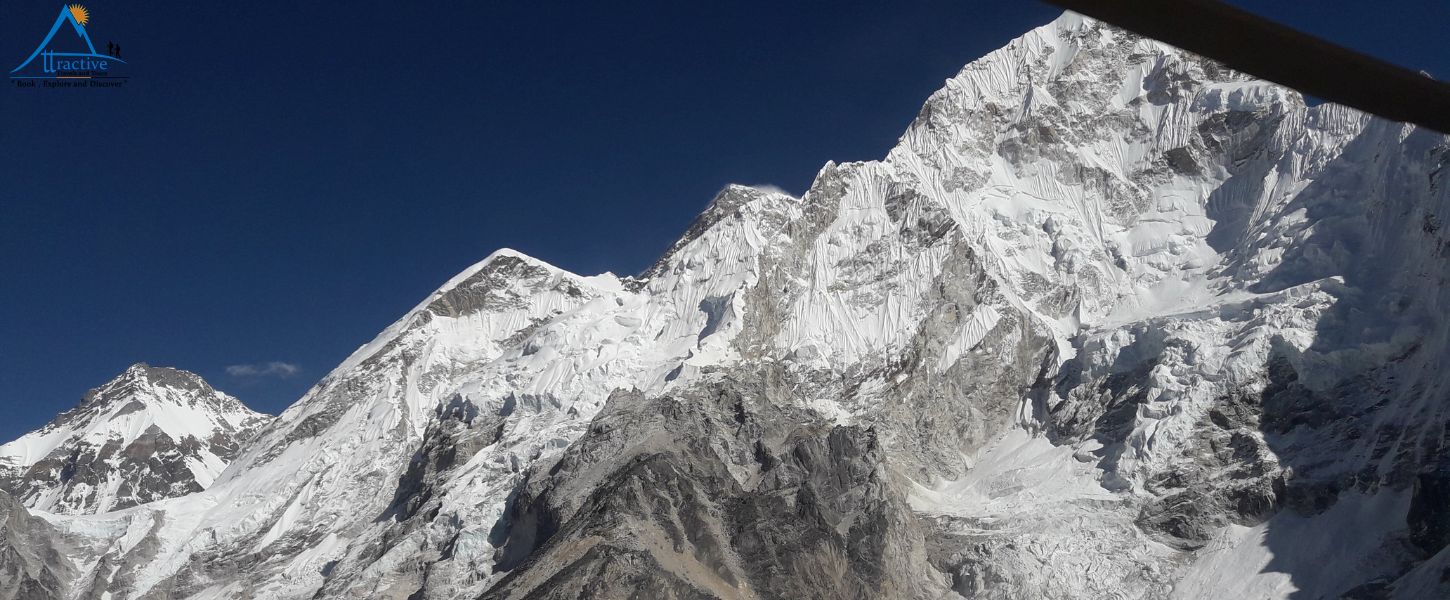
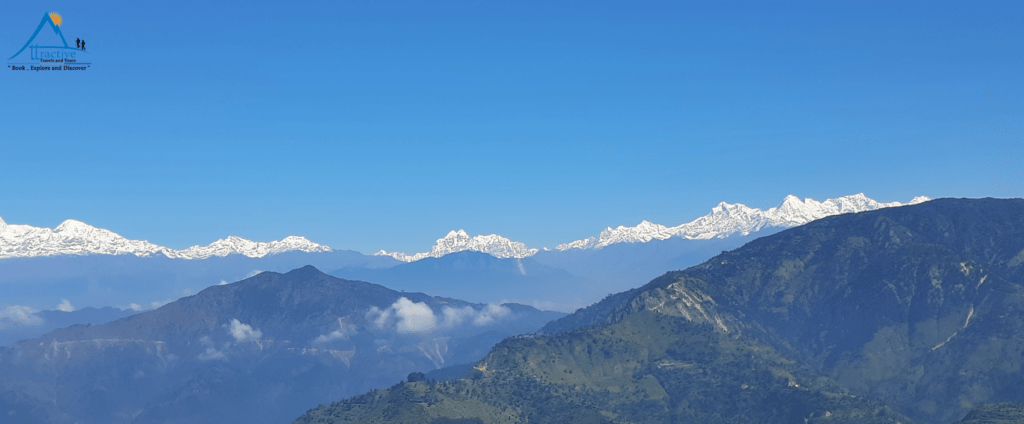
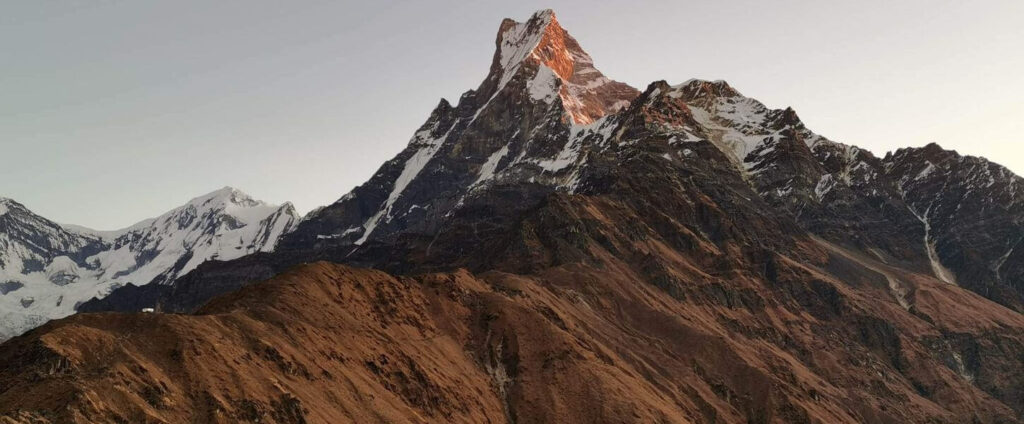
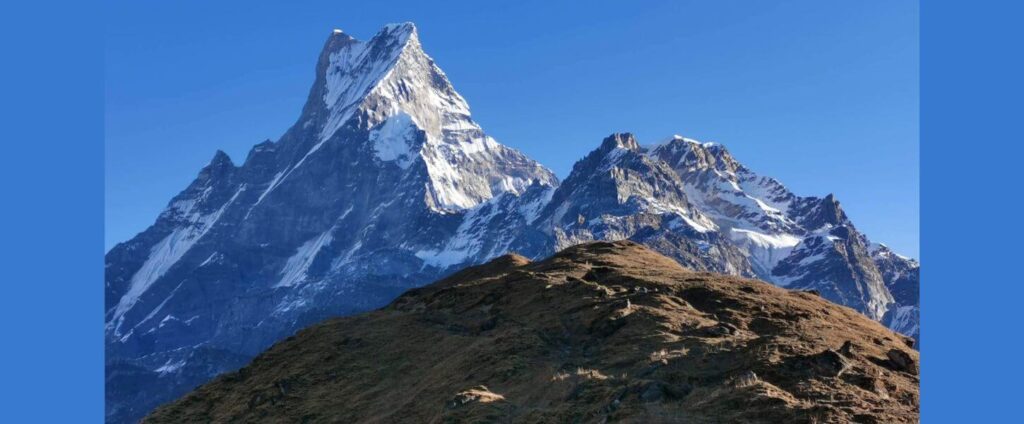
The Mardi Himal Trek is a beautiful and less crowded trek in the Annapurna region of Nepal. Trekking Mardi Himal offers stunning views of the Himalayas, including Mount Annapurna, Mount Machhapuchhre (Fishtail), and Mount Hiunchuli.
The trek takes you through forests, terraced fields, and traditional villages, providing an opportunity to experience the culture and lifestyle of the local people.
Despite the popularity of the trip to Annapurna Base Camp, interest in the less well-known Mardi Himal Base Camp Trek has recently increased. If the length of the Annapurna Trek is too much for you, the Mardi Himal Trek is a great alternative.
On the Mardi Himal Trek, you will travel 42 kilometers over the course of 4 days. You can participate in it without any prior climbing experience, and if you have altitude sickness while on the Trek, you can quickly descend to a lower height.
Here’s everything you need to know about the trekking Mardi Himal:
Location: Trekking Mardi Himal begins at the village of Phedi, which is close to Pokhara, and is situated in Nepal’s Annapurna region.
Starting Point: Kande & Finishing Point: Siding.
Trek Length: Depending on your schedule and pace, the trek lasts between 10 and 12 days. Distance: 42 KMs.
Difficulty Level: The Mardi Himal Hike is regarded as a moderately difficult to tough trek. To complete this walk, you must be in good physical shape and have previous trekking experience. Highest Elevation:4500m at Mardi Himal Base Camp.
Altitude Sickness: On high-altitude hikes like the Mardi Himal Trek, altitude sickness is prevalent. It’s crucial to adjust appropriately and to keep an eye on your symptoms. It is preferable to descend as soon as you begin to feel uncomfortable.
Accommodation: During the walk, lodging is typically provided in tea houses or lodges. The tea houses provide the bare necessities, including food, lodging, and restrooms.
Fees and Permits: Annapurna Conservation Area Permit (ACAP), Trekkers Information Management Centre Card (TMIS).: To participate in the Mardi Himal Trek, you must have a TIMS card and an Annapurna Conservation Area permit. It is important to confirm the most recent information with a local tour operator or the Nepal Tourism Board, as the costs for these permits are subject to change.
Best Time Of The Year For Trek: September through November and March through May are the best months to go on the trekking Mardi Himal. While the monsoon season (June to August) might be wet and slick, winter can be very cold and snowy.
Guides and Porters: Using a guide or porter is often preferred by hikers on the Mardi Himal Trek, while it is feasible to go unaided. This can improve the trek’s comfort and help guarantee a fun and safe journey.
In conclusion, the Mardi Himal Journey is a great trek for anybody looking for an adventure in the Himalayas away from the usual path. The Mardi Himal Trek is a must-visit location for hikers and environment enthusiasts because of its magnificent scenery, vibrant culture, and welcoming residents.
Considering the weather conditions, April and October are to be preferred for trekking in Nepal. But if you are looking to avoid crowds, it is good to choose March or November. However, the weather conditions may not be ideal in these months, and snow might ruin your Trek.
May to September is the monsoon season and the route gets very muddy, whereas, between December to February, the cold is unbearable due to the winter.
When deciding what to carry, you should remember that we are going for a trek and not mountain climbing. Leave your ropes and shackles behind and get everything mentioned on the following list:
The Mardi Himal Trek is not extremely difficult as it is shorter, and the route encompasses destinations of lower elevations. The best way to prepare for the Trek is by starting to walk two times a day for sixty minutes so that you get the hang of walking. After you do it for about three weeks, you can then start to trek carrying a backpack of 10 – 15 kgs. These activities will condition you so that you become fit for the Mardi Himal Trek.
What differentiates Mardi Himal Trek is that it offers you peculiar views of the unexposed sides of the Annapurna Massif. This trek route started to attract more traffic only in 2011. It was also when various teahouses started to pop up on the route. The final destination of the Trek is the Mardi Himal Base Camp, situated at an elevation of 4500m.
Never go on a trek all alone. In case of accidents or emergencies, you will have no one to help. Moreover, without a reliable guide, you might get lost and reach nowhere. Instead, make sure you book your trekking trip with a government-registered agency. They will not only arrange all of your lodging, meals, transportation, guides, and porters but will also take care of all of your travel needs in a professional manner. This will help you enjoy the trip without having to be anxious about anything else.
Especially for people living at sea level, the high altitude may not feel comfortable. Some may find it hard to breathe at high altitudes due to the lack of oxygen present in the atmosphere. Hence we advise you to trek at a slow pace and carry the necessary medications. If required you should descend to lower elevations.
Even if you see locals drinking from local tap water, you should not follow suit. The tap water may be contaminated and may not be drinkable. Instead, you should carry a mineral water bottle, a UV-ray water filter, or chlorine tabs with you or get boiled water from a nearby hotel or restaurant.
Ask your guide whether it is allowed to take pictures in the area you are in. Some temples and monasteries don’t allow you to use your camera. Taking pictures in a prohibited area may land you in trouble.
Having travel insurance is mandatory because you will be trekking in altitudes above 3000m. You must ensure in your home country before traveling to Nepal and beginning your Trek. Please bring a copy of your insurance, and your insurance policy must cover medical expenses, helicopter evacuation, and other health-related expenses.
To conclude, the Mardi Himal Trek will take you off the beaten track. This Trek will give you a chance to experience unexposed and unspoiled parts of the Annapurna region. The area is comparatively less crowded. You will also experience natural and cultural diversity.
Mardi Himal Trek is a cultural melting point of two world religions, Hinduism and Buddhism. The Mardi Himal Trekking journey ascends from lower land to higher elevation, providing mystical mountain scenery of Mt. Dhaulagiri (8,167m), Machhapuchhare (6,993m), Mt. Hiunchuli (6,441m), and Annapurna South (7,010m).
The Mardi Himal Trek begins in Pokhara, a very beautiful city and tourist hub, and then ascends towards Phedi to Dhampus, one of the world’s paradises. This Trek allows us to experience rural life away from the hustle and bustle of city life, making the trip both enjoyable and memorable.
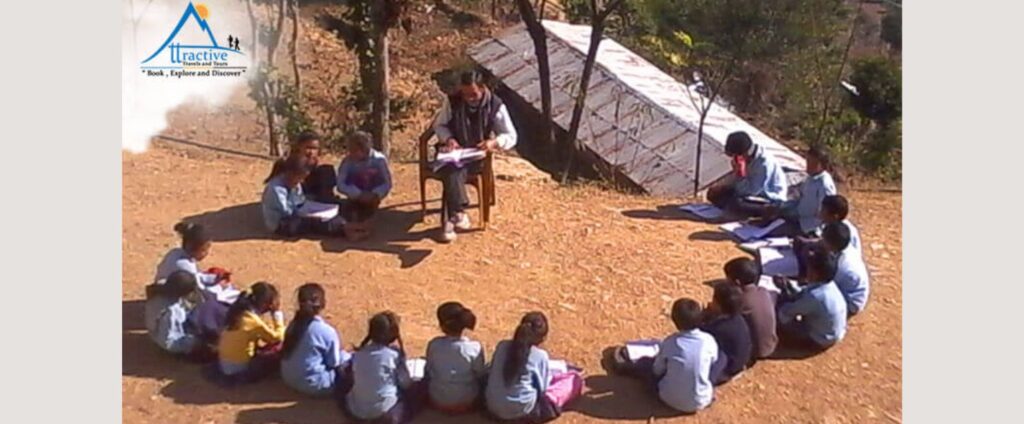
The trekking takes place in traditional villages such as Phedi, Pothana, Landruk, and Sidhing, each with its own culture and identity. There are only a few tea houses and lodges along the route that offer basic facilities and provisions; however, the hospitality, cuisine, and rooms are sophisticated, appetizing, and well-attuned.
Also Read: Mardi Himal Trek
Q: Is trekking Mardi Himal challenging?
The Mardi Himal walk can be described as difficult because it demands traversing steep, rocky terrain while climbing at a high altitude. Be prepared for the physically challenging conditions because the walk takes you through rural places with few amenities and services.
Hikers should be prepared for rapid fluctuations in temperature and precipitation because the weather can be unpredictable.
Nevertheless, the walk is well worth the effort due to the stunning scenery and the opportunity to see the local cultures. If your physical condition is good and you’ve done some trekking before, you should be able to finish the walk. But you should always pay attention to your body and alter your pace as necessary.
Q: When is the best time to travel in the Mardi Himal area?
The months of September through November and March through May are ideal for travel to the Mardi Himal region. These months provide clear skies, comfortable temperatures, and ideal hiking terrain. You can anticipate clear vistas of the Himalayas during these months and fewer tourists on the treks.
The Mardi Himal region can experience extremely cold and snowy weather from December through February, which makes trekking challenging. The region is prone to heavy rain during the monsoon season (June to August), making the routes slick and raising the risk of landslides.
Therefore, it is advised to schedule your trip during the prime trekking season, which is from September to November and from March to May, if you want to experience the most of the Mardi Himal Trek.
You enter a region that is rarely seen by outsiders when you participate in our guide to Chepang Hill Trek. It is located north of Chitwan National Park in the country’s beautiful central hills. The Chepang Hill Trek is so named because as we go along the hilly terrain, we pass through communities inhabited by the Chepang people. The location is heaven for those who enjoy the outdoors and bird watching. In essence, Nepal is home to about 846 bird species, or 10% of all bird species worldwide. The area is also home to a wide variety of fauna.
Discovering the Chepang people, the local ethnic group, is one of this trek’s key highlights. Their native tongue belongs to the Tibeto-Burman language family. They used to lead a semi-nomadic existence, but in recent generations, they have begun to settle down.
They are now more dependent on farming permanently. The diverse landscape makes farming challenging and forces people to gather food from the outside more frequently. Additionally, the Chepang people have their language and way of life. The trekking route also goes via Newar, Chhetri, and Magar villages, in addition to Chepang.
The population of Chepang is dealing with an increasing number of issues, such as malnutrition, illiteracy, and marginalization by the Nepali government. By participating in the guide to Chepang Hill Trek, you will visit some of Nepal’s most remote and distinctive communities and assist the inhabitants in becoming economically self-sufficient.
We leave Kathmandu and continue our adventure after a beautiful drive. There aren’t many people on the trail because it is a somewhat “off-the-beaten-path” excursion. You will be made to feel entirely at home during your stay at the homestay. A viewpoint at Siraichuli (1945 meters), from which we can see the Annapurna, Manaslu, Langtang, and Dhaulagiri mountains, can be reached by hiking over the terraced slope.
Then, we make our way down through lush, rainy woods till we get to Shaktikhor, a bustling market that is interesting to explore. The following day, we return to Kathmandu and reflect on our trip with a stereotypical Nepali lunch.
Come along with us on this fantastic cultural hike to discover Chepang culture! The track is ideally close to Chitwan National Park, making it simple to incorporate into a safari excursion.
Trekking is feasible at any time of the year, but the finest seasons are spring (March to May) and fall (September to November). The Chepang Hill Trek demands moderate fitness and acclimatization to prevent extreme mountain sickness. Please don’t hesitate to get in touch with Attractive Nepal for further information .
The cost of lodging is included in each of our packages. The predetermined itinerary consists of this lodging. We will book you into a 2-3 Star hotel while you are in Kathmandu. Our guides will choose the ideal lodge for you to stay in throughout the walk based on their expertise and room availability.
Every type of lodging will be on a twin-sharing basis. Showers and restrooms will be shared in the mountain. You would have to share a room with a same-sex trekker from another group during the busiest trekking season.
There is a broad range of food available in Nepal, and it is simple to meet your demands. If you let us know ahead of time if you are vegetarian, vegan, gluten-free, or lactose-free, we can make accommodations.
Breakfast, lunch, and dinner are all included in the hike. We will provide you with your breakfast while you are a guest at the hotel in Kathmandu. Dinner and lunch must be paid for separately. We will prepare your meals while you are camping. We can choose typical Nepali, continental, Italian, Tibetan, and Indian fare at tea houses during teahouse treks. After our trek, we will celebrate and eat a typical Nepalese lunch before leaving for Thamel.
A guide will lead the walk with official credentials. Our guides are genuine about the trekking business and have extensive trail expertise. Your trekking trip in Nepal will be one you’ll never forget, thanks to the dedication of our guides and porters. Our guides will answer any questions you may have while on your walk.
Our top priority is keeping you secure. More than six individuals will require two available guides. On teahouse treks, every two trekkers will be accompanied by a porter. We will need extra porters for camping trips to transport the food, kitchen supplies, tents, etc.
We must give our bodies enough time to adjust to the altitude because many of our hikes take us far into the Himalayas. Acclimatization days are planned into the schedule of our hikes. To avoid altitude sickness, it is best to move slowly. Depending on the hike, a certain level of fitness is required.
Expect to walk for an average of 5 to 6 hours each day while participating in the trial. Those of moderate fitness may often complete the treks. Personal commitment and a cheerful mood are more crucial than experience or fitness for completing and enjoying the walk.
Before embarking on a hike, we firmly advise getting travel insurance. Although we try our best to look after you, unexpected things sometimes happen. It is best to get insurance if a medical emergency necessitates a helicopter evacuation. You must purchase medical insurance in your home country since you cannot do so in Nepal. Make sure your insurance covers mishaps overseas and at altitude.
Spring (March to May) and Autumn are the busiest times to travel in Nepal (September to November). Although they are a little busier than the off-season, these seasons offer the most beautiful scenery and clearest skies.
Trekking is possible in the Winter (December to February). However, the weather will be chilly. Trekking is also possible from June to August, when there is a significant possibility of rain and views that are likely to be hidden by clouds.
If you ever wish to visit this historical and fantastic place, don’t hesitate to contact us, as we provide an itinerary of 10 days at Chepang Hill Trek. You can check our post for more details and inside into the guide to Chepang Hill Trek .
Q: In what part of the world is Siraichuli Hill located?
The Kaule Village Development Committee in Chitwan District, Narayani Zone of Nepal, is home to Siraichuli, the highest hill peak in the district.
Q: What is the height of the Siraichuli hill?
Siraichuli is located at an elevation of 1945 meters and offers views of the Terai region of southern Nepal and mountains like Gausankhar, Dhaulagiri, Langtang, Rolwaling, and Manaslu.
Regarding trekking in the Annapurna Region, the Mardi Himal Trekking is one of the best-kept secrets. You can travel off the beaten path and around the corner of the map from where most people would typically embark on the trip to Annapurna Base Camp. The Mardi Himal Trekking excursion brings you to the Mardi Himal base camp between Machhapuchhre, also known as Fish Tail Mountain, and Mardi Himal.
The views are uncrowded during the Mardi Himal Trekking. Real teahouses, gorgeous rhododendron forests, and the best views of the Annapurna Mountain Range are to be expected. Giants like Mardi Himal, Machhapuchhre, Annapurna South, and Hiunchuli will be beside you. What else do you require?
Machhapuchhre, Fish Tail Mountain, one of the enormous mountains in the Annapurna Massif, keep watching over the Mardi Himal Trekking. Along this journey, several stone homes, charming teahouses, and numerous rock hills may be found.
The trail for this hike may be found right off the main trail to Annapurna Base Camp. Since it differs from other treks in the Annapurna region, like the Annapurna Base Camp Trek and the Annapurna Circuit Trek, it is a well-liked substitute.
You can locate the Mardi Himal Trekking on a side trail leading to the Annapurna Base Camp. It is a little tougher and, for the most part, a little more interesting than most treks in the Annapurna region, but it is also much less crowded. You can get fantastic views of the Annapurna Massif’s lesser-known sides on the Mardi Himal Trekking.
At 4,500 meters, you will arrive at the Mardi Himal Base Camp, which is the destination (17,763 ft). There weren’t a lot of teahouses on this trek at first, but since around 2011, there have been more teahouses along the route from the beginning to the Mardi Himal Base Camp.
There are four distinct seasons in the Annapurna Region and throughout the rest of Nepal. Winter, Spring, Summer, and Autumn. The most popular times to trek this Annapurna classic from March to May and October or November. It must be acknowledged that each trekking season has its unique environment and level of enthusiasm for trekkers.
It might be challenging to complete the Marid Himal Trekking. However, this does not imply that you cannot succeed. As long as you enjoy hiking and prepare for your adventure well in advance, you can make it.
Although the typical Mardi Himal Trekking is not challenging, hikers and trekkers should be in fair physical condition. You are still traveling across Nepal’s Himalayas, after all. Continue reading if you want to learn more about the physical requirements for trekking in Nepal and how you might improve your fitness level.
It can be challenging to select an appropriate Mardi Himal Trekking. You want to spend as much time for Mardi Himal as possible if you want to do it well. You also wish to spend some time in Pokhara because traveling from Kathmandu to Pokhara is frequently included. The village is too charming to pass up. In addition, it will take quite an amount of driving to get there, so you might as well get a little exercise.
The ideal itinerary for 12-day Mardi Himal Trek is one from Attractive Travel Nepal. According to our trekking experts, this schedule is the best choice for a fruitful Mardi Himal trip.
The best friend you can have in the mountains is your equipment. In essence, your gear is essential wherever you are going. The right equipment might be the difference between life and death in terrible situations. A good set of gear can make the difference between a good time and a bad one in every situation.
You have your flights booked, your guide in Nepal is waiting for you, and now you show up with a backpack that is too heavy, a jacket that is too thin, and shoes that are almost certainly going to cause blisters. How wasteful. Make the most of your vacation to Mardi Himal Base Camp by packing the appropriate supplies.
We’ve provided you with a basic, thorough packing list below that is appropriate for any hike in Nepal, along with the Mardi Himal Trekking:
– Duffel Bag
– Rucksack with Rain Cove Daypack
– Hiking Boots
– Sandals or Shoes
– Hiking Socks
– Trekking Poles
– Inner Socks
– Thermal Baselayer
– T-Shirts
– Fleece Pullover or Jacket
– Light Weight Thermal Tops
– Waterproof Jacket
– Sports Bra for Her
– Hiking Shorts
– Hiking Pants
– Waterproof Pants
Preparing your legs for greater elevations won’t be easy if you reside somewhere other than the Himalayas. The Mardi Himal Walk is fortunate because it is not a high-altitude trek and is not as long as some other treks in Nepal. Preparations for the Mardi Himal Trekking are not too difficult.
Practice is a good way to get the hang of what you do. Climbing is the best climbing exercise. We recognize that you appreciate walking since you are interested in a multi-day trekking adventure. Awesome, keep doing it.
The time has come to see them more frequently if you are fortunate enough to live in an area surrounded by hills or even mountains. When? If you are unfamiliar with this, we advise starting your trek a year in advance and committing to a seven-day, 60-minute ascent. After around three weeks, after you have the hang of it, you will have the perfect chance to strengthen your power.
Since Kathmandu is where most international visitors to Nepal arrive, they are more inclined to hike outside of the Annapurna region. The first challenge to trekking in the Annapurna region is this.
To reach Pokhara, one must physically go there. It is standard practice for all hiking companies to provide transportation to and from Pokhara to Kathmandu. Some travel by bus, while others fly. A schedule often includes transportation from Pokhara to Besisahar and hotel accommodations in Pokhara. Below you will find a list of some expenses.
Even though there is no entrance cost, permits must still be purchased. It is hard to climb in the Nepal Himalayas without them. You need two different types of permits for the Mardi Himal Trekking:
1. TIMS: Trekkers Information Management System
Every trekker who wants to go on a trek in Nepal needs to obtain this permit. All trekking routes, from the trek to Poon Hill to Everest Base Camp, require it. Each person pays NRS 2000 for this. This is around 17 USD or 15 EUR.
2. ACAP: Annapurna Conservation Area Permit
Because you will be entering the Annapurna Conservation Area, you will need permission. All permissions are arranged by your hiking company. The Mardi Himal Base Camp Trek costs approximately USD 850 or EUR 700.
We place the highest priority on safety. As a result, whenever it comes to maintaining the cost of our climbs and treks cheap, this is one area where we do not make any exceptions. Trekking firms have been chosen based on their technical proficiency, demonstrated safety performance, perfect judgment, amiable manner, and capacity to offer helpful and knowledgeable directions. Additionally, they are highly competent in first aid and personal safety gear. First aid supplies are supplied on all led climbs and treks in the Annapurna Region.
When there are splits in the trail, signs indicate the appropriate directions. The track is marked with white and blue stripes. It’s simple to find lodging; show up at a guest house and inquire about availability. Although the high altitude, erratic weather, and steep ascents and descents may make this walk difficult for beginner hikers, we nevertheless advise joining a tour.
From Kathmandu to Mardi Himal, hiking excursions are available, including lodging, transportation, permits, guides, full board, etc. If you’re seeking a stress-free hiking vacation, it’s a brilliant option.
One can hire a guide, a porter, or both if you don’t want to hike with a group. The standard day rate for guides, including meals and lodging, is USD 25. One guide can be distributed among several people. Porters are paid $20 USD daily, which covers their lodging and meals. If you don’t overpack, you can hire a single porter to carry up to 25 kg for two trekkers.
Tips for Saving Money on the Trek:
The tenth-highest peak in the world, Annapurna, is well known for both its surreal beauty and its propensity for avalanches. The Annapurna Circuit Trek is also one of the three most well-known trekking areas in Nepal and among the most well-liked trekking areas worldwide.
The Annapurna region provides a greater variety of trekking options than other trekking destinations, ranging from very easy walks to more challenging, high-altitude treks, among which the Annapurna Circuit Trek is one.
These are the answers to a number of the most frequently asked questions about ACT for those still considering it and those who have already made up their minds that it is the correct route for them. Questions you have undoubtedly been thinking about or asking yourself when making travel plans. It should serve as your essential guide toward this fantastic walk and a call to adventure
The Annapurna Circuit is 260 kilometers long as a standard. However, the mileage may vary based on the route you take or the locations of your start and finish points. Likewise, depending on your selected schedule, it can take 10 to 21 days to finish the circle.
Please take a look at our flawlessly planned 27-day Annapurna Circuit Trek.
The months of March through May are the ideal times to complete the Annapurna Circuit Trek. Additionally, the post-monsoon season is an excellent time to go trekking from late September through December. Although it is also feasible to do this walk in February and early September, the above period is ideal.
Since the ACT is a guesthouse hike, you may find guesthouses in practically every settlement. While some are nicer, most have communal bathrooms and are rather basic. Although blankets are given, it’s a good idea to pack your sleeping bag because the top floors may be chilly, and the structures don’t have heating. Typically, to reserve a room, you must eat at the lodge. Use the hot gas showers that some locations could offer since above Manang. You won’t have another opportunity to take a shower till you reach Muktinath, which is on the opposite side of the pass.
An ACAP, or Annapurna Conservation Area Project Permit, and a TIMS (Trekkers’ Information Management System) card are required because the Annapurna hiking zone is a restricted area in Nepal. The necessary permissions will be taken care of by Attractive Travel and Tours, so you won’t need to worry about complications. You will also have access to a certified guide to help you along the road.
Network, internet, and WIFI connectivity in the lower area are often intense. Once in Kathmandu, you’ll need to get a local SIM card from a company like NTC or NCELL to keep in touch with friends and family. However, they could be highly lacking or nonexistent in other locations, particularly at higher altitudes.
Although you may do the ACT without needing a guide or porter, it’s good to be aware of your alternatives. Hiring a guide might be helpful if you are unique to trekking or are going solo. By carrying your belongings on the walk, porters can figuratively lighten the load. If you have a pre-existing medical issue, you should consider hiring one (back problems, bad knees, etc.)
Attractive Travels highly advise packing light because the trip would be challenging. It’s crucial to include items like layered jackets, light and heavy wool clothing, sunglasses, waterproof overalls, ponchos, raincoats, and sunscreen.
A reliable pair of trekking boots will serve you well. High-altitude medications and water purification pills are considered crucial. At one of the numerous shops in Thamel, you may buy or rent anything you need for your journey. Here is a list of some of the essential goods you must bring.
Once you begin your journey, no ATMs or financial services are available. Though most major currencies are acceptable at lower elevations, having a few Nepali rupees on hand is best. It might be helpful at more significant elevations.
Though travel insurance is not required, it is a wise measure, specifically on such unexpected and challenging trek routes as the Annapurna Circuit. It is self-evident that such a distant, high-altitude site will lack sophisticated health centers and medical practitioners. Given the current situation, insurance can give the required financial assistance in the face of unanticipated threats.
The initial symptoms usually appear 12-24 hours after reaching high elevations. The symptoms of altitude sickness vary depending on the height. Mild, short-term altitude sickness symptoms include dizziness, weariness, lack of appetite, sleeping difficulties, general exhaustion, and shortness of breath. These symptoms are sometimes accompanied by a headache, nausea, and vomiting.
No. Usually, oxygen is not necessary since the hike schedule is structured to allow for enough acclimatization. In the case of extreme altitude sickness, we will quickly descend to a lower height, which is quite unusual in the Annapurna area journey.
Crampons are not often necessary for this walk if done during the season. Crampons may be necessary if you wish to attempt the walk during the mid-winter or rainy season. You won’t know what circumstances you’ll face on the hiking path until you arrive there, so it’s better to have your crampons and never use them than to need them and not have them.
The temperature in the Annapurna area changes according to the season. There is no particularly hot weather in the snow-capped Himalayas, even during the summer. The hottest temperature in the day can reach 25°C/77°F, while the minimum temperature at night can drop to -20°C/-4°F or even below. Overall, the hiking sections below the base camp are significantly warmer than those above. Spring is relatively warm, particularly during the day when there isn’t any cloud cover or snowfall.
Shorter treks in the Annapurna Region are simpler than lengthy treks. Longer treks, such as Annapurna Base Camp and Annapurna Circuit Trekking, need a higher degree of fitness. If you are in decent physical shape, you do not need any hiking expertise for a short hike in Annapurna. However, suppose you’re planning a more extended and complex trip in Annapurna over 4500 meters. In that case, you should prepare beforehand by exercising and trying out a few alternative trekking routes.
Solo trekking in Nepal peaks and valleys has a unique appeal. The most excellent part is that you may stroll at your own pace because you don’t have to wait or follow anyone.
Solo hiking allows you to be highly flexible and take diversions. Even though you feel lonely at times since you have no one with whom you can discuss or share your emotions, planning and handling logistics for yourself becomes a lot easier.
However, solo hiking is not as simple as it appears. It is full of difficulties. One of the most significant drawbacks is that you will not have anyone to assist you if you fall or trip. Nonetheless, if you are cautious, this may not be an issue; however, ensure you carry a first aid kit and other requirements.
Trekking opportunities abound in Nepal. However, as previously said, solo trekking has its obstacles. Thus now we will explore various treks that may be done alone. These venues are frequently crowded, so if you encounter difficulties, you can have someone around you to aid you.
So, let’s look at some spots where you may go trekking alone.
Ghorepani is a small trekking track that provides trekkers with a great view of the mountains. Trekkers may see Mt. Annapurna, Mt. Dhaulagiri, Macchapuchhure, Nilgiri, and many other peaks above 8000 meters. It is the ideal approach to seeing the Himalayan landscape in a short amount of time.
This one-week hike is ideal for single adventurers. This journey also includes traditional towns, rhododendron woods, cold waterfalls, patchwork valleys, and breathtaking mountain vistas, making the hike more exciting and unforgettable for hikers.
Ghorepani Poonhill hikes allow trekkers to learn about the Gurung community’s ethnic culture and way of life. The Gurung community’s distinct culture and warm hospitality may be found in the Ghorepani poon hill region.
The climatic conditions of Ghorepani Poonhill are pleasant all year. During the winter months, the temperature in Ghorepani drops below zero. Trekkers should also keep an eye on the weather forecast throughout the monsoon season. They can, however, carry waterproof trousers and coats to protect themselves from heavy rain or storms.
Lower Mustang Trek is perfect for trekkers with limited time but a desire to explore the stark beauty of Mustang’s magical terrain. This is also the finest hike for single tourists. This easy hike takes you across the bleak Himalayan paths that flank the Annapurna range. In terms of accessibility, comfort, and price, the lower sector of Mustang is significantly more established than the higher half of the region, which was formerly part of a historic trade route to Tibet.
This walk also provides a distinct culture and scenery and a spectacular vista of the Dhaulagiri and Annapurna peaks. It also allows hikers to visit Muktinath, a significant Hindu and Buddhist pilgrimage. Unlike the Upper Mustang Trek, this location does not require a restricted area permit.
The Langtang Valley is located north of Kathmandu. The valley is one of Nepal’s central trekking locations, attracting visitors worldwide each year. The route rises the Langtang valley from Syabrubesi at 1470m to Kyanjin Gompa at 3870m.
The valley has excellent geological characteristics and a great Tibetan culture and lifestyle. It is the ideal bundle for an exceptional short walk that delivers a variety of punches in a short amount of time.
On the way, the trails provide stunning views of the wild Langtang River, lush woodland, high alpine meadows, bamboo groves, glaciers, and snow-covered summits.
The Langtang Valley walk is straightforward and risk-free. It is even feasible without the assistance of a guide or courier. The walk is not too expensive, and one can easily find tea houses along the way to adequately accommodate oneself. Autumn and spring are the most acceptable times to walk to Langtang.
The Annapurna Base Camp (ABC) climb is one of Nepal’s most renowned, short, and relatively straightforward high-altitude hikes. The ABC trip combines a variety of landscapes, cultures, and natural plants. It also provides a superb close-up view of the Annapurna range, Machhapuchhre, Dhaulagiri, and Hiunchuli.
The most excellent time to ascend the ABC is in the spring. The routes go through dense rhododendron woods and along the deepest gorge in the world, the Kali Gandaki, with breathtaking views of high-altitude vistas. Aside from the natural wonders, the trip allows you to explore Gurung tradition, local lifestyle, and culture.
In ten days, while trekking to ABC, you will be able to experience and witness the local people’s culture, lifestyle, and customs, as well as discover animals and plants at their finest. ABC trip is often safer and more exciting for solitary hikers. This hike offers numerous opportunities for lone trekkers to explore.
The Everest Base Camp trek is a once-in-a-lifetime opportunity for individuals who wish to fly above the sky. Extend oneself in the lap of the Himalayas, immerse your soul in natural beauty, and push yourself beyond your limits.
The 14-day Everest Base Camp Trek brings you to the following locations: Lukla, Manche Bazaar, Dingboche, Tengboche, Everest Base Camp, and Kala Patthar.
This is the region’s most vivid and busy time of year, with many pathways lined with blossoming rhododendrons. Mountaineering to Everest Base Camp not just to delivers beautiful views of the Himalayas but also the Sherpa culture, monastery, and many other attractions.
It is entirely up to you whether you organize your walk with or without a guide and porter. Hiring a guide or porter is not required for treks in popular areas like Annapurna Base Camp and Everest Base Camp. However, there are several areas in Nepal where trekkers are not permitted to hike without a guide.
A guide can assist you in making your trail more fascinating and worthwhile. He will tell you about the mountain ranges, scenery, vegetation, animals, and wildlife on the hikes. Because the guide and porter are knowledgeable about the area, they may recommend suitable tea houses and the most outstanding view locations to stay at or eat.
The primary goal of the solo journey is to discover the incredible natural surroundings and achieve tranquility by abandoning oneself. Throughout the year, anyone may go on a solo trip to Nepal. In the 1970s, introduced the solo trek in Nepal to foreigners.
If you want to hike alone, you should use caution on the paths and with strangers. You won’t be alone on the renowned walking paths during peak season. Pick a good safe time for your solo trips. As a result, thorough planning and attention to detail will ensure that your solo adventure is fun and memorable. Essentially, the solo journey allows you to experience the walk exactly how you choose.
Trekking in Nepal can be classified into many categories, with respect to their level of difficulty. All the beginner treks are intended especially for inexperienced trekkers, and destinations are considered based on terrain, the duration of the trek, and relative comparison to all the other trekking destinations. There are many best trek in Nepal for beginners, among them some are listed below.
The listed destinations below are suitable for anyone, regardless of their age, experience, or unfamiliarity with the whole trekking field. For anyone just starting out for the first time and those who are a little hesitant in their abilities—these destinations are the perfect choice for an easy, laid back, and effortless trekking experience.
Given below are the names of the best treks in Nepal for beginners, with brief descriptions of them:
Positioned in the northern part of central Nepal, Ghorepani lies within the site of the Annapurna Conservation Area. It is strategically located near the viewpoint of Poon Hill. This place is a pit stop for its fellow travelers. Ghorepani/Poon Hill/Ghandruk Trek is considered to be one of the best trek in Nepal for beginners.
Poon Hill is a very popular destination for sightseeing, and it has gained quite a cult following over the years. Due to these reasons alone, the guest houses and lodges here have specialized development in providing hospitality in the form of excellent meals for travelers.
This serene hill station gets its name from two Nepali words, ‘ghora’ and ‘pani’ (horse+water). Blooming with rhododendrons in springtime, striking features of the village include its stone paved pathways and houses of tin roofs with patina finishes.
Ghorepani is a major trail route to the Annapurna Base Camp, and the hike is really fetching, with lots of waterfalls, greenery, and scenic views of the Himalayan ranges. You can hike to Poon Hill from here in the early morning to watch the sunrise. If you’re feeling adventurous, you also have the additional option to trek to Ghandruk for a day, which is all very rewarding.
The Royal trek was named after King Charles III after he trekked this path in the early 1980s. This route is suitable for Beginners as it has a steadily ascending slope, perfect for a relaxed walk along the foothills of the Annapurna. A reasonably short trek, the areas alongside this route are home to many authentic ethnic tribes with rich cultural traditions.
About a half-hour drive from Pokhara is a locality called Bijapur, and this is the starting point of your Royal Trek. Unique viewpoints in this trek are the Syaglung Danda and the Pachabhaya Danda at its end, surrounded by the Begnas and Rupa Lake.
Popularly believed to be Sir Edmund Hillary’s favorite view of Everest, this trail presents its hikers with many Buddhist Monasteries sprawled across the trail. The trek lies in the Lower Khumbu region of Nepal.
And because of this, you will witness a considerable amount of Sherpa Culture during your Trip to Pikey Peak. Pikey Peak has two summits, with a mere difference of twenty meters between the two. It stands at an altitude of 4065 meters above sea level.
Dhampus is a Village Development Committee in the Kaski district of North Central Nepal. A trek to this region of Nepal gives visitors alluring views of the Annapurna, Hiunchuli, and Machhapuchhare ranges.
Here, you can observe traditional farmhouses and the native culture of the tribes residing in these hills. Many species of migratory birds are also observed flocking to this region at certain times of the year. In addition to your Dhampus hike, you can also opt to visit the Sarangkot hill nearby, which features paragliding.
In the southern part of Dhaulagiri Mountain lies the only hunting reserve in Nepal, the Dhorpatan Hunting Reserve. You can trek to Dhorpatan from Pokhara, and the trail is a satisfactorily pleasant hike.
The incredible biodiversity of this region will leave you enthralled. In case you’re interested, you are left with the option of participating in some hunting, too (once all your permits are in order, of course).
Helambu is a highland village less than 100 kilometers from the Kathmandu Valley. Famous for its many monasteries and apples, this is a short trek you can complete within a week.
It is a precursor to the Langtang National Park, and you should seriously consider extending your trip if you have the luxury of time.
The barren landscape and the rich Tibetan culture of Mustang build up to a truly authentic experience, in case you’re considering a visit to this region.
Trekking to Lower Mustang is quite easy, and the landscapes are quite contrasting compared to what you will get to see anywhere else in Nepal. Jomsom, Marpha, Muktinath, and Tatopani are some of the examples of exotic places along this route that you can opt to visit.
Located in the Ganesh Himal Region, trekking to the Ruby Valley gives you the privilege of witnessing a newly opened trek with hot springs, waterfalls, suspension bridges, stone mills, and ruby mines.
Take a chance to trek to this region, and you will get to observe the unique Tamang and Gurung Cultures, both of which are culturally rich mountain tribes of the Himalayas.
The Khopra Ridge is a popular trek to the center of the Annapurna Region. It has a glorious views of the Himalayan ranges like Annapurna I, Machhapuchhre, Nilgiri, Dhaulagiri, etc. During this trek, you will also come across the Baraha Tal, or the Khayer lake. All of this are situated at an altitude of 4660 meters above sea level.
Twenty-two notable mountains are observed from the Khopra Ridge, the most prominent of them—Mt. Dhaulagiri I, and Mt. Annapurna I. It is one of the best high-altitude, short treks that you can choose from this list.
Within the confines of the Kathmandu Valley, this is one of the best hiking spots situated close by. The ancient city, culture, and people, along with the great monastery here—an important Buddhist Pilgrimage site, is a great hike for a comprehensive cultural exploration.
The trek starts from the Panauti Village, an ancient town that is a former merchant hub for the Tibet Trade Route. This trail is covered by magnificent greenery, which engulfs the entire hill. This trek is considered to be one of the best trek in Nepal for beginners.
‘Thrangu Tashi Yangtse’ is a Karma Kagyu Buddhist Monastery, a center of spiritual growth for school monks of all ages.
Panchase is an intersection of five hills on a mountain top, with many temples and a lake, situated very close to the city of Pokhara. You can find many species of medicinal herbs that grow in the fertile soil of this area.
The view of the Annapurnas from this place is considered the best one from anywhere near Pokhara. Three different routes are available for this trek, and it is an extremely easy, short trek, yet very rewarding beyond measure. This three-day hike requires no permits or a TIMS card either.
Your trip to the Narphu Valley will leave you amazed, given the range of geographical diversity—with narrow canyons, gorges, beautiful villages, and striking rock formations. This route was only opened after the early 2000s and showcased new, rare Tibetan culture.
The unfrequented routes of this region are a tribute to nomadic lifestyles. Also wandering along the trails of this region undoubtedly invokes the same sentiment in travelers.
A side-trail to the Annapurna Base Camp, although deemed ‘challenging,’ it is, nevertheless (fear not), a chill, casual hike. It is a very wholesome and gratifying experience. Extravagant views of the Himalayan ranges are observable from the Mardi Base Camp.
You can reach the base camp leisurely, indulging yourself generously in teahouses and lodges across the route. The Mardi Himal Trek will take about a week in total, and this is probably the most physically demanding trek on this list, which is why you should save it for the last.
Any of these best trek in Nepal for beginners are a great option for you to embark on your first hiking experience. You can complete the above treks (preferably in serial order). Which will prepare you for the more demanding treks in the future, which would require a lot more effort and time.
Keep in mind that, even though these treks are easier than the other, much longer and harder treks, there is no compromise on the natural and cultural beauty that you will experience during these treks.
We wish you the best on your prospective journey in the near future.
Q: What are the things that I’ll have to pack while trekking?
As long as you’re not backpacking, you will only need to carry your essentials, i.e., a change of clothes, water, food/snacks for the road, cameras, etc. Any other personal gear and emergency equipment will be carried by the porter/guide accompanying you.
Q: How do I choose the right trekking boots for my journey?
Good trekking boots will make quite a difference in your journey, so it is crucial to choose the right one and break into these kicks before you start your trek. Comfort, Grip, Ankle Support, Durable outer material, and light-weighing boots are your best option in the market.
Chepang Hill Trekking trail is one of the newest trekking trails in Nepal. The hill is located in the west of Kathmandu city. Trekking to Chepang Hill offers the opportunity to hike through the high hills and falling rivers. The route is less crowded as the trekking route is the newest one and has not been commercialized yet. Chepang Hill Trek is a rare combination of exploring distinct cultures and sightseeing. Chepang still follows primitive lifestyles such as foraging for wild roots, fishing, hunting, and traditional farming inside jungles.
The prosperous forest biodiversity in the region includes a wide variety of natural fruits and vegetables with high food security ethics as well as medicinal herbs. The region has a high density of Chiuri (Indian Butter Tree) inhabitants in Nepal. Out of the predictable two hundred thousand species, 140 thousand Chuiri trees are found in and around the area. The region is rich in 200,000 such species found in large quantities.
The increasing influence of Christianity in the region has both pros and cons on Chepangs. Chepang activists say that Christianity has given motivation to formal education, encouraged community meetings, communal prayers, and cooperation, empowered imperfect women, and discouraged ‘alcoholism’ in the community.
You can see the stunning vistas of Himalayan Peaks like Gaurishankar, Dorche Lakpa, Annapurna Range, Dhaulagiri, Manaslu Range, Langtang, and many others. Chepang Hill offers you panoramic natural sights and scenery. The beautiful forests, fountains, and falls will certainly make you forget all your tiredness. The cool atmosphere and peaceful environment will heal your soul and mind. The activities and innocent behavior of the Chepang people will win your heart.
We, the experienced and helpful team of Attractive Nepal warmly welcome you to Nepal and visit such a hidden paradise and experience the hill trekking trail. The Chepang hill trek lets you explore the friendly behavior of Chepang village and its wonderful and beautiful culture.