Interesting Facts About Nepal’s Living Goddess Kumari
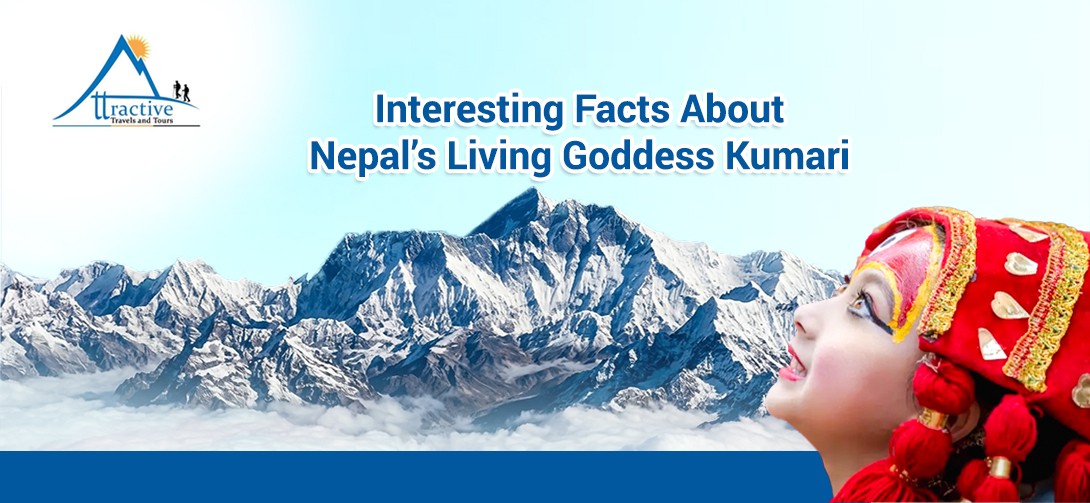
Introduction to Nepal’s Living Goddess
Indeed, no place on Earth hosts more fascinating religious rituals than Nepal, the proud homeland of the living goddess. Specifically, devotees throughout the country deeply respect the “Kumari,” a young girl whom believers view as the living incarnation of divine female energy. Unlike traditional statues and icons that worshippers utilize in temples, the Kumari represents a human deity chosen by celestial grace to participate in sacred ceremonies. Consequently, this ancient tradition consistently captivates worshippers, researchers, and global travelers alike. Furthermore, an intricate web of ancient legends, royal customs, and modern cultural dynamics surrounds the Kumari phenomenon. From the moment authorities select a young girl to the challenges she faces after returning to normal life, the Kumari tradition offers an endlessly intriguing window into Nepalese culture.
The Origins of Nepal’s Living Goddess
Etymologically, the term “Kumari” stems from the Sanskrit language, generally signifying a virgin or a young girl. However, in the context of Nepal, the Kumari symbolizes a prepubescent girl whom society worships as the earthly manifestation of the goddess Taleju. Ready to discover Kathmandu’s sacred sites? Feel free to send an inquiry today.
The Taleju and King Jaya Prakash Malla Legend
Historically, several captivating legends explain the origins of this unique practice, notably the account involving King Jaya Prakash Malla of Kathmandu and the goddess Taleju.
Secret Nightly Meetings and the Dice Game
According to local tradition, the goddess regularly visited the king at night to play Tripasa (a traditional dice game). During these nocturnal visits, Taleju provided vital royal guidance regarding governance and kingdom protection under strict vows of absolute secrecy.
The Broken Promise
Tragically, one night the king’s curious wife discovered the clandestine meeting and entered the royal chamber. Feeling deeply betrayed, Taleju instantly vanished into thin air.
Taleju’s Command
Before departing, the goddess instructed the distraught king that if he wished to retain her divine protection and blessings, he had to discover her mortal form within a young girl hailing from the Shakya community.
How the Malla Kings Institutionalized the Tradition
Although minor doubts regarding its precise origins persist, the Malla dynasty successfully formalized and institutionalized the tradition. Indeed, Malla monarchs played a pivotal role in establishing the elaborate ceremonies surrounding the Kumari.
Construction of Kumari Ghar in 1757
Specifically, King Jaya Prakash Malla propelled the tradition to new heights in 1757 by constructing the famous Kumari Ghar in Kathmandu Durbar Square. Today, the Kumari Ghar houses the Royal Kumari, serving as a timeless symbol of Kathmandu’s rich heritage.
Why Both Hindus and Buddhists Worship the Kumari
Remarkably, both Hindus and Buddhists unite in worshipping the Kumari. On one hand, Hindus revere the Kumari as a living manifestation of Taleju Bhawani, a fierce and protective aspect of Goddess Durga. On the other hand, Buddhists perceive her as Vajradevi, representing a supreme divine female deity.
The Sacred Selection Process
Among Nepal’s most unique customs stands the intricate process of choosing a new Kumari. Typically, religious authorities initiate this search as soon as the reigning Kumari reaches puberty, loses excessive blood, or experiences a physical condition that prevents her from fulfilling her sacred duties.
Initiating the Search
When the need arises, senior priests, royal astrologers, and cultural authorities launch a formal search for a successor, strictly following ancient customs.
Strict Eligibility Requirements
Crucially, not every child qualifies for this divine role. Specifically, candidates must belong to the Shakya community, a traditional Buddhist family with deep historical roots. Furthermore, priests review family backgrounds thoroughly and select girls at a very tender age, usually between two and six years old.
Evaluating the 32 Sacred Perfections (Battis Lakshanas)
A cornerstone of the selection process involves evaluating candidates against the Battis Lakshanas—the 32 sacred perfections. These rigorous criteria demand:
-
Eyes resembling a lotus flower
-
A neck shaped like a conch shell
-
A sweet voice resembling a duck
-
A broad, lion-like chest
-
Flawless, unblemished skin
Astrological Examination
Additionally, religious experts analyze each candidate’s horoscope against specific astrological benchmarks. A favorable outcome confirms that the child possesses the spiritual readiness required to embody a living goddess.
The Recognition Test
During this practical test, candidates must correctly identify items belonging to the former Kumari. This vital ritual establishes whether a genuine spiritual connection and a seamless transfer of divinity exist between the two girls.
The Kalratri (Black Night) Ceremony
Undoubtedly, the Kalratri (Black Night) ceremony remains the most intense stage of the selection process. Traditionally, candidates endure a frightening environment designed to test their courage and emotional composure. Believers maintain that only the true incarnation of the goddess will remain completely fearless amidst the terrifying rituals. Consequently, this ceremony sparks widespread discussion and occasional controversy surrounding the Kumari custom.
Final Confirmation by Priests
Once authorities select the ideal candidate, priests perform elaborate rituals to consecrate and officially establish the young girl as Nepal’s new Living Goddess. Following this, attendants escort her into the Kumari Ghar, marking the official beginning of her reign as a sacred deity.
Life as Nepal’s Living Goddess
Living as Nepal’s Living Goddess entails a highly sacred, heavily ritualized existence. Centuries-old traditions dictate every aspect of this unique role, centering entirely upon the Kumari system. Devotees hold the young Kumari in supreme reverence as a human vessel of divine power. Meanwhile, she spends the majority of her days performing sacred rituals inside the historic Kumari Ghar.
Major Festivals and Public Appearances
Although the Kumari rarely leaves the Kumari Ghar during ordinary days, she steps out to grace Nepal’s most important cultural festivals.
Indra Jatra
Indra Jatra stands out as the paramount festival associated with the Kumari. During this grand celebration, the Royal Kumari emerges from her sanctuary to ride through Kathmandu on a magnificent ceremonial chariot. Thousands of devoted spectators gather along the streets to catch a glimpse of her and receive her divine blessings. Historically, Nepalese monarchs received their royal blessings directly from the Kumari on this auspicious day. Today, following the abolition of the monarchy, the President of Nepal receives this sacred blessing.
Dashain
Similarly, Dashain serves as another major festival deeply linked to the Kumari. Throughout this holiday, worshippers honor the Kumari by associating her directly with Goddess Durga. Furthermore, priests perform exclusive secret rituals for her inside the Taleju Temple, a sacred space that remains completely inaccessible to the general public.
The Kumari as a Living Oracle
According to devout followers, the Kumari communicates divine messages through subtle facial expressions and body language during public interactions:
-
Smiling: Signals incoming blessings and general prosperity.
-
Crying: Acts as a dire warning of impending misfortune.
-
Trembling: Portends serious difficulties or upcoming political unrest.
-
Remaining Expressionless: Indicates a highly favorable and peaceful omen.
The End of a Kumari’s Divine Reign
Naturally, a Living Goddess’s divine reign does not last forever. According to ancient legend, the goddess Taleju inhabits the Kumari’s body only until the child reaches puberty. Therefore, a girl’s first menstrual cycle signifies the departure of the divine presence, thus ending her tenure as the Living Goddess. Similarly, losing a significant amount of blood due to a sudden physical wound or severe illness signals the same conclusion. Once this milestone occurs, authorities initiate the search for a successor, and the former Kumari transitions back into ordinary civilian life.
Debunking the Myth About Former Kumaris and Marriage
For generations, a persistent myth claimed that former Kumaris could never marry, causing deep anxiety and fear among families. Superstition dictated that marrying an ex-goddess would bring catastrophic bad luck, leading many to believe that finding a husband would prove impossible. However, history clearly proves that superstition holds no truth; numerous former Kumaris have successfully married, raised families, and built happy, normal lives. Today, this outdated myth is fading rapidly, remembered merely as one of the many fascinating legends woven into the rich fabric of the Kumari tradition.
Chronological Timeline of Nepal’s Royal Kumaris
|
Name |
Timeline | Tenure Period |
Context |
| Hira Maiya Shakya | 1922 – 1923 |
1 |
Earliest reliably recorded Royal Kumari of Kathmandu |
| Chini Shova Shakya | 1923 – 1931 |
8 |
Longest pre-WWII tenure; survived to marry (2 daughters) |
| Chandra Devi Shakya | 1931 – 1933 |
2 |
Married and raised two daughters |
| Dil Kumari Shakya | 1933 – 1942 |
9 |
Served through the WWII era; married, had 3 children |
| Nani Shova Shakya | 1942 – 1949 |
7 |
Married; 6 children — dispelling the marriage death myth |
| Kayo Mayju Shakya | 1949 – 1955 |
6 |
Married and had two children |
| Harsha Lakshmi Shakya | 1955 – 1961 |
6 |
Felicitated by KMC in 2015 for cultural contribution |
| Nani Mayju Shakya | 1961 – 1969 |
8 |
Served 8 years, married, had 3 children |
| Sunina Shakya | 1969 – 1978 |
9 |
Felicitated by KMC 2015; married, had 2 children |
| Anita Shakya | 1978 – 1984 |
6 |
Felicitated by KMC 2015; served through political transition to democracy |
| Rashmila Shakya | 1984 – 1991 |
7 |
Selected at age 4, Authored ‘From Goddess to Mortal’ (2005/2012) |
| Amita Shakya | 1991 – 2001 |
10 |
Longest-serving Royal Kumari of the modern democratic era (pre-republic). |
| Preeti Shakya | 2001 – 2008 |
7 |
Enthroned just days after the royal massacre of June 1, 2001. |
| Matina Shakya | 2008 – 2017 |
9 |
First Royal Kumari of the Federal Democratic Republic of Nepal. |
| Trishna Shakya | 2017 – 2025 |
8 |
Selected Sept 27, 2017 at age 3. Served 8 years. Succeeded Sept 2025 |
| Aryatara Shakya | 2025 – present |
– |
Selected Sept 30, 2025 at age 2 years 8 months. Current Royal Kumari |
The Most Fascinating Case in Kumari History: Dhana Kumari Bajracharya
Chosen as Patan’s Kumari in 1954 when she was still very young, she remained as Kumari for decades. Being quite different from other Kumaris, who were replaced due to reaching puberty, this case involves an especially prolonged period of worship.
Despite the fact that she was eventually replaced, some devotees have never stopped worshipping her. In terms of Kumari history, this particular case has gained much popularity among experts.
This case can be seen as a perfect example showing how significant this role can be, both spiritually and personally.
The Future of Nepal’s Living Goddess Tradition
Among the major issues surrounding the tradition is that fewer girls come forward to take up the role. In some communities, not as many families are willing to offer their daughters to be chosen as before.
On the other hand, the majority of the population agrees that the living goddess tradition is worth preserving, since it holds special importance to the culture of Nepal.
Such disagreements have sparked a debate about how the tradition should change with the times, without losing its spiritual and cultural value. Various reforms in terms of education, money, and social integration have been proposed, and further modifications are expected to occur in the future.
Conclusion
The Kumari ritual is still one of the most exceptional rituals in Nepalese culture and tradition. From her mythic origin during the time of the Mallas up to her selection process and her current annual festivals, the Living Goddess is undoubtedly one of a kind in Nepalese society.
To some, the Kumari is a powerful manifestation of divine force. Unlike everyone else, she is an incarnation of the rich and proud cultural heritage that the country still succeeds in preserving despite the rapid pace of the modern era.
Regardless of the approach taken, the history of Nepal’s Living Goddess will never stop being intriguing.
From mountain trails to cultural landmarks, our expert guides make every journey special. Contact us and start your adventure today.
FAQs
Who is the goddess Kumari?
Kumari is the term used to refer to the prepubescent girls of Nepal worshipped as a living incarnation of the goddess.
At what age is Kumari chosen?
A Kumari is selected at an age of around 2-6 years. Certain conditions have to be fulfilled to be selected as a Kumari.
Which Kumari never got a period?
Dhana Kumari Bajracharya is often mentioned when it comes to Kumari, who had been serving their role for too long due to not experiencing any menstrual period during her tenure.
What happens if Kumari cries?
Crying is a big sign that is often associated with the prediction of misfortune or other problems.
Why can’t Kumari walk?
Due to the significance and importance of the position of Kumari, walking is not considered ideal. So, a chariot is brought for Kumari in public processions.
Download PDF