Entrance Fees for Kathmandu UNESCO Sites & Chandragiri Cable Car (2025 Guide)
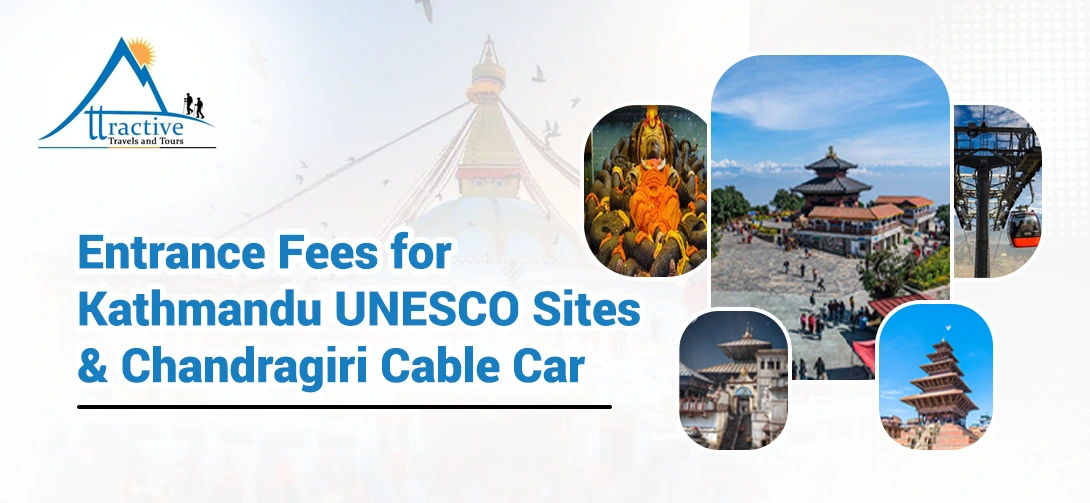
Kathmandu UNESCO Heritage Sites: Ultimate Entrance Fee Guide
Kathmandu UNESCO heritage sites serve as the cultural heart of Nepal. Furthermore, they act as living museums filled with antique temples and lively streets. Indeed, these monuments protect ancient traditions, as documented by the UNESCO World Heritage Centre. Consequently, visitors can read more via our Nepal travel guide for extra tips. If you are planning a trip for 2026, therefore, knowing the exact entrance fees helps with smart budgeting. Moreover, travelers can successfully avoid unexpected financial surprises.
Overview of Kathmandu UNESCO Heritage Sites
The Kathmandu Valley features seven monumental zones. Specifically, these famous landmarks are split into three distinct categories:
- Durbar Squares: Kathmandu, Patan, and Bhaktapur.
- Buddhist Sacred Sites: Swayambhunath and Boudhanath Stupa.
- Hindu Sacred Sites: Pashupatinath Temple and Changu Narayan.
| Site Name | Nepali Citizens | SAARC Nationals | Foreign Nationals |
|---|---|---|---|
| Kathmandu Durbar Square | Free | NPR 150 | NPR 1,000 |
| Patan Durbar Square | Free | NPR 250 | NPR 1,000 |
| Bhaktapur Durbar Square | Free | NPR 500 | NPR 1,800 |
| Swayambhunath Stupa | Free | NPR 50 | NPR 200 |
| Boudhanath Stupa | Free | NPR 100 | NPR 400 |
| Pashupatinath Temple | Free | NPR 1,000 | NPR 1,000 |
| Changu Narayan Temple | Free | NPR 100 | NPR 300 |
Detailed Breakdown of Kathmandu UNESCO Heritage Sites
1. Kathmandu Durbar Square
Situated in central Kathmandu, this ancient royal palace complex showcases brilliant Newar architecture. Historically, it served as the royal seat for Malla kings. Thus, it remains a core Kathmandu UNESCO heritage site.
- Highlights: Hanuman Dhoka Palace Museum, Kumari Ghar, and Taleju Temple.
2. Patan Durbar Square
Located across the Bagmati River, Patan Durbar Square is a true masterpiece. Consequently, art lovers frequently label it the City of Fine Arts. Indeed, exploring this Kathmandu UNESCO heritage site is truly mesmerizing.
- Highlights: Patan Museum, Krishna Mandir, and the Golden Temple.
3. Bhaktapur Durbar Square
Known as the City of Devotees, Bhaktapur remains the best-preserved medieval city. As a result, narrow alleys transport visitors straight back in time. Moreover, this Kathmandu UNESCO heritage site draws thousands of global tourists.
- Highlights: 55-Window Palace, Nyatapola Temple, and Pottery Square.
4. Swayambhunath Stupa (Monkey Temple)
Perched on a western hill, Swayambhunath offers sweeping valley views. Furthermore, it ranks among the oldest religious sites in Nepal. Consequently, this Kathmandu UNESCO heritage site holds immense spiritual weight.
- Highlights: Whitewashed dome, Buddha eyes, and playful resident monkeys.
5. Boudhanath Stupa
As one of the largest global stupas, Boudhanath forms the spiritual heart of Tibetan Buddhism. Additionally, pilgrims continuously circle the massive white structure. Thus, this Kathmandu UNESCO heritage site provides an atmosphere of pure serenity.
- Highlights: Giant mandala shape, prayer wheels, and rooftop cafes.
6. Pashupatinath Temple
Located along the Bagmati River, Pashupatinath is Nepal’s holiest Hindu site. Although non-Hindus cannot enter the main temple, visitors can explore outer grounds. Meanwhile, this Kathmandu UNESCO heritage site hosts the mesmerizing evening Aarati ceremony.
- Highlights: Cremation ghats, holy shrines, and the evening Aarati ceremony.
7. Changu Narayan Temple
Perched on a high hill, Changu Narayan stands as Nepal’s most ancient temple. Built around 400 CE, it features striking stone sculptures. Indeed, this Kathmandu UNESCO heritage site concludes the architectural tour splendidly.
- Highlights: Ancient stone carvings, Vishnu statues, and panoramic views.
Chandragiri Cable Car Pricing & Details
Although it is not a UNESCO site, the Chandragiri Cable Car is a top modern attraction. The ride offers stunning views of the Himalayas and Kathmandu Valley. Therefore, many travelers combine it with their heritage tour.
- Nepali Citizens: NPR 799 (one-way) / NPR 1,350 (round-trip)
- SAARC Nationals: NPR 1,400 (round-trip)
- Foreign Nationals: NPR 2,200 (round-trip)
Conclusion on Kathmandu UNESCO Heritage Sites
Exploring Kathmandu UNESCO heritage sites offers an unforgettable cultural journey. With proper budget planning, your trip will run seamlessly. Furthermore, you can check our cultural tours page for expert guidance.
Frequently Asked Questions (FAQs)
1. What are the Kathmandu UNESCO heritage sites?
Answer: The valley features seven key locations, specifically including Kathmandu, Patan, and Bhaktapur Durbar Squares, Swayambhunath, Boudhanath, Pashupatinath, and Changu Narayan.
2. Which is the most artistic square among Kathmandu UNESCO heritage sites?
Answer: Patan Durbar Square is widely regarded as the most artistically sophisticated due to its exquisite metalwork.
3. Can non-Hindus enter Pashupatinath Temple?
Answer: No, the main interior is restricted; however, visitors can observe rituals from designated outer banks.
4. What is the best time to visit Kathmandu UNESCO heritage sites?
Answer: Autumn and spring offer ideal weather conditions, making them the best times for exploring these monuments.
Download PDF