Best Time to Visit Nepal: Month-by-Month Weather, Trekking, Tour & Travel Guide
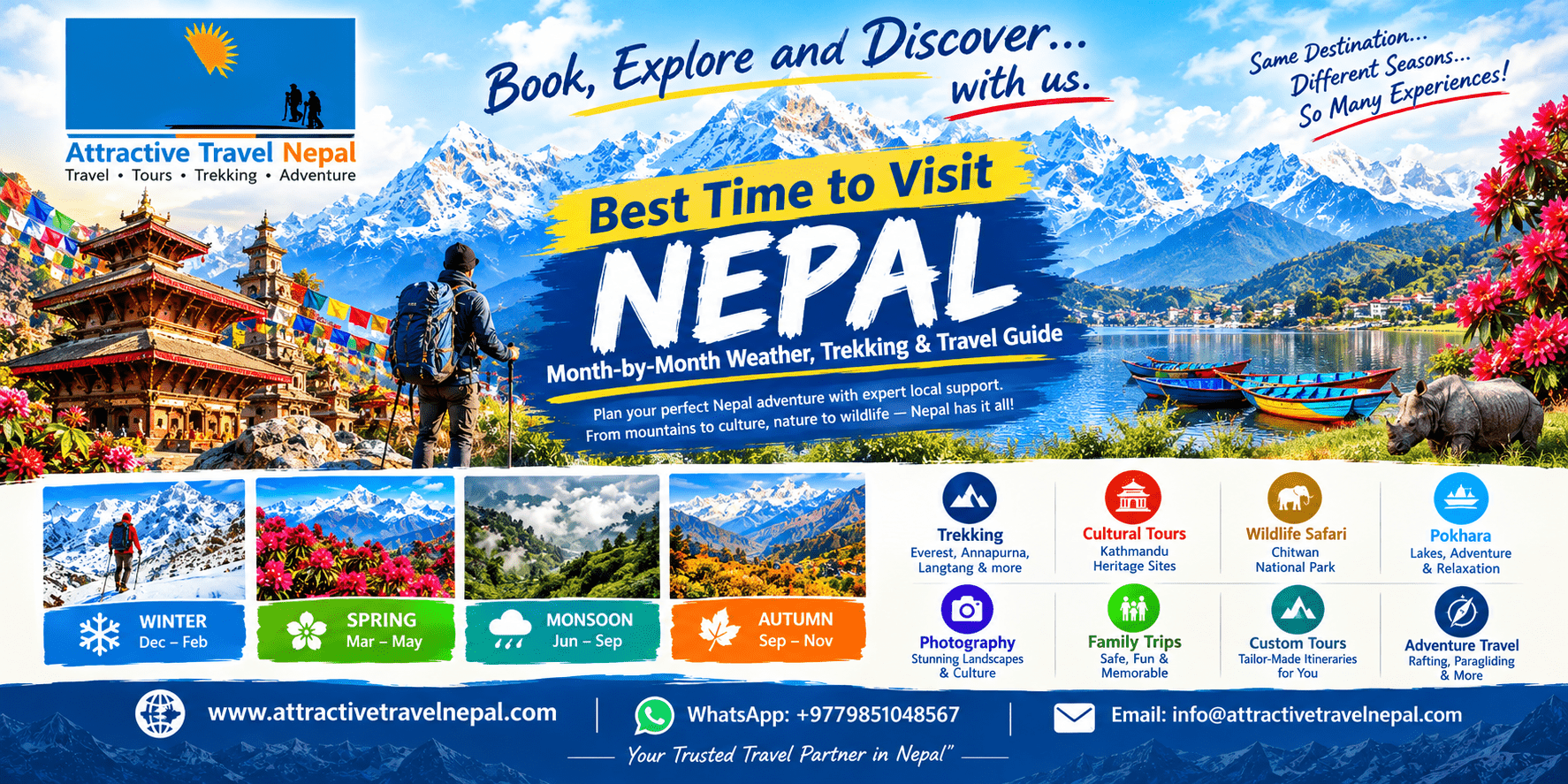
Best Time to Visit Nepal: Travel Guide 2026/2027
Planning a trip to Nepal and wondering when is the best time to visit Nepal? The answer depends on what you want to experience. Nepal is a spectacular year-round destination, but different seasons offer very different conditions for trekking, sightseeing, wildlife tours, mountain photography, cultural experiences and adventure activities.
For most international travelers, October and November are considered among the best months to visit Nepal because the monsoon has generally ended, skies are often clearer, temperatures are comfortable and Himalayan views can be spectacular. March, April and May are also popular, particularly for trekking, spring landscapes and rhododendron flowers.
However, there is much more to consider than simply choosing the most popular season. The best time for an Everest Base Camp Trek may not be the same as the best time for a jungle safari in Chitwan. Likewise, travelers interested in Upper Mustang may deliberately choose the monsoon months because the region lies in a Himalayan rain-shadow area.
In this detailed guide, Attractive Travel Nepal explains the best time to visit Nepal month by month, Nepal’s weather and seasons, the best trekking seasons, the best time for Everest Base Camp and Annapurna, the monsoon season, winter travel, family holidays, sightseeing and practical travel-planning tips.
What Is the Best Time to Visit Nepal?
If you want the short answer: October and November are among the best overall months for a classic Nepal holiday, especially for trekking and mountain views.
March, April and May are excellent alternatives, offering spring weather, colorful landscapes and rhododendron blooms.
Best time to visit Nepal by activity
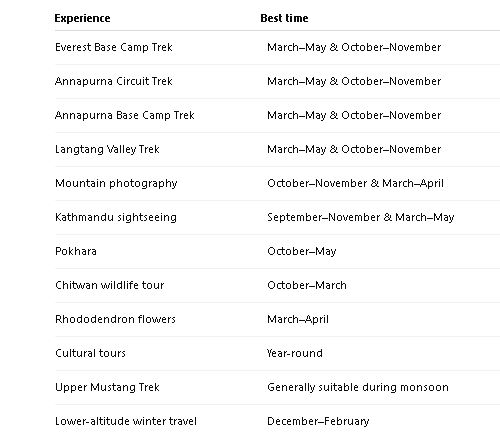
Weather varies according to altitude, geography and the particular year, so these periods should be treated as planning guidelines rather than guarantees.
Understanding Nepal’s Weather and Seasons
Nepal’s geography creates extraordinary climatic variation.
The country extends from the lowland Terai to the Himalayan region, including Mount Everest and several other peaks above 8,000 metres. Because elevation changes so dramatically, temperatures and weather can be very different between Kathmandu, Pokhara, Chitwan and high-altitude trekking destinations.
Nepal generally experiences spring, summer/monsoon and winter conditions, with autumn traditionally being one of the most popular periods for tourism.
The major travel seasons are:
- Spring: March to May
- Summer/Monsoon: June to September
- Autumn: September to November
- Winter: December to February
Nepal receives the majority of its annual rainfall during the summer monsoon, while autumn generally brings increasingly dry and clear conditions.
Altitude is also extremely important. A warm day in Kathmandu does not mean that the Everest Base Camp trail will have similar temperatures.
For this reason, travelers should choose their clothing, itinerary and trekking route based on both season and altitude. Kathmandu Travel Guide with us.
Nepal Weather by Month
Nepal weather is different by month. This is details about weather of Nepal by month.
1. January – Cold Winter and Clear Mountain Days
January is the middle of Nepal’s winter season.
The Kathmandu Valley can have cool mornings and evenings with pleasant sunshine during the daytime. Pokhara can also be comfortable during sunny days, while higher elevations are much colder.
High-altitude trekking routes can experience freezing temperatures, snow and difficult trail conditions.
What to do in Nepal in January
January is suitable for:
- Kathmandu sightseeing
- UNESCO heritage tours
- Pokhara sightseeing
- Chitwan wildlife experiences
- Cultural tours
- Lower-altitude hikes
- Short trekking routes
- Mountain photography on clear days
Travelers interested in high-altitude trekking during January should have appropriate winter equipment and experience.
Is January a good time to visit Nepal?
- January can be a good choice if you prefer quieter destinations and winter scenery.
- It is less suitable for travelers who want warm weather or easy high-altitude trekking.
2. February – Winter Slowly Gives Way to Spring
February remains cool, especially in the mountains, but conditions gradually begin to improve.
Lower elevations become increasingly comfortable, and the days become longer and warmer.
February can work well for travelers who want cultural sightseeing, city tours and selected trekking experiences without visiting during the busiest autumn period.
Nepal travel in February
Popular activities include:
- Kathmandu Valley tours
- Pokhara
- Chitwan
- Cultural experiences
- Short hikes
- Lower-altitude treks
- Photography
For high-altitude trekking, always check current route conditions and prepare for cold temperatures.
3. March – Spring Trekking Season Begins
March is the beginning of one of Nepal’s most attractive travel periods.
Temperatures become more comfortable and spring vegetation begins appearing across the hills.
One of the highlights of trekking in spring is the blooming rhododendron, Nepal’s national flower.
Mountain trails can become colorful, particularly in forested areas of trekking regions such as Annapurna and Langtang.
Why visit Nepal in March?
March is excellent for:
- Nepal trekking
- Everest Base Camp
- Annapurna trekking
- Langtang Valley
- Mardi Himal
- Ghorepani Poon Hill
- Cultural tours
- Mountain photography
- Nature and adventure
For travelers who want a combination of comfortable weather and spring scenery, March is an attractive month.
4. April – Excellent Month for Trekking and Adventure
April is one of the most popular months for trekking in Nepal.
The weather is generally favorable for outdoor activities, spring flowers are visible and the mountain environment is spectacular.
For many travelers, April provides an excellent combination of:
comfortable temperatures + mountain scenery + spring flowers + trekking opportunities.
Best things to do in Nepal in April
- Everest Base Camp Trek
- Annapurna Circuit Trek
- Annapurna Base Camp Trek
- Langtang Valley Trek
- Mardi Himal Trek
- Manaslu Circuit Trek
- Poon Hill Trek
- Kathmandu sightseeing
- Pokhara tour
- Wildlife experiences
April is also an important period for Himalayan mountaineering.
If your main objective is a high-altitude trek, early planning is recommended because popular routes become busy during the spring season.
5. May – Warm Weather Before the Monsoon
May is the final month of the main spring season.
Temperatures become warmer at lower elevations, while the high Himalayas remain much cooler.
Early May can provide favorable trekking conditions, although weather can become increasingly variable as the monsoon approaches.
Best activities in May
- Everest Base Camp Trek
- Annapurna trekking
- Langtang trekking
- Mountain expeditions
- Cultural tours
- Adventure activities
- Kathmandu and Pokhara sightseeing
If you are planning a trek in May, it is useful to build some flexibility into your itinerary because weather conditions can change.
6. June – Beginning of Nepal’s Monsoon Season
June marks the beginning of the main monsoon period.
Rainfall increases across many parts of Nepal, particularly at lower elevations.
This can affect trekking conditions through:
- Wet trails
- Mud
- Leeches
- Cloud cover
- Reduced mountain visibility
- Possible transportation delays
However, June does not mean that Nepal is closed to tourism.
Travelers can still enjoy Kathmandu, cultural attractions, selected destinations and rain-shadow areas.
Where to travel in June Consider:
- Kathmandu
- Pokhara
- Cultural tours
- Selected lower-altitude destinations
- Upper Mustang
- Dolpo
- Rain-shadow trekking areas
Always check current weather and transportation conditions before traveling.
7. July – Monsoon in Nepal
July is normally one of the wettest periods of the year.
Frequent rain can make many classic trekking routes less predictable.
However, monsoon also transforms Nepal into a remarkably green landscape.
Rice fields, forests, waterfalls and rivers can be particularly impressive.
Is July a good time to visit Nepal?
It depends on your travel goals.
July may not be the first choice for travelers whose main objective is crystal-clear Himalayan views.
However, it can be interesting for:
- Cultural tourism
- Photography
- Lush landscapes
- Rain-shadow trekking
- Upper Mustang
- Local experiences
- Lower-season travel
- August – Green Landscapes and Rain-Shadow Adventures
8. August continues the monsoon season.
Much of Nepal is green and vibrant, but heavy rainfall can affect roads, domestic flights and trekking trails.
For travelers interested in trekking during August, Upper Mustang and other rain-shadow areas deserve consideration.
The Himalayan geography protects some northern regions from much of the monsoon rainfall.
Nepal travel in August
Possible experiences include:
- Kathmandu cultural tours
- Upper Mustang Trek
- Rain-shadow destinations
- Local cultural experiences
- Photography
- Selected adventure activities
Travelers should remain flexible because weather can affect transportation.
9. September – Transition Toward Autumn
September is a transition month between monsoon and autumn.
Early September can still experience rainfall, while conditions generally become more favorable later in the month.
The landscape remains green after the monsoon, and tourist activity begins increasing.
Why consider Nepal in September?
Late September can offer:
- Improving trekking conditions
- Green landscapes
- Comfortable temperatures
- Increasing mountain visibility
- Fewer visitors than the peak autumn period in some places
If you are considering a September trek, the exact departure date and route should be selected according to current weather conditions.
10. October – One of the Best Months to Visit Nepal
For many travelers searching for the best time to visit Nepal, October is at the top of the list.
The monsoon has generally ended, the landscape is fresh and mountain visibility can be excellent.
October is also a major trekking month.
Why visit Nepal in October?
You can enjoy:
- Everest Base Camp Trek
- Annapurna Circuit
- Annapurna Base Camp
- Langtang Valley
- Manaslu Circuit
- Mardi Himal
- Poon Hill
- Kathmandu cultural tours
- Pokhara
- Chitwan
- Mountain photography
- Adventure activities
Nepal trekking in October
October is a peak trekking season.
Popular trails can be busy, particularly around Everest and Annapurna.
Travelers should therefore plan accommodation, flights, permits and trekking arrangements in advance.
October is also a major festival period in Nepal, and visitors may have opportunities to experience important Nepali cultural celebrations depending on the annual calendar.
11. November – Clear Skies and Excellent Trekking Conditions
November is another outstanding month for Nepal travel.
The weather is generally dry, mountain visibility can be excellent and daytime temperatures are comfortable for trekking.
It is particularly attractive for travelers who want:
- Himalayan views
- Trekking
- Photography
- Cultural tours
- Kathmandu sightseeing
- Pokhara
- Wildlife experiences
Why choose November?
November offers an attractive balance of:
clear mountain scenery + comfortable trekking weather + dry conditions + cultural experiences.
Like October, November is a popular travel month, so advance booking is recommended for popular trekking routes.
12. December – Winter Returns
December brings increasingly cold conditions, particularly at high altitude.
However, lower-altitude destinations remain suitable for tourism.
Kathmandu and Pokhara can have pleasant sunny days, although mornings and evenings can be cold.
Things to do in Nepal in December
- Kathmandu heritage tour
- Pokhara
- Chitwan
- Lower-altitude trekking
- Cultural tours
- Short hikes
- Mountain photography
High-altitude trekking remains possible on suitable routes, but winter preparation becomes increasingly important.
Best Time for Trekking in Nepal
Nepal is famous worldwide for Himalayan trekking, and choosing the right season can make a major difference to your experience.
The two traditional trekking seasons are:
Spring Trekking Season – March to May
Spring offers:
- Mild to warm conditions at lower elevations
- Comfortable trekking temperatures
- Rhododendron blooms
- Beautiful landscapes
- Mountain views
- Good photography opportunities
April is particularly popular.
Autumn Trekking Season – September to November
Autumn is traditionally considered one of the best periods for trekking.
It offers:
- Post-monsoon landscapes
- Increasingly clear skies
- Good mountain visibility
- Comfortable daytime temperatures
- Dry trails
- Excellent trekking conditions
October and November are particularly popular.
Best Time for Everest Base Camp Trek
The Everest Base Camp Trek is one of Nepal’s most famous adventures.
The preferred seasons are generally:
March to May
Spring offers improving weather, beautiful landscapes and rhododendron forests.
October to November
Autumn is particularly attractive because the monsoon has generally ended and mountain visibility is often excellent.
What about winter?
Everest Base Camp can be trekked during winter by suitably prepared travelers, but temperatures are much colder and snowfall can affect trails and passes.
What about monsoon?
June–September can bring rain and cloud in many areas, making the classic Everest route less predictable.
For most first-time trekkers, spring and autumn are the easiest seasons to plan around.
Best Time for Annapurna Circuit Trek
The Annapurna Circuit is one of Nepal’s classic trekking routes.
The best-known trekking seasons are:
March–May and October–November.
Spring brings flowering landscapes, while autumn often provides clear mountain views.
The Annapurna region includes major destinations such as:
- Manang
- Thorong La
- Tiicho Lake
- Ice Lake
- Muktinath
- Mustang
- Jomsom
- Pokhara
Because the circuit crosses different elevations, weather can vary dramatically along the route.
Best Time for Annapurna Base Camp Trek
Annapurna Base Camp is another highly popular trekking destination.
Spring and autumn are generally favored.
Spring
Expect:
- Rhododendron forests
- Green landscapes
- Pleasant trekking conditions
- Beautiful mountain scenery
Autumn
Expect:
- Clearer skies
- Dry trails
- Strong mountain visibility
- Comfortable daytime trekking
The exact conditions vary according to altitude and weather patterns.
Best Time for Langtang Valley Trek
Langtang Valley is a fantastic choice for travelers who want Himalayan scenery without committing to some of the longer high-altitude itineraries.
Spring and autumn are generally the preferred periods.
Highlights include:
- Langtang Valley
- Kyanjin Gompa
- Himalayan landscapes
- Forests
- Tamang culture
- Mountain photography
The combination of mountain scenery and cultural experiences makes Langtang attractive for both experienced and first-time trekkers.
Best Time to Visit Kathmandu
Kathmandu is a year-round destination.
The most comfortable periods for many travelers are:
March–May and September–November.
Kathmandu offers an extraordinary mixture of:
- Ancient temples
- UNESCO heritage sites
- Historical Palaces.
- Nagarkot Himalayan Sunrise View
- Chandragiri Hill by Cable Car
- Traditional architecture
- Buddhist and Hindu culture
- Local markets
- Restaurants
- Museums
- Nepali festivals
A Kathmandu tour can easily be combined with trekking, Pokhara or Chitwan.
Best Time to Visit Pokhara
Pokhara is famous for its beautiful lakes, mountain views and adventure activities.
Popular experiences include:
- Phewa Lake
- Sarangkot sunrise
- Pumdikot Shiva Statue.
- Caves exploration.
- World Peace Pagoda
- Davis Falls
- Mountain views
- Paragliding
- Hiking
- Trekking kingdom of Nepal.
For clear Himalayan views, October–November and spring are particularly attractive.
Pokhara is also a gateway to many Annapurna-region treks.
Best Time for Chitwan Jungle Safari
If you want to see a different side of Nepal, add Chitwan to your itinerary.
Chitwan offers opportunities for:
- Jungle safaris
- Birdwatching
- Wildlife experiences
- Canoeing
- Nature walks
- Tharu cultural experiences
The cooler months are generally more comfortable for outdoor activities in the Terai.
A classic first-time Nepal itinerary can combine:
Kathmandu + Pokhara + Chitwan Tour.
This provides culture, mountains, lakes, wildlife and adventure in one trip.
Best Time to See Rhododendron Flowers
Spring is the best period for rhododendron lovers.
Rhododendrons bloom across many Himalayan areas, although the exact flowering period varies with elevation and location.
March and April are particularly popular for spring trekking.
The combination of:
snowy mountains + green forests + colorful rhododendrons
makes spring trekking especially attractive for photographers and nature lovers.
Best Time for Mountain Photography in Nepal
If mountain photography is your priority, visibility matters more than temperature alone.
The most popular periods are:
October–November
Post-monsoon conditions can provide exceptionally clear mountain views.
March–May
Spring offers excellent scenery, flowers and changing mountain light.
Winter
Clear winter days can also produce excellent views, although temperatures are much colder.
Early mornings are often particularly rewarding for mountain photography.
Best Time for Families to Visit Nepal
Families may prefer a season with comfortable temperatures and flexible travel conditions.
Spring and autumn are generally suitable.
A family itinerary could include:
Kathmandu – 2 to 3 days
Explore heritage sites and experience Nepali culture.
Pokhara – 2 to 3 days
Enjoy Phewa Lake, mountain scenery and family-friendly activities.
Chitwan – 2 to 3 days
Experience wildlife and Tharu culture.
Families interested in trekking can add a short route such as Poon Hill or another itinerary appropriate for their age and experience.
Best Time for a First Nepal Trip
If you are visiting Nepal for the first time, consider your priorities.
If trekking is your main goal
Choose March–May or October–November.
If sightseeing is your priority
Consider March–May or September–November.
If you want wildlife
Consider the cooler months, particularly October–March.
If you want fewer visitors
Winter and shoulder seasons can be considered, while accepting colder or less predictable conditions.
If you want Upper Mustang
The monsoon period can actually be suitable because of the region’s rain-shadow geography.
Is Nepal Worth Visiting During the Monsoon?
Yes. Monsoon is not necessarily a reason to eliminate Nepal from your travel plans.
It simply requires more careful destination selection.
The advantages can include:
- Green landscapes
- Waterfalls
- Fewer tourists
- Lush forests
- Cultural experiences
- Rain-shadow trekking
- Different photography opportunities
For travelers who dislike rain and want consistently clear Himalayan views, however, spring or autumn may be more suitable.
Nepal Travel During Winter
Winter is often overlooked by travelers who assume Nepal is only a trekking destination.
Winter can be excellent for:
- Kathmandu
- Pokhara
- Chitwan
- Cultural tours
- Lower-altitude hiking
- Photography
High-altitude trekking is more challenging because of cold and snow.
If you choose winter trekking, your itinerary should account for shorter daylight hours, colder nights and changing trail conditions.
Nepal Travel During Festival Season
Nepal’s festivals are an important part of the country’s cultural calendar.
Major festivals can fall at different dates each year because many follow lunar calendars.
Traveling during a festival can provide opportunities to experience:
- Traditional celebrations
- Religious ceremonies
- Family gatherings
- Local food
- Music
- Processions
- Cultural traditions
If experiencing Nepali festivals is one of your main goals, check the festival calendar for your specific travel year before booking flights.
How Many Days Should You Spend in Nepal?
There is no single perfect Nepal itinerary.
Your ideal trip depends on whether you want trekking, cultural experiences, wildlife, adventure or relaxation.
7 Days in Nepal
A one-week itinerary could include:
Kathmandu + Pokhara
This is suitable for travelers who want a short introduction to Nepal.
10 Days in Nepal
Consider:
Kathmandu + Pokhara + Chitwan
This gives you culture, mountains, lakes and wildlife.
14 Days in Nepal
Two weeks allows you to combine sightseeing with a short or moderate trek.
18–21 Days
Three weeks provides enough flexibility for a longer Himalayan trek combined with cultural and wildlife experiences.
If trekking at high altitude, always allow adequate time for acclimatization.
What to Pack for Nepal
Your packing list depends on your destination and season.
Spring Packing List
Bring:
- Lightweight layers
- Fleece
- Trekking trousers
- Comfortable hiking shoes
- Rain jacket
- Sunglasses
- Sunscreen
- Hat
- Reusable water bottle
Autumn Packing List
Bring:
- Layered clothing
- Fleece jacket
- Windproof jacket
- Trekking boots
- Warm layers
- Sun protection
- Comfortable daypack
Winter Packing List
Add:
- Down jacket
- Thermal underwear
- Warm gloves
- Wool socks
- Warm hat
- Insulated sleeping bag for high-altitude routes
Monsoon Packing List
Bring:
- Waterproof jacket
- Waterproof backpack cover
- Quick-drying clothing
- Waterproof footwear
- Extra socks
- Dry bags
- Insect protection
For a high-altitude trek, your trekking agency can provide a route-specific packing checklist.
How to Choose the Right Nepal Tour Package?
Choosing a Nepal tour is not only about the price.
Consider:
Your travel dates
Different seasons suit different activities.
Your interests
Do you want:
- Culture?
- Trekking?
- Wildlife?
- Adventure?
- Photography?
- Luxury travel?
- Family travel?
Your fitness level
A high-altitude trek requires different preparation from a Kathmandu-Pokhara sightseeing tour.
Your available time
A seven-day holiday requires a different itinerary from a three-week Nepal adventure.
Your preferred travel style
You can choose from:
- Private tours
- Small-group tours
- Guided trekking
- Customized itineraries
- Family holidays
- Luxury experiences
Why Choose Attractive Travel and Tours?
Planning an international trip to Nepal can involve many details, including transportation, accommodation, trekking permits, guides, acclimatization, route selection and seasonal weather.
Attractive Travel Nepal specializes in helping travelers discover Nepal through customized travel, tours and trekking experiences.
Whether you are planning a first visit from the USA, Canada, Australia or another international destination, your itinerary can be designed around your preferred travel dates and interests.
Best Time to Visit Nepal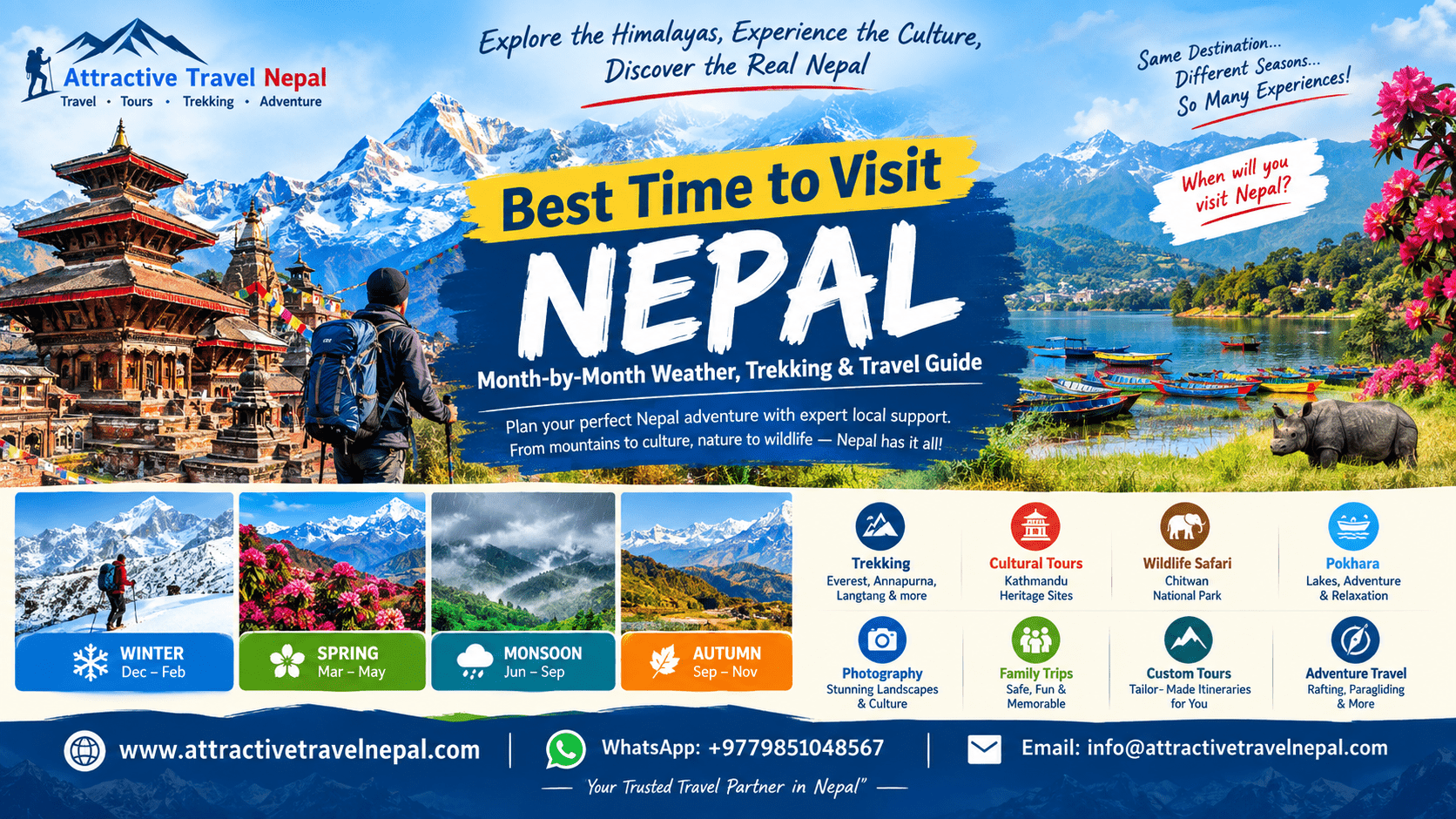
Our Nepal travel services can include:
- Nepal tour packages
- Nepal trekking packages
- Everest Base Camp Trek
- Annapurna trekking
- Langtang trekking
- Cultural tours
- Kathmandu tours
- Pokhara tours
- Chitwan jungle safari
- Private Nepal tours
- Family tours
- Customized Nepal itineraries
- Adventure travel
The advantage of planning with a local Nepal travel company is that your itinerary can be adapted to the season, route conditions, available time and travel preferences.
Frequently Asked Questions About the Best Time to Visit Nepal
What is the best time to visit Nepal?
October and November are among the most popular months for a classic Nepal trip because autumn generally provides favorable trekking conditions and good Himalayan visibility. March–May is another major travel period.
What is the best month to visit Nepal?
For many travelers, October is one of the strongest choices, particularly for trekking and mountain views. November is another excellent option.
What is the best time to trek in Nepal?
The main trekking seasons are spring and autumn, especially March–May and October–November.
Is October a good time to visit Nepal?
Yes. October is a peak tourism and trekking month with generally favorable conditions.
Is November a good time to visit Nepal?
Yes. November is particularly attractive for trekking, mountain photography and sightseeing.
Is March good for Nepal trekking?
Yes. March marks the beginning of the spring trekking season and can provide beautiful mountain and forest scenery.
Is April good for Everest Base Camp?
April is traditionally one of the main months for Everest Base Camp trekking.
Can I visit Nepal in June?
Yes. June is the beginning of monsoon conditions. Travelers should select destinations carefully and monitor weather and transportation conditions.
Can I trek in Nepal during July?
Some trekking routes remain possible, particularly in rain-shadow areas, but many classic routes experience monsoon conditions.
Is Upper Mustang good during monsoon?
Upper Mustang can be a particularly interesting monsoon-season destination because it lies in a rain-shadow region.
Can I visit Nepal in winter?
Yes. Winter is excellent for cultural tours, lower-altitude travel and selected trekking routes. High-altitude areas can be extremely cold.
What is the rainy season in Nepal?
The main monsoon period is generally June through September, with rainfall varying significantly by location and altitude.
What is the best time for Everest Base Camp Trek?
The traditional preferred seasons are March–May and October–November.
What is the best time for Annapurna Circuit Trek?
Spring and autumn are generally preferred, especially March–May and October–November.
What is the best time for Kathmandu and Pokhara?
Kathmandu and Pokhara can be visited throughout the year, but spring and autumn generally provide comfortable conditions and good opportunities for sightseeing and mountain views.
How many days are enough for Nepal?
Seven days can provide a short introduction to Kathmandu and Pokhara. Ten to fourteen days allow more variety, while two to three weeks are better if you want to combine a major trek with other destinations.
When Should You Visit Nepal?
The best time to visit Nepal depends on your travel goals.
For the classic Himalayan experience, October and November are among the most popular choices. The post-monsoon season can bring clear skies, comfortable trekking temperatures and spectacular mountain scenery.
For spring landscapes, rhododendron forests and trekking, March, April and May are excellent options.
For cultural sightseeing, Nepal can be visited throughout the year.
For wildlife experiences, the cooler months can be especially comfortable.
For monsoon travel, destinations such as Upper Mustang offer an alternative because of their rain-shadow geography.
For winter, Kathmandu, Pokhara, Chitwan and lower-altitude destinations can provide rewarding experiences, while high-altitude trekking requires additional preparation.
The important thing is not simply to ask:
“When is the best time to visit Nepal?”
Instead, ask:
“What do I want to experience in Nepal?”
Once you know whether your priority is Everest Base Camp, Annapurna trekking, Himalayan photography, culture, wildlife, adventure or a relaxing Nepal vacation, it becomes much easier to select the right travel season.
From the ancient temples of Kathmandu to the peaceful lakes of Pokhara, the forests of Chitwan and the world’s highest mountains, Nepal offers an extraordinary range of experiences.
Plan your Nepal adventure with Attractive Travel Nepal and discover the Himalayas, culture, nature and adventure at the time of year that suits your journey.
Attractive Travels and Tours Pvt. Ltd.