Sagarmatha National Park: UNESCO World Heritage Site

Overview of Sagarmatha National Park
The word “Sagarmatha” is a Nepali word that is made up of two words “Sagar” and “matha.” “Sagar” means sky, while “matha” means head. Hence, Sagarmatha means the forehead of the sky. The Sagarmatha National Park is one of Nepal’s ten UNESCO world heritage sites.
The National Park is located in the Solukhumbu district, the northeastern part of Nepal, and covers an area of 1,148 square kilometers or 443 square miles. The park is bordered by the Qomolangma National Nature Preserve of Tibet Autonomous Region in the north, while in the south, it is bordered by the Dudh Koshi River.
The National Park is an excellent example of exceptional natural beauty surrounded by majestic peaks and glaciers, including Mount Everest, the world’s highest peak. The significant glaciers inside the park are Khumbu, Imja, Ngozumpa, and Nangpa. Several rare animals live in the park, such as snow leopards and red pandas. Similarly, it is also home to some of the richest biospheres in the world, with an intricate blend of Sherpa culture and the most ecologically significant flora and fauna.
In the same way, we can do various refreshing activities there, like sightseeing, hiking, camping in Gokyo Lake, trekking up to the highest point monastery at Mt. Taboche, chilling at Dudh Koshi River, and so on. We also get the opportunity to learn about the culture and traditions of the Sherpas.
When Was Sagarmatha National Park Established?
The plan to establish the National Park was formally declared at the third international WWF congress held in Bonn, Germany, in 1973. Following that declaration, Sagarmatha National Park was finally established on 19th July 1976. Likewise, it was declared one of the world’s heritage sites in 1979 as Nepal’s first UNESCO world heritage.
The National Park is situated in the Solukhumbu district in the country’s northeastern region and occupies a total area of 1148 square kilometers. The park protects the rich Sherpa culture, Everest Ecosystem, and endangered species. The area also has a buffer zone declared on 1st January 2002. The buffer zone encompasses a total area of 275 square kilometers, including inside human settlements and the park’s surrounding territory.
What Are the Things To Do in Sagarmatha National Park?
This park offers a wide range of activities and adventures. Below are a few of the things we can do in the national park:
1. Hiking:
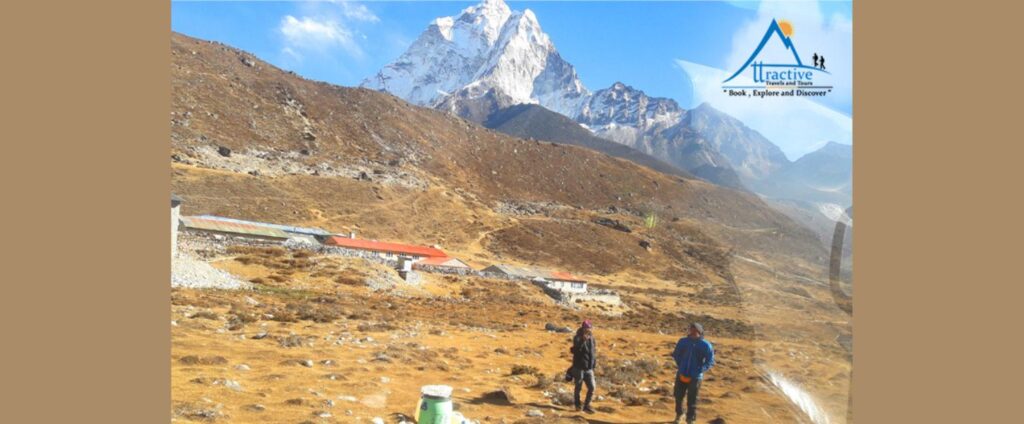
Hiking is considered one of the most popular activities inside the Sagarmatha National Park. It is popular among both locals as well tourists. All treks into this park begin with Lukla town. Throughout the trek, one can enjoy mesmerizing natural beauty from the rocky, hilly slopes to the breathtaking views of Himalayan peaks, mountains, and valleys. Travelers can travel on most trails independently, but traveling with a local Sherpa is preferable and more efficient.
2. Trekking:
Another thrilling activity at Sagarmatha National Park is trekking. The treks to Mount Taboche, the Everest Base Camp, and the monasteries are the main trekking activities inside this national park.
3. Camping:
It’s a great idea to camp along the shores of the stunning Gokyo lake if you enjoy excitement and adventure. Gokyo Lake is 4,700–5,000 meters (15,400–16,400 feet) above sea level. Take camping to a new level by pulling the tent from the bag and setting it up under the stars. It is a once-in-a-lifetime chance to view the tallest mountain in the world, Mount Everest, from Gokyo Lake.
4. Sightseeing:
Traveling to Sagarmatha National Park is all about sightseeing. One will see magnificent hills, sloping terrain, wild vegetation, glimpses of the tallest mountains, glaciers, lakes, and more. Take photos of those stunning views and feel the beauty of the surrounding area.
5. Chilling
One of the most extraordinary things to do in the National Park is to spend quality time on the shores of the swift-flowing river, Dudh Koshi river, and feel relaxed. Forget all your worries, as the water in the river flows. Numerous suspension bridges cross the river, and they all provide breathtaking stunning views.

6. Getting Familiar with Local People:
Nepal is a multi-cultural, multi-ethnic, multi-lingual, and multi-religious country. People with different cultures, religions, traditions, and languages live in different parts of Nepal. In the same way, Sherpas live in Sagarmatha National Park. Sherpas are of Tibetan origin and have Tibetan influence. They celebrate festivals like Dumji, Mani Rimdu, and Losar. Local people are amiable and always smile friendly. We will learn about new cultures and traditions.
Places to Visit in Sagarmatha National Park
Here are a few of the places to visit in the National Park:
- Gokyo Lakes
- Beautiful monasteries
- Local area
- Dudh Koshi River
How to Reach Sagarmatha National Park?
Sagarmatha National Park, situated in the Solukhumbu area, is roughly 135 kilometers from Kathmandu. Getting to the park is a difficult job that requires a significant amount of hiking. Continue reading to learn more about how to reach Sagarmatha National Park quickly and easily.
Sagarmatha National Park By Air
The Tenzing-Hillary Airport in the Lukla area is the nearest airport to Sagarmatha National Park. The only international airport in Nepal is in Kathmandu, where visitors arriving from abroad must first arrive. There are frequent flights from the domestic terminal of Tribhuvan International Airport in the capital to the terminal in Lukla; the journey takes about 25 minutes. The remaining distance to Sagarmatha can be traveled in two days of hiking from Lukla.
Sagarmatha National Park By Road
There are no straight road routes into Sagarmatha National Park. The most convenient alternative is to take a bus from Kathmandu to Jiri, a village about 100 kilometers from the park. A 10-day journey from Jiri will get you to Sagarmatha.
Where to Stay at Sagarmatha National Park?
You don’t need to worry about finding a place to stay at the National Park. The following are some of the lodging alternatives available in the National Park:

Accommodations and Camping in Sagarmatha National Park
Guesthouses and Hotels
Indeed, at the National Park, many guesthouses and hotels provide accommodations for both locals and foreigners. However, all guesthouses lack full equipment because the area lies deep within Nepal’s Himalayan region, where modern facilities have not yet fully arrived. Consequently, only a select few homestays and lodges provide convenient lodging equipped with basic comforts.
Camping Options
Meanwhile, camping suits adventurous travelers perfectly. Specifically, visitors can pack their own camping gear and set up camp wherever they feel most comfortable within the national park boundaries.
Best Time to Visit Sagarmatha National Park
Ideal Seasons for Visiting
Overall, the best time to explore the National Park spans autumn and spring, specifically from October to November or March to June. During the autumn months (October to November), the weather remains crystal clear, allowing travelers to witness brilliant views of hills, mountains, and lush natural greenery directly. Furthermore, mild temperatures make hiking around the scenery exceptionally delightful. Similarly, the environment shines clean during the spring season (March to June) once the monsoons pass. At this time, skies stay clear, landscapes look cleansed and renewed, and nature reveals stunning views of surrounding mountains.
Seasons to Avoid
Conversely, the worst time to visit Sagarmatha falls during summer (July to September) and winter (December to February). During winter, heavy snowfall strikes the region, and temperatures plummet extremely low, usually dropping below zero degrees Celsius.
Conclusion
Ultimately, the protected region of Sagarmatha National Park in the Nepalese Himalayas houses several unusual and diverse plant and animal species. Recognizing the park’s outstanding natural beauty and cultural value, international authorities named it a UNESCO World Heritage Site in 1979. Moreover, the world’s tallest peak, Mount Everest, rises proudly within Sagarmatha, attracting tens of thousands of tourists and climbers annually. Thus, the park stands as a vital conservation area representing both natural and cultural preservation.
Frequently Asked Questions
Q: Where can I get a Sagarmatha National Park permit?
Conveniently, travelers can secure their Sagarmatha National Park entry permit at the park’s Monjo entrance or the Nepal Tourism Board office in Kathmandu. Alternatively, a nearby trekking organization can help you obtain the permit. However, officials advise contacting specific organizations directly for precise policies and regulations.
Q: How much is the entrance fee for Sagarmatha National Park?
Specifically, Sagarmatha National Park charges 3,000 Nepalese Rupees (NPR) for foreign visitors and 1,500 NPR for SAARC citizens as entrance fees. Therefore, visitors should check with appropriate authorities for any updates or price adjustments.
Q: Where is Sagarmatha National Park situated?
Geographically, Sagarmatha National Park sits close to Mount Everest in Nepal’s Solu-Khumbu region.
Q: When was Sagarmatha National Park enlisted in the World Heritage List?
Historically, experts enlisted Sagarmatha National Park into the World Heritage List in 1979, establishing it as Nepal’s first UNESCO World Heritage site.
Q: Which was the initial World Heritage Site listed in Nepal?
As noted, Sagarmatha National Park proudly holds the title of Nepal’s very first World Heritage Site.
Q: How do I travel to Sagarmatha National Park from Kathmandu?
Travelers can reach the National Park from Kathmandu using several different methods:
-
Flight: Flying from Kathmandu to Lukla and then hiking into the National Park provides the easiest method.
-
Bus: Alternatively, travelers can take a longer, more scenic bus ride from Kathmandu to Jiri, then hike to the park.
-
Private Drive: Visitors can also rent a private car from Kathmandu to Salleri, starting the hike from there.
Before starting any walk into Sagarmatha National Park, experts strongly advise adequate high-altitude acclimatization, regardless of your chosen transportation method.
Q: Which animals live in Sagarmatha National Park?
Rich biodiversity fills Sagarmatha National Park, which hosts numerous remarkable animal species, including:
-
Snow Leopard
-
Himalayan Tahr
-
Musk Deer
-
Himalayan Black Bear
-
Gray Wolf
-
Eurasian Lynx
-
Red Panda
-
Langur monkeys
-
Blood Pheasant
-
Danphe (Nepal’s national bird)
These represent just a fraction of the notable wildlife inhabiting the park.
Download PDF