Kathmandu Tour Guide | Kathmandu Sightseeing and Things to do

Travelers from all over the world have made Kathmandu something of a destination. Given the city’s captivating fusion of artistic and cultural legacy and close proximity to the Himalayas, it is simple to understand why. Join us on a private Kathmandu tour guide and see this city’s numerous delights.
Durbar Square, located in the centre of the ancient city, is a must-see for anybody travelling to Kathmandu because of its distinctive architecture and friendly attitude. With the help of your Kathmandu tour guide, go around the Old Town’s twisting, crooked lanes, stopping to eat momos that have been steaming or look at the local crafts.
A day journey to the area’s World Heritage-listed sites, Swayambhunath, Pashupatinath, Bodhnath, and Patan, is highly recommended. Additionally, your Kathmandu tour guide should be pleased to assist you with a trek in Champa Devi or Shivapuri National Park to reach the verdant mountain beauty around the Kathmandu Valley.
The capital city of Nepal, Kathmandu, is where you’ll probably arrive first while traveling there. But don’t make it a quick stop on your journey; it’s worth lingering along and taking in the ambiance of this fascinating city. The most intriguing things to do in Kathmandu range from spirituality and shopping to heritage, architecture, and culture. Here are some tips for maximizing your time there.
1. Explore the Villages in the Kathmandu Valley with Kathmandu Tour Guide
The Kathmandu Valley, whose communities have maintained a traditional way of life unaffected by contemporary development, is a great place to escape Kathmandu’s traffic and urban sprawl. Located south of Kathmandu and close to Patan, Bungmati and Khokana are two of the most well-liked villages to visit. These two villages need tourism more than ever because the 2015 earthquake severely damaged them.
Rato Mahhendranath, a respected rain deity, is thought to have been born in Bungmati hamlet, which goes back to the sixth century. Unfortunately, the earthquake destroyed his temple. Thus his idol is currently preserved in the adjacent Patan. You may visit the villagers’ workshops to see the woodcarvers and sculptors at work. Khokana is a prosperous farming community where mustard oil is produced, and locals work in agriculture for most of the day.
2. Visit Shivapuri Nagarjun National Park for the Day
The Shivapuri Nagarjun National Park, which is around two hours from Kathmandu and offers more than 61 square miles of nothing but nature, is situated along the valley’s northern side.
Nepal’s ninth national park, which was once a watershed and wildlife reserve, is now a popular trekking destination. This area is home to numerous rhododendrons, pine and oak trees, Himalayan black bears, rhesus monkeys, leopards, 177 bird species, 102 butterfly species, and 129 mushroom species.
3. Wander about the Old City
Wandering around the exciting maze of tiny alleys and passageways in ancient Kathmandu will keep you occupied for hours, if not days, from Durbar Square to Thamel.
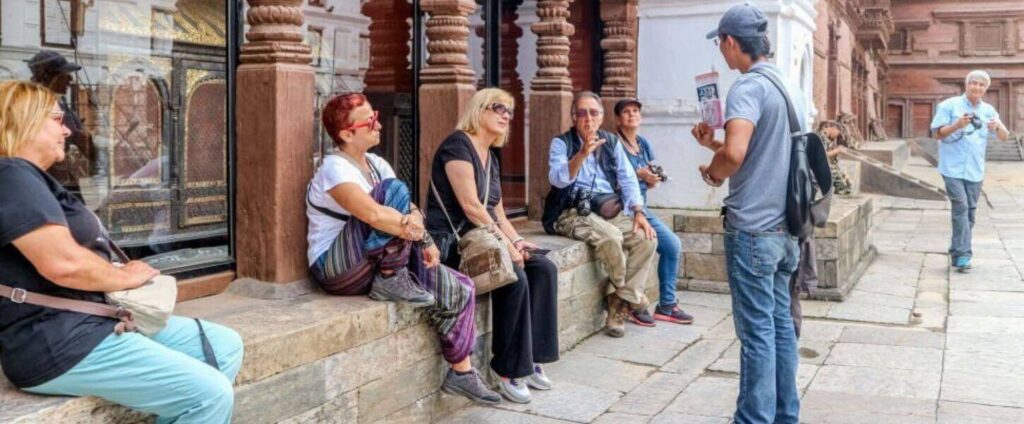
Grab a map and start exploring; you will likely discover shrines and sculptures tucked away in unexpected locations. Start at the northeastern corner of Kathmandu Durbar Square and travel down Siddhidas Marg to reach Indra Chowk. This bustling market serves as a lively intersection where five roads meet.
Continue straight down Siddhidas Marg to Kel Tole to visit the Seto Machhendranath Temple. Furthermore, as you proceed along the same road, you will arrive at Ason Bazar, the busiest intersection in the city. Vendors sell produce from across the Kathmandu Valley here from dawn until dusk. You should spend some time observing the vibrant scene. Additionally, the square features a magnificent three-story temple dedicated to Annapurna, the goddess of plenty, which draws numerous pilgrims.
After five minutes, turn left into Chittadhar Marg, then right onto Chandraman Singh Marg. Follow this path until you reach Thahiti Tole, home to a 15th-century Buddhist stupa and the Nateshwar temple. Along this route, the Kathesimbhu Stupa dominates a quiet courtyard. Significantly, this 17th-century structure serves as a replica of the enormous Swayambhunath Stupa located just outside the city.
The Historic Durbar Squares
The city centers around the historic Kathmandu Durbar Square in Basantapur, where royal families lived until the 19th century. UNESCO designated this site a World Heritage landmark in 1979. It features Hindu and Buddhist temples dating back to the 12th century, alongside the Hanuman Dhoka palace. Unfortunately, the massive 2015 earthquake severely damaged several buildings, including the palace, and demolished the southernmost temples.
Poor maintenance, ongoing restoration, and high admission costs (1,000 rupees for tourists) often discourage visitors from entering the main square. However, you can find two other significant and ornate squares nearby: Patan Durbar Square (500 rupees for foreigners) and Bhaktapur Durbar Square (1,500 rupees). Because these sites escaped the earthquake’s worst impacts, they offer far greater value. Finally, several tour operators offer private excursions to these locations if you wish to explore them in depth.
Shopping and Relaxation in Thamel
You can enjoy Thamel best on foot, though you should watch for traffic. This district remains one of the most popular tourist destinations in Kathmandu. Within this area, you will find numerous restaurants, boutiques, and the Garden of Dreams. This peaceful park offers a quiet corner to relax, tucked away from the main streets.
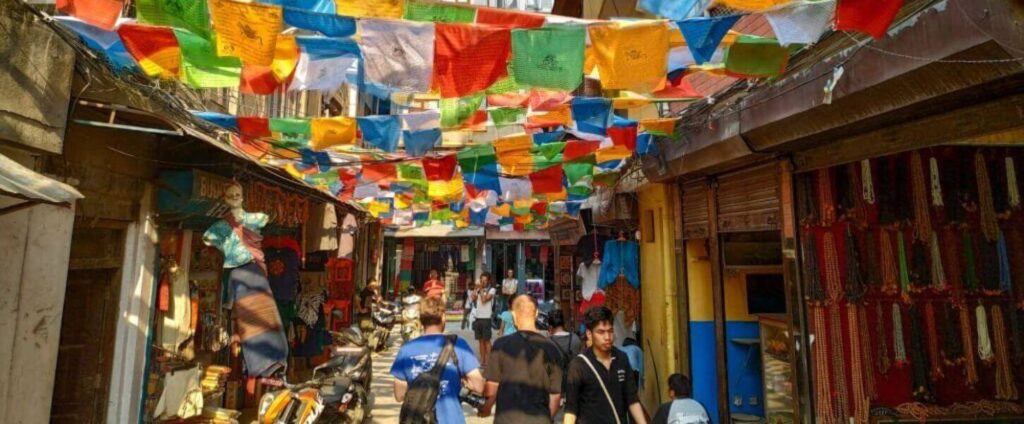
Despite its bustling and chaotic energy, rows of Tibetan prayer flags and passing cycle rickshaws help Kathmandu’s Thamel tourist zone maintain its timeless, old-world charm. Along these vibrant streets, shops overflow with brilliantly colored apparel, jewelry, paper lanterns, thangka paintings, wood carvings, bronze statues, and traditional literature. Because shopkeepers often quote high prices, travelers should bargain firmly—aiming to pay roughly a third to half of the initial amount. When evening arrives, Thamel transforms entirely; its streets glow with cozy lights while live music drifts invitingly from local pubs.
6. Stroll Through the Garden of Dreams
Few experiences match the profound peace of walking through the Garden of Dreams, located just across the street from the former Royal Palace near Thamel. Built in 1920 by scholar and horticulture enthusiast Kaiser Shumsher Jung Bahadur Rana, this European-style garden offers a tranquil escape from the urban rush. Open daily from 9:00 a.m. to 6:30 p.m., the grounds provide an ideal setting for a relaxing picnic or a midday stroll.
Meet Your Expert Guide: Prakash Aryal
At Attractive Travels and Tours Pvt. Ltd., travelers benefit from a dedicated team of experienced professionals, including expert tour leaders, trekking guides, and field staff. Among their top professionals stands Prakash Aryal, widely recognized as a premier Kathmandu tour guide. Originally born in the central Dhading district, Aryal moved to Kathmandu to pursue higher education. He launched his tourism career in 2007 as an office assistant while continuing his studies, eventually advancing to assistant tour and ticketing officer, and later manager at a leading travel company.
Since 2014, Aryal has specialized as an expert tour guide with Attractive Travels and Tours. Furthermore, he serves as a founding member of AHRD Nepal, an NGO dedicated to uplifting rural communities—particularly through education, healthcare, and support for orphans in the Chepang Village of Jogimara, Dhading. Holding a tour guide diploma from the Nepal Academy of Tourism and Hotel Management (NATHAM), Aryal continually pursues self-study, driven by a deep commitment to delivering exceptional service.
Essential Travel Tips for Thamel
-
Pedestrian Zones: Fortunately, authorities converted many of Thamel’s main streets into pedestrian-only zones in late 2017, making exploration much easier and safer.
-
Street Youth: Occasionally, travelers encounter street-dwelling youth in the neighborhood. Experts recommend avoiding direct cash handouts.
-
Safety: Generally, Thamel remains a safe destination. However, visitors should remain vigilant with personal belongings, particularly when walking out late at night.
-
Noise Levels: Be aware that accommodations along Thamel Marg can become quite noisy on weekends due to nearby clubs and live music venues.
UNESCO World Heritage Sites In Kathmandu Valley

The Kathmandu Valley is the ideal location for a cultural introduction to Nepal. Since ancient times, the valley has been the hub of social, cultural, and economic power. You may go on a sightseeing tour of the UNESCO sites in the Kathmandu Valley. UNESCO has designated two natural and eight cultural sites in Nepal as World Heritage Sites, 7 of which are in the Kathmandu Valley. Walk through Kathmandu Valley’s cobblestone streets to discover some of the best examples of oriental architecture.
1. Bouddhanath Stupa
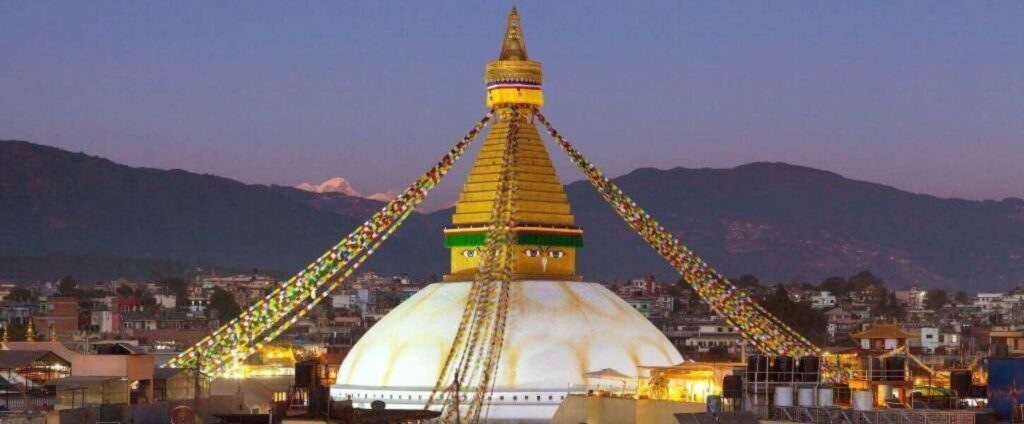
According to reports, this is South Asia’s most prominent Buddhist shrine. King Man Deb constructed the enormous historic chhorten in the sixth century A.D. From above; it appears to be in the shape of a lotus flower, which is still a highly sacred thing for all devoted Buddhists worldwide. A series of three terraces support it. A circular market, a component of Tibet town, surrounds the chhorten. In this instance, the Buddha’s four pairs of eyes also vividly flash the four cardinal directions, denoting the need to keep a vigilant watch on people and their commitments throughout the day and night.
2. Pashupatinath Temple
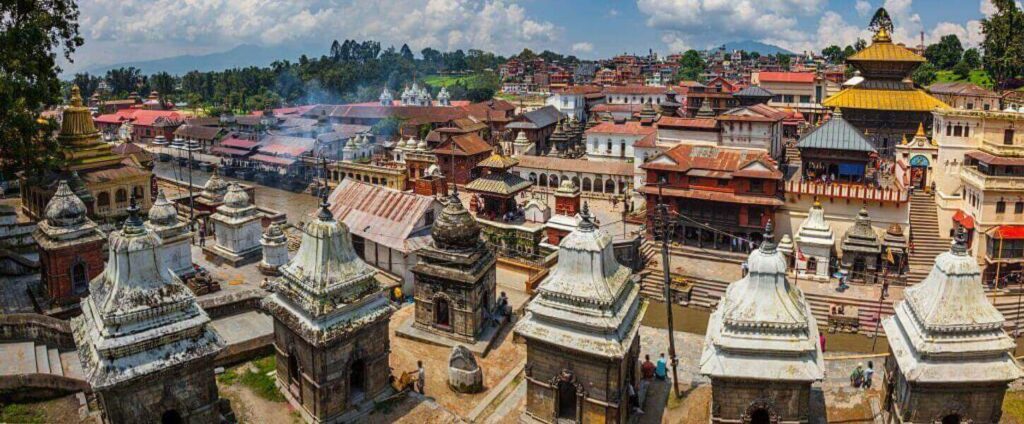
It is a pagoda-style Hindu temple near the sacred Bagmati River’s bank, with golden roofs and ornately carved silver doors dedicated to Lord Shiva. Pashupati Nath Temple, one of the holiest temples in the entire Hindu world, serves as the hub of pilgrimage on the day of Shivaratri. 5 kilometers to the east of the central city is the little holy village of Debpatan, which is home to the enormous temple. The central courtyard of the temple is only open to Hindus. Visitors from other countries may see the temple from the eastern bank of the Bagmati River.
3. Kathmandu Durbar Square
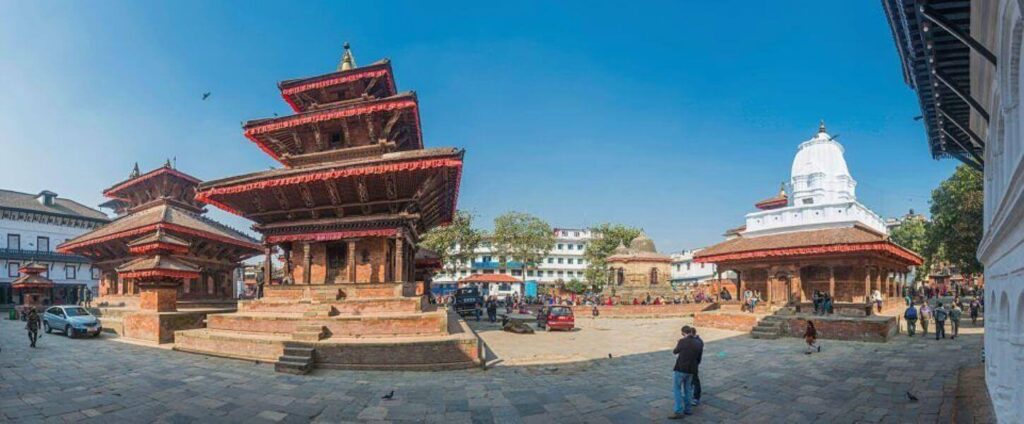
The Kathmandu Durbar Square’s countless structures may easily overwhelm one. A few sites in the Square are the House of the Living Goddess (Kumari Ghar), the fearsome Kal Bhairab, the Red Monkey God, and hundreds of sensual sculptures! The structures in this area, which are the Malla dynasty’s finest works of art, are the products of intense competition between Kathmandu, Patan, and Bhaktapur’s three royal palaces. Different parts of the Valley were given to the Yaksya Malla children.
It was fortunate for Nepalese and today’s tourists that they and their descendants started an artistic arms race to outdo one another in magnificent structures. Kings created everything in an even greater style by copying what their neighbors did. Among the several monuments in the Square are the pagoda-style temple, the shrine of Goddess Taleju (it is said that she played dice with King Jaya Prakash Malla), and a statue of Shiva and Parvati seated side by side.
4. Swayambhunath Stupa (Monkey Temple)

It is one of the oldest Buddhist Chaityas in the world and is thought to be 25 centuries old. The Great Stupa of Swayambhu symbolizes both Nepal’s beauty and its splendor. It is recognized as a World Heritage Site, demonstrating that it is the hub of devoted worship for the faithful Bajrayan ideology and honors Lord Adi Buddha. It is devoted to the God of the self-originating flame. A sturdy hemisphere of terra-cotta bricks and earth supporting a cornice of copper and gold make up the stupa, the prominent structure. The all-seeing eyes of Lord Buddha are shown on the four-sided base of the spiral, perpetually observing the valley and separating sin from virtue.
The sacred Bishnumati River separates it from Kathmandu City proper, two kilometers away. It is 500 feet above the Valley’s level and is perched on top of a mound. The hill is covered in a mosaic of tiny Chaitya and pagoda temples. Another significant Buddhist temple, Manjushree, is situated on the hind hill. This Buddha in China represents the God of Knowledge.
5. Bhaktapur Durbar Square
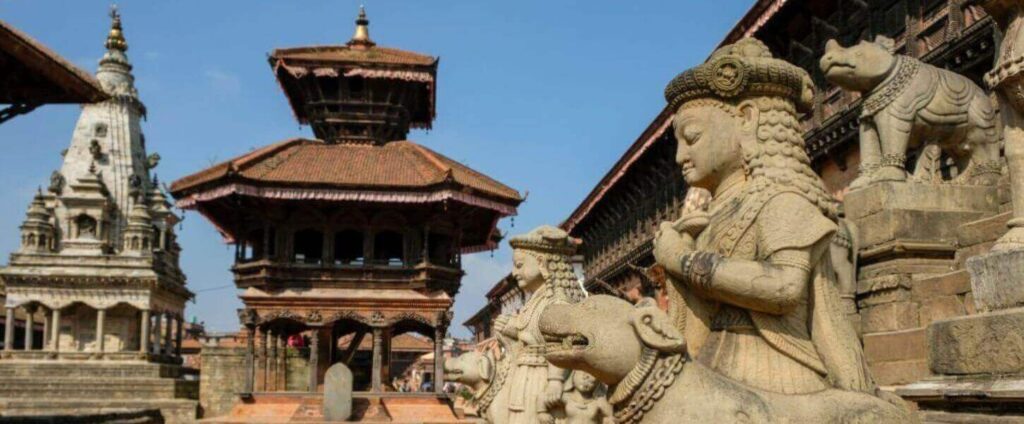
Even though Bhaktapur is close to the capital, the atmosphere and feeling of history there are so drastically different that it might as well be on another planet. Although satellite dishes are slowly encroaching, not much has changed in this area over the years.
The National Museum of Woodcarving, the Bronze and Brass Museum, and the National Art Gallery are all located in Bhaktapur. Visit the Golden gate, the Palace with fifty-five windows, the Lion gate, and the Picture Gallery. The beautiful Changu Narayan temple, which has been around since the fourth century, is located four kilometers distant. This temple has a lengthy history, but it was constructed in the seventh century, and because it is one of Kathmandu’s least visited, it has a more atmospheric atmosphere.
6. Patan Durbar Square
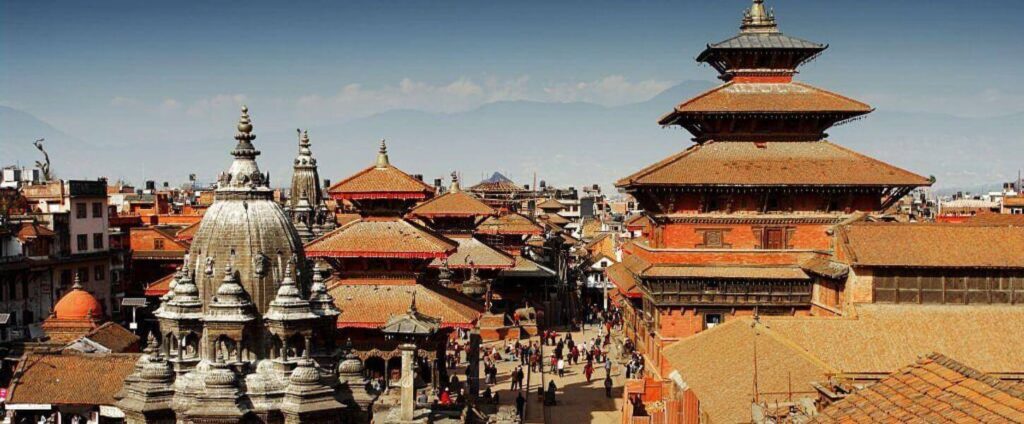
The mansion of the old Patan Royal Family is located inside the Patan Durbar Square complex, which is located in the heart of Patan, also known as Lalitpur, “the city of arts”. Its three principal courtyards are the palace’s Mul Chowk, Sundari Chowk, and Keshav Narayan Chowk.
The oldest one, Mul Chowk, is in the middle of Patan Square. The western portion of the complex is made up of several different-sized and-styled temples. These include the Golden Temple of Hiranya, the Krishna Temple, and the Bhimsen Temple.
7. Changunarayan Temple

the historic Hindu temple of Changu Narayan sits just 15 kilometers away from the Kathmandu Valley. Tracing its roots back to the 4th century, the site holds deep historical value. Furthermore, an ancient 464 A.D. stone inscription and other architectural marvels highlight the Kathmandu Valley’s rich history.
Frequently Asked Questions
What more do I need to know about Kathmandu’s attractions?
Beyond exploring Thamel, travelers can choose several fantastic excursions to enhance their trip:
-
Kathmandu Valley UNESCO Sites Day Tour
-
Nagarkot Sunrise and Bhaktapur Durbar Square UNESCO Tour
-
Everest Base Camp Heli Tour
What tourist destinations are closest to Thamel?
Specifically, visitors can easily access these nearby attractions on foot:
-
Garden of Dreams
-
Asan Market
-
Hanuman Dhoka
What is Kathmandu well-known for?
Overall, Kathmandu proudly blends Buddhist and Hindu cultures. Key highlights include the Kumari Living Goddess, Swayambhunath Stupa (the Monkey Temple), Durbar Square, and Boudhanath Stupa. Tragically, a devastating earthquake struck the city in 2015, damaging several historic areas.
How safe is Kathmandu?
Generally, Kathmandu remains a safe city for travelers. Although minor crimes occur occasionally, violent crime is rare. However, because of vulnerable infrastructure, the risk of earthquakes remains high in this seismically active region. Additionally, winter and spring bring heavy air pollution, which can pose risks for travelers with respiratory issues.
Download PDF