At nearly every Everest Base Camp photo, summit success story, and high-altitude rescue in the Himalayas, there is often a Sherpa presence behind the moment.
Sherpa guides and climbers have supported expeditions, carried supplies, prepared routes, and helped people through difficult mountain conditions. Yet many travelers know the name without knowing much about the people themselves.
The Sherpa People are an ethnic group that speaks a unique language, has traditions and culture, beliefs, history, and a homeland in the Himalayas. Their story has much more to say than just being mountain climbers.
For many centuries, the Sherpas have been living in mountain settlements, farming and raising cattle, trading on Himalayan trails.
This guide explores where the Sherpas came from, how they settled in the Everest region, and how their environment shaped their daily lives.
It also looks at their language, religion, relationship with the mountains, role in mountaineering, and the ways modern tourism has changed their communities while keeping their cultural identity alive.
Explore the Everest region with Attractive Travels and Tours.
The Sherpas originally migrated from the Kham region of eastern Tibet into northeastern Nepal. Historical accounts generally place this migration around 400 to 600 years ago.
The movement was likely influenced by conflict and the search for new grazing areas and suitable land for settlement. Groups gradually crossed the high Himalayan passes and established communities in the Solukhumbu region.
“Sherpa” is a Tibetan word for “eastern people,” which refers directly to the direction they traveled from. Once they settled in Nepal, a good relationship was established between the Sherpas and the mountains they were surrounded by.
The entire culture of these people, from the way they settled, worshipped, farmed, and traded, developed based on the mountains surrounding them.
Outside Nepal, the term “Sherpa” is commonly understood as being used in a general sense to refer to a mountain guide or porter.
This is a misunderstanding which should be corrected. The term Sherpa refers to an ethnic community with a rich heritage and culture. Some Sherpas have become very accomplished climbers, but the term does not describe a profession.
The Sherpa people are an ethnically unique group whose culture has been developed over many years in the Himalayan region. While many Sherpas are engaged in tourism and mountaineering, there are many others who work in sectors such as education, commerce, agriculture, hospitality, public service, among others.
It is due to their experience in this field that the Sherpa have earned themselves a reputation as mountaineers, combining knowledge, experience, physical adaptations, and familiarity with the Himalayas.
Sherpa language is derived from the Tibetan language and is not Nepali. The Sherpa language is still in use among the Sherpas and serves as an important element in culture. Language helps to pass on stories, traditions, native phrases and knowledge from generation to generation.
Some of the Sherpas speak many languages, including Nepali, due to schooling, tourism, businesses and travel. The Sherpa people need to keep their language to keep their past alive as well as move ahead in life.
Tibetan Buddhism is deeply rooted in Sherpa culture. It is practiced on a day-to-day basis, in meetings, festivals, monasteries, prayer flags, mani walls, and so forth. Monasteries are vital institutions that act as centers for praying, performing religious ceremonies, and cultural activities.
Anyone who travels through the Sherpa villages will find Buddhist monuments and prayer flags during the journey. There are also mountains that play an integral role in Sherpa lives. Mountains like Mount Everest do not just present a difficult challenge to climb. Many of them are also considered to be holy sites.
Life at altitude has shaped Sherpa communities in practical ways over many generations. Thin air, a cold climate, steep terrain, and limited farmland have all influenced what people grow, how animals are raised, how goods move around, and where settlements get built.
Traditional ways of life grew out of making the best use of whatever resources the mountain environment offered.
Cultivation of potatoes and rearing of animals have long played a crucial part in the lives of people living in the mountains. Potatoes are ideally adapted to grow in mountainous areas. Similarly, the yaks could easily withstand cold temperatures and walk through rugged terrains.
The yaks produced milk as well as other dairy products. Besides, they could easily carry cargo through rough terrain. Trade was another key source of livelihood based on ancient trade routes linking Nepal and Tibet.
Sherpa settlements developed through the old trade routes and ended up becoming important places where trekkers could have some time to rest. Namche Bazaar, for instance, grew into an important business hub on the route that leads to Mount Everest.
Another example of Sherpa settlements is Khumjung, which is surrounded by agricultural land, Sherpa homes, monasteries, and mountains. Even with all the tourists, there are still some true Sherpa villages in these settlements.
The relevance of Sherpa people to mountaineering in the Himalayas should not be ignored. The knowledge and experience that the Sherpas have about the mountain regions have played an important role in the success of different expeditions for many years.
It should be noted that the involvement of the Sherpas does not only include carrying gear. There have been many Sherpa climbers who have contributed to route preparation and other activities.
The successful climb of Mount Everest with Edmund Hillary by Tenzing Norgay in 1953 was undoubtedly the most popular event where the contribution of the Sherpas was seen in the history of Everest.
The accomplishment of these two climbers was an important event in the field of mountaineering. It made Tenzing Norgay one of the most famous mountaineers of that age. However, this accomplishment was just one episode of a long story of Sherpas’ skills on Mount Everest.
The skills of the Sherpa climbers cannot be attributed solely to their experience. Scientific studies of the effects of altitude on populations have revealed that living at elevation for generations may result in physiologic adaptations that will assist the body in working in hypoxic environments.
The Sherpas are known for their efficient use of oxygen and many other adaptations that allow their bodies to work effectively under high altitude conditions. While these adaptations can give some advantage, they do not make mountaineering a safe activity for the Sherpa climbers.
The Sherpa people have undergone great transformation due to the growth of tourism and mountaineering in the Everest region. The expansion of tourism has created job openings in various areas such as guiding, treks, lodging and even transportation.
Education, improved communications and exposure to urban centers have transformed the way of life of the new generations who are spending some time away from their traditional settlements.
At the same time, the Sherpa culture did not disappear. The practice of Buddhism, the celebrations and festivals, traditions of the family, language, cuisine, and community gathering continue to play an important role in Sherpa culture.
Traditional aspects and modern lifestyle exist simultaneously, thus allowing for the development of the culture rather than keeping it at a fixed point. Such awareness allows for the prevention of viewing Sherpa communities as relics of the past.
A trip to the Everest region allows tourists to encounter Sherpa communities as an integral part of everyday life and not only as a part of the picturesque environment.
In this trekking tour, travelers have a chance to witness villages, monasteries, farms, bazaars, and even houses where people live and work. Staying in local guest houses and trekking in the vicinity of Namche Bazaar and Khumjung will offer more insights into the region.
Interaction with the locals can also make the trip more enriching. It is important for travelers to remember that such communities are not places that were built specifically for tourism purposes. These are homes and workplaces for the locals.
Respecting their religion, following local traditions, asking permission before photographing them and showing an interest in their history can all contribute towards making the trip more respectful. The Sherpas continue to mold the trails and communities experienced by the travelers.
Attractive Travels and Tours is a licensed tour and trekking operator based in Kathmandu. We provide tourists with opportunities to tour and trek through Nepal, Tibet, and Bhutan.
With diverse trekking and touring packages, the company assists tourists in touring the Himalayas using its well-coordinated schedules and local knowledge. Attractive Travels and Tours is associated with the Nepal Government, Nepal Tourism Board, NATA, KEEP, and PATA.
Attractive Travels and Tours offers certified government guides to aid visitors in discovering the region of Everest safely and in a manner befitting the environment. It is important to note that the trip is not necessarily focused on getting to the base camp, but also the discovery of the villages, monasteries, culture and people along the route. Travelers will get to know the Sherpa People better and see the area in person.
Contact Us to plan your Everest adventure.
The Sherpa People are not just a label that comes along with mountaineering news stories. They are a unique ethnicity with their own long-standing history, their own language based on Tibetan, their own religion and culture, and a connection to the Himalayas.
Migration of Sherpas from eastern Tibet, their inhabiting of Solukhumbu, occupations, and help in climbing Mount Everest are some of their characteristics.
The impact of tourism and development continues to alter life in the Everest region. However, the Sherpa culture is as vibrant today as ever in the villages, monasteries, festivals, and family life. A trek in the Himalayas will reveal a lot more than just views of snow-capped mountains for that reason.
Tourists who make efforts to know about the local culture usually return from their trip with a richer experience of it.
The word “Sherpa” comes from Tibetan words meaning “eastern people,” pointing to the historical movement of the community from eastern Tibet into the Himalayan regions of Nepal.
Not really, because being a Sherpa is an ethnic identity and not a designation for a profession. There are a lot of mountain guides in Nepal who have a diverse background. However, many Sherpas have managed to establish themselves as excellent guides and mountaineers because of their extensive experience and knowledge of the mountains.
The majority of Sherpa villages practice the teachings of Tibetan Buddhism. Monasteries, prayer flags, mani walls, rituals and other religious symbols and practices are widely seen and celebrated in the villages around the area.
Their ability to climb comes from years of adaptation to living at high altitude, acclimatization, experience, and profound knowledge of the surroundings. Still, proper acclimatization and preparations are a must, despite all the factors listed above.
Yes, it is because the treks to the camp usually go right through Sherpa villages like Namche Bazaar and Khumjung.
Attractive Travels and Tours is Nepal’s most reputable trekking company that offers various trekking packages. One of the packages offered by Attractive Travels and Tours is the trekking to Everest Base Camp.
Considering your unique needs before beginning the Everest Base Camp Trek is important. These conditions could relate to your financial situation, physical fitness level, environmental preferences, and the results you hope to achieve from this expedition. Each of these elements will impact your decision-making and assist you in identifying the kind of trekking experience you desire.
Once you have decided on your trek’s requirements, you may start looking for a trekking company that can offer packages that meet your specifications. Choosing a trustworthy and knowledgeable trekking operator that can provide you with a package specially designed to meet your needs is essential. Additionally, they can advise you on the ideal time to go, the best path to travel, and the supplies and equipment you’ll need for the walk.
The Everest Base Camp Trek offers a rare chance to see some of the most breathtaking vistas on earth. The Everest Base Camp Trek’s highlights include the following:
As mentioned, choosing the best trekking company is crucial when undertaking a journey to Everest Base Camp. The trek is demanding and entails several risks and difficulties, including altitude sickness, erratic weather, and steep terrain. As a result, selecting a trustworthy and knowledgeable company might make all the difference in guaranteeing a fun and safe experience. When selecting a trekking company, keep the following things in mind:
When selecting a trekking company for your Everest Base Camp trek, it’s crucial to prioritize its reputation in the industry. One way to gauge this is to check for reviews on popular platforms like TripAdvisor, Google, and Facebook. These platforms provide clients with a forum to discuss their experiences with the business openly. It provides insightful information about the quality of service and satisfaction you can anticipate.
Read both good and negative reviews to obtain a complete picture of the company’s strengths and weaknesses. Analyze for patterns in the feedback, such as remarks about the experience of the tour guides, the safety protocols, the equipment provided, or the overall organization and communication of the company.
Selecting a trekking company with knowledgeable, experienced guides is essential when setting out on an adventure in the Everest region. It is because an experienced guide’s knowledge and skills can truly make a trek effective and gratifying. Additionally, a knowledgeable guide may significantly improve your trekking experience by giving you insightful information about the local people, their history, and the area’s geography.
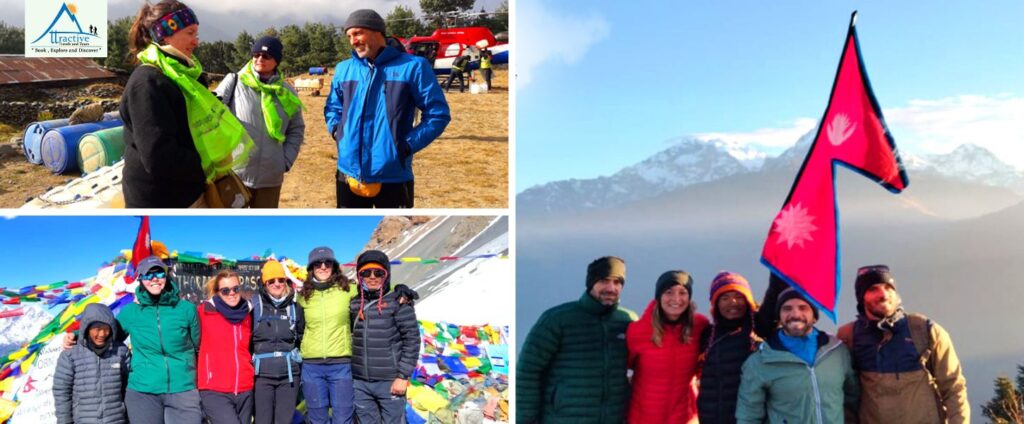
Experienced guides are proficient at navigating the Everest region’s treacherous and occasionally unpredictable terrain. As a result, they are prepared to handle any problems that may develop throughout the trek, such as injuries, poor weather, or altitude sickness.
Additionally, a knowledgeable guide can help you customize your trekking itinerary to suit your physical capabilities and personal preferences. They can advise on the most scenic routes to travel, where to go, and when to hike to avoid crowds.
When planning a trekking adventure, it is essential to prioritize safety above all else. As a result, it’s crucial to pick a trekking company that prioritizes safety and has a history of doing so.
Consider past experiences and client testimonials when assessing the safety record of a trekking company. Look for testimonials that speak directly to the company’s commitment to safety and how well it can manage potential issues.
Furthermore, confirming that the trekking company supplies all the required safety gear, such as oxygen cylinders, first aid kits, and communication gadgets, is essential to address any medical emergencies. They should also prepare for unforeseen events like natural catastrophes or accidents by training their guides and employees in emergency response measures.
When considering a trekking company, looking into its logistics services is crucial. It covers transportation to and from the airport, lodging, food, permits, and other essential arrangements. It is critical to make clear what is and is not included in the pricing.
For instance, some trekking firms may provide airport transfers as part of their package, while others may require you to make your travel arrangements. Likewise, certain companies may provide meals and lodging throughout the trek, while others might offer these services for just a certain portion of the trip.
In addition to these logistics, it is important to consider any other services that the trekking company might provide, such as guided tours or equipment rental. You can better manage your budget and make sure you know what to expect from your trekking trip by knowing which services are included in the price and which might require additional payment.
It’s crucial to consider the trek’s costs while making your plans. While it may be tempting to choose the cheapest option, it’s vital to remember that quality often comes at a higher price. Therefore, don’t compromise your safety and the entire experience of the trek to save a few bucks.
Selecting a trip that offers the required safety precautions and trained guides is important. Although these components may raise the price, they are necessary to ensure a safe and happy trip. Additionally, a higher-priced trek might include nicer lodging, food, and equipment, which can greatly improve your experience.
However, this doesn’t imply that you should choose the most expensive option blindly. Research and contrast the costs and services provided by various trek companies. Also, look for evaluations and feedback from prior trekkers to understand the services’ caliber.
Attractive Travels and Tours is a licensed travel and tour company in Kathmandu, Nepal, founded by Ms. Ranjita Silwall. The business offers personalized treks and tour packages in Nepal, Tibet, and Bhutan. And trekking to Everest Base Camp is one of the many activities that Attractive Travels & Tours offers through partnerships with certified operators.

One key factor that sets Attractive Travels and Tours apart from other travel and tour companies is their emphasis on personalized service. The company works closely with each client to create a customized itinerary that meets their needs and interests. The skilled and knowledgeable staff at Attractive Travels & Tours offers clients professional advice and suggestions to assist them in selecting the ideal excursions, lodging, and travel arrangements for their trip.
Attractive Travels and Tours thoroughly screens and trains its tour guides to ensure they adhere to strict government tourism standards. They are dedicated to giving customers a safe, entertaining, and instructive experience. Moreover, they are also informed about the histories and cultures of Nepal, Tibet, and Bhutan. The company has received excellent ratings and favorable evaluations on many travel review websites, highlighting its offerings’ standards.
In conclusion, a reliable trekking company may make all the difference when planning a trip to Everest Base Camp. They can offer the assistance and knowledge required to guarantee trekkers have a safe and pleasurable journey. Several factors should be considered when selecting a company, including its reputation, experience, safety record, and level of customer service.
Firstly, you should research the company’s reputation by reading reviews and feedback from previous customers. Secondly, the company’s experience organizing Everest Base Camp treks should be considered. Safety is extremely important when trekking to Everest Base Camp, so you should pick a company with a good safety record. Lastly, the company’s customer service should also be considered.
Overall, keeping these things in mind will assist you in selecting a reliable and knowledgeable trekking company. And that business will make sure you’re safe and that your trip to Everest Base Camp is delightful.